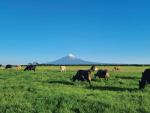
Southerly Winds Hit Taranaki Dairy Pasture Growth
A spate of southerly winds bringing cold temperatures has presented challenges for Taranaki dairy farmers.




 increase font size
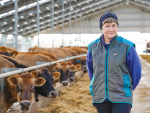
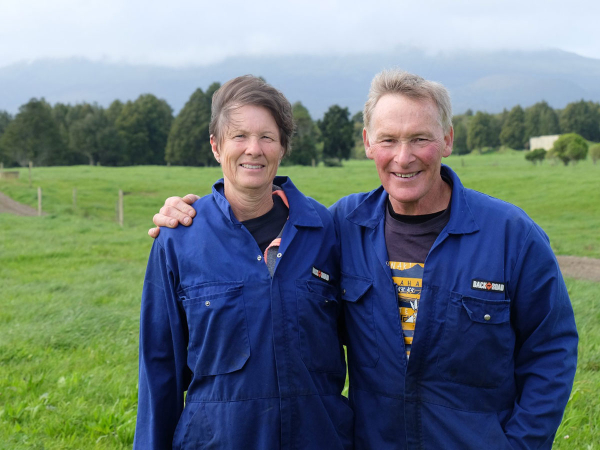 Philip and Lyneyre Hooper
Philip and Lyneyre Hooper of the Hoopman Family Trust have tonight been named the Taranaki Regional Supreme Winners at the Ballance Farm Environment Awards.
The couple have been recognised for their low-input, pasture-based farming system that enhances biodiversity while maintaining strong productivity.
Situated against the dramatic backdrop of Mount Taranaki, the Hoopers’ 144ha (90ha effective) property has undergone significant transformation since they purchased the family farm in 2003. What was once a traditional sheep and beef unit has evolved into a precision dairy grazing operation underpinned by infrastructure investment, pasture improvement and environmental stewardship.
Judges described the Hoopers as “a great farming couple working and living on the land, while enhancing and protecting the natural resources that surround them.”
They also noted the operation as “a well-managed farming operation working with the high-altitude environment to enhance biodiversity… a great example of a low input farm operation which takes account of the fragile nature of the area, while still maintaining a productive pasture-based system.”
The couple’s tenure has focused heavily on land development and infrastructure. When they began, the property had just four troughs and no races. Today every paddock now has reticulated water. Significant re-grassing and a shift toward organic liquid fertilisers have improved soil health and pasture diversity.
Environmental protection has been central to their approach. The Hoopers have fenced and retired 32ha of wetland forest remnants, creating an important ecological connection to Te Papa-Kura-o-Taranaki National Park. They are continuing intergenerational guardianship of Gratiola concinna, a nationally endangered wetland herb, working alongside the Department of Conservation on translocation projects and habitat protection.
Extensive riparian planting, stock exclusion and water monitoring have resulted in excellent water quality outcomes, with regional council testing confirming strong macroinvertebrate index results.
Philip’s innovative, DIY approach has also seen the installation of solar-powered pumps and mobile-monitored flow meters that detect leaks instantly. Diversification into glamping and active involvement in local catchment groups further strengthens the resilience of their business.
“We live in a place of natural beauty on the side of our stunning maunga. Enhancing and protecting that environment while building a profitable business is something we’re very proud of,” Lyneyre said.
A spate of southerly winds bringing cold temperatures has presented challenges for Taranaki dairy farmers.

OPINION: One of the privileges of judging the Ballance Farm Environment Awards for more than a decade is the opportunity to spend time on farms and orchards across New Zealand and hear from people constantly looking for ways to improve their businesses.
OPINION: The stats speak for themselves.
The Ballance Farm Environment Awards are coming to the West Coast of the South Island.
With forecasters advising El Niño conditions will develop through winter and strengthen into spring and summer, Ballance Agri-Nutrients is encouraging farmers and growers to think ahead about nutrient planning and be prepared to work around challenging weather conditions.


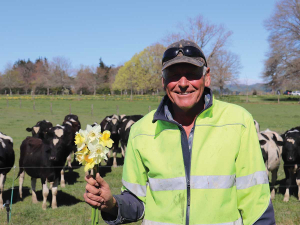
South of the central Hawke’s Bay town of Waipukurau is Taniwha Station – a highly successful 550ha bull beef farming operation.
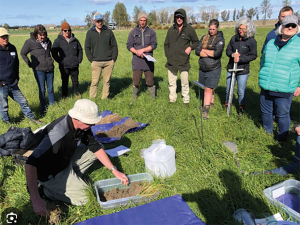
Beef + Lamb NZ funded research has shown that some simple changes to pasture management could help farmers make better use of rainfall and build resilience before dry conditions hit.
OPINION: There could hardly be a more appropriate theme for a conference than the one chosen by the red meat sector - Navigating Volatility.
When Northland leather worker Vernon Suckling started making horse saddles 50 years ago, quad bikes and side-by-side vehicles were unheard of.
Alliance Group has confirmed that eligible farmer-shareholders who supply and continue to back the business will receive up to $20 million later this year, following the strategic investment partnership with Dawn Meats.
With a general election under five weeks away, Rural News is asking major political parties about their policies and positions on key issues facing the primary sector. We will run their responses to each question over the next four weeks. The ACT Party and the Greens didn't respond in time.
OPINION: It seems Canterbury processor Synlait is still in the doldrums.
OPINION: Get offside with New Zealand First leader Winston Peters at your own peril.




