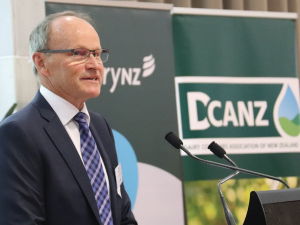
DCANZ Urges Next Government to Back Dairy Export Growth
Dairy processors are ready to further boost New Zealand’s export earnings but want the incoming government to match their ambition with good policy.



Dairy processors are ready to further boost New Zealand’s export earnings but want the incoming government to match their ambition with good policy.
Massey University is best placed to solve the “problems” facing the dairy industry, says vice chancellor, Pierre Venter.
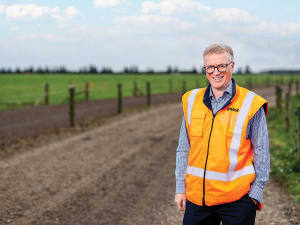
Synlait's longest serving employee – a man who joined the Canterbury-based milk processor even before it began processing milk – is now its newest executive.
A dairy industry leader believes eradicating the common and costly disease, Bovine Viral Diarrhoea (BVD) is within reach.
A farmgate milk price of $10/kgMS this season is firming up as milk powder prices soar and the New Zealand dollar weakens.
Federated Farmers has welcomed new rural policies released by ACT, saying they align closely with its own election priorities.
Farmers are being encouraged to rethink how they manage waste on farm with the launch of ruralwastesorted.co.nz, a new website bringing together practical tips, real farmer experiences and resources.
New Zealand’s red meat sector has welcomed the India-New Zealand Free Trade Agreement taking effect, which removes India’s 33% tariff on New Zealand sheepmeat.
More than 95 per cent of New Zealand’s forestry and wood exports to India can now enter tariff free as the New Zealand-India Free Trade Agreement comes into force today.
Federated Farmers is backing Feilding High School’s call to keep Agriculture and Horticultural Science as a standalone subject in Year 11.

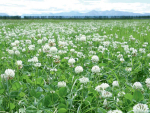
Growing great pasture this season doesn’t have to break the bank.
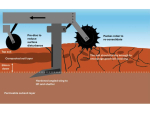
As we move further into spring, decisions are being made about working land for cropping, as daytime and ground temperatures increase.
After almost two decades of sharemilking, saving and building equity, Aaron and Marcia Flay this year realised their long-held dream of settling on their first dairy farm.
South of the central Hawke’s Bay town of Waipukurau is Taniwha Station – a highly successful 550ha bull beef farming operation.
Beef + Lamb NZ funded research has shown that some simple changes to pasture management could help farmers make better use of rainfall and build resilience before dry conditions hit.
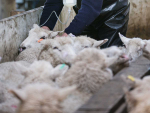
With ewes and lambs coming to the yards at tail docking, it's tempting to drench the ewes 'while they're here'. Wormwise vet Mary Bowron urges farmers to consider the variables before getting out the drench gun. Do ewes actually need a drench at tail docking? Well, it depends.
Farmers with high-quality feed available in late spring could consider weaning at least a proportion of their lamb crop early to benefit both lambs and ewes.
A major move is about to get underway to improve the quality and viability of dairy beef and cattle in NZ.
Veterinarians say changes to the code of welfare for dairy cattle provides a positive foundation for improved cattle welfare across the country.
For years, New Zealand’s dairy sector has been moving towards more selective use of antibiotics at dry-off, yet blanket dry cow therapy (DCT) – treating every cow in the herd with antibiotics, regardless of her individual infection status – has persisted on some farms.
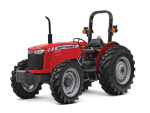
Massey Ferguson has announced a strategic supply partnership with International Tractors Limited (ITL), a manufacturer of low-horsepower and compact tractors, with recognised brands such as Sonalika and Sollis, to expand its portfolio with a new tractor range.
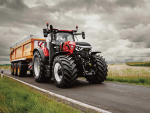
With the biannual Italian EIMA machinery Expo less than a month away, Case IH has taken out a Technical Evolution award for the Advanced Vehicle Suspension system available on its Optum 360–440 series tractors.
The Advanced Vehicle Suspension system, available on Optum 360, 390, and 440 models, responds to changing conditions, automatically adjusting how the suspension reacts to absorbs shocks and controlling vehicle movement.
In operation, sensors monitor the vibrations transmitted from the tractor chassis to the operator cabin, allowing the system to adjust suspension damping in real time. The control system incorporates key priorities, such as comfort at lower speeds and stability as speed increases, while also reacting to factors such as lower tyre pressures, where the tyres absorb more of the initial shock.
Case IH said as suspension requirements change throughout the working day, as tractors move between the paddock and road transport, the system manages suspension response in the background as tasks, speeds and conditions change, leaving the operator without the need to make manual adjustments.
Richard Hollins, Optum series tractors global product manager, said: “Pioneering technology must earn its place in the working day. Farmers and contractors will judge an investment by what it delivers, including manageable ownership costs, dependable up-time and the versatility to tackle different jobs. With AVS, we are putting intelligent control to work for comfort and stability, without giving the operator another setting to manage.”
Organised by FederUnacoma, the Italian Agricultural Machinery Manufacturers Federation, the contest has been part of EIMA since 1986, with the Technical Evolution distinction awarded to products that introduce original improvements to solutions already manufactured or patented.
www.caseih.com
Becoming the norm in the automobile industry, but much less so in agriculture, Dutch self-propelled sprayer manufacturer Agrifac has developed a diesel-electric version of its Vanguard 55.
Building on the success of the existing Massey Ferguson 7S series, ahead of the upcoming EIMA Show, the manufacturer has announced the arrival of its new MF 7S MARK 2 range, offering six choices from 170 to 245hp, positioned between the current MF 7S and the MF 8S Xtra series.
French manufacturer Pichon has expanded its SV slurry tanker range with the launch of two new models.



OPINION: The same mainstream media muppets that brought you Jacindamania in 2017 have been flat out pimping for the Opportunities…
OPINION: Your old mate reckons the atrocious way farmers in the UK are treated by their lords and masters in…
OPINION: It seems Canterbury processor Synlait is still in the doldrums.
OPINION: Get offside with New Zealand First leader Winston Peters at your own peril.

Returning to the family dairy farm after playing 20 years of professional rugby around the world is no easy task.
Rural Contractors NZ says proposed changes to land transport rules for agricultural vehicles are a welcome response by the Government…
Synlait has swung to second-half profit as operations stabilise, but the dairy processor still posted a $75.4m annual loss.



