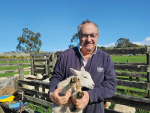
Welding Safety on Farms: One Farmer’s Burns Lesson
Decades piloting planes has ensured vet and farmer David Hayes is focused on safety. So, after a serious accident while welding on farm, he is sharing his experience so others can learn from it.




 increase font size
 Nathan and Lois Smith have developed their own solution to prevent bulk tank contamination.
The greatest nightmare for any dairy farmer is the fear of contaminating the milk vat, either with milk from a treated animal or water from the wash cycle.
Besides the financial penalty and milk needing to be thrown away, repeated offences will result in downgrades from the milk company.
Nathan and Lois Smith are dairy farmers in the Turakino Valley, south of Whanganui, milking 400 spring calving cows on the 174ha home block, with a further 200 dairy followers and 100 beef animals on a nearby run-off block.
Always keen to adopt new technology, the clever couple have developed their own solution for bulk tank contamination, with the aptly named VatGuard.
At the heart of the system, a central Hub monitors the position of the main valve on the vat supply line. When the valve is set to the "to vat" position, this is confirmed by a bright green LED light in the milk room, repeated by corresponding green lights along the length of the milking shed.
If the valve is in the closed or divert position a similar bright red, flashing light in the milk room and milking shed draws the operator's attention.
Nathan says the system is "a clear visual prompt to staff that the valve is in the correct position, meaning it's also particularly useful for relief milkers who are not completely familiar with the plant".
Manufactured in New Zealand from high quality, durable components, the systems wireless connectivity between the hub and indicator lights, means there is no wiring, so installs are easy.
The Hub and indicator lights are powered by rechargeable batteries offering run times of around 90 days or 180 milkings.
An external LED display on the exterior of the Hub displays battery health.
Visit www.vatguard.co.nz
Decades piloting planes has ensured vet and farmer David Hayes is focused on safety. So, after a serious accident while welding on farm, he is sharing his experience so others can learn from it.
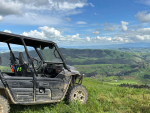
The terrible floods that hit the Wairarapa may have subsided, but the danger to farmers still exists, according to local Federated Farmers president Rob Hickson.
Improving health and safety is about incremental gain rather than a sudden decision, says Leeston farmer and Federated Farmers health and safety spokesman David Birkett.
A huge reduction in ACC claims from on-farm accidents over the last five years is due to thousands of small, practical decisions being made in sheds, yards, paddocks and around kitchen tables across the country, says Safer Farms ambassador Lindy Nelson.
Decisions you make in an instant on the farm can be the difference between life and death.

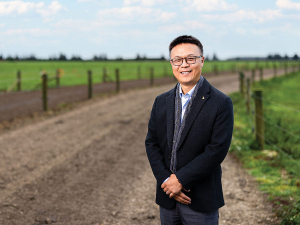
Canterbury milk processor Synlait has come through tough times and is now ready to scale up from a stable base, says its newly confirmed CEO Leon Fung.
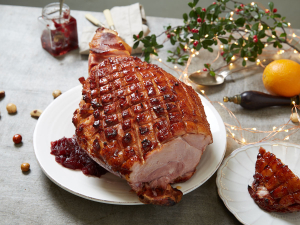
NZPork says a ham made in New Zealand is not necessarily made from New Zealand pork.
Rural Contractors NZ says proposed changes to land transport rules for agricultural vehicles are a welcome response by the Government to out-of-date regulations which have seen members hit with huge fines.
With New Zealand’s greenhouse gas emissions in the spotlight, Auckland scientist Nathan Balasingham says there’s a better way to tackle the problem than shrinking cow numbers or fertiliser usage.
Massey University vice chancellor Pierre Venter says his institute is moving from a period of austerity into a growth phase, based on their new strategy.
With the red meat sector going through a boom time with high prices, the time is right for the industry to step up its investment into developing new food products.
OPINION: It seems Canterbury processor Synlait is still in the doldrums.
OPINION: Get offside with New Zealand First leader Winston Peters at your own peril.




