
Pouarua Water Storage Scheme Gets Government Backing
The Government is backing work on a community-led water storage scheme that could irrigate up to 11,000 more hectares of the Poverty Bay flats, Agriculture Minister Todd McClay says.




 increase font size
 Open Country Dairy chief executive Mark de Lautour says the review of DIRA must not be tailored to the interests of an already dominant player.
The country's second largest milk processor is warning against 'complacency' during a review of competition regulations in the dairy sector.
Open Country Dairy says any review of the Dairy Industry Restructuring Act (DIRA) must ensure the outcomes are in the best interests of all stakeholders.
The DIRA was enacted to promote the efficient operation of New Zealand dairy markets and ensure fair competition for milk supply and supply of consumer dairy products.
Under the DIRA, the Minister of Agriculture, Todd McClay, is required to ask the Ministry for Primary Industries (MPI) to review provisions around open entry and exit provisions, base milk price settings, and the supply of regulated milk to other processors.
MPI published the terms of reference two months ago and initial submissions were made last month.
McClay must table the final report in Parliament by June 1, 2027.
Former Agriculture Minister and Labour MP Damien O'Connor told Dairy News that he expects the Government to delay the DIRA review until after the general election.
"It will be interesting to see how the coalition Government handles this DIRA review.
"I suspect they will kick it beyond the election, given the very confused signals they give to stakeholders across the dairy sector."
In its submission, Open Country Dairy, owned by the Talley's Group, called for a more critical lens to be applied, to ensure the outcomes are in the best interests of all stakeholders.
"DIRA was put in place 25 years ago to manage the significant risks that came with creating a dairy monopoly," says Open Country chief executive Mark de Lautour.
"Each time the Government has reviewed this key pro-competition framework, the mechanisms designed to protect farmers, consumers and the industry at large have been weakened.
"While DIRA has enabled incremental shifts toward a workable competitive market, this should not lead to complacency and further weakening of DIRA," de Lautour says.
It also notes that Fonterra has divested its consumer business, thus exited the market for the wholesale supply of consumer dairy products in New Zealand.
But Open Country claims that Fonterra maintains a nearly 80% market share - its share having declined by much less than 1% a year on average since its creation by the government in 2001.
In several important dairy regions, Fonterra remains farmers' only choice of processor. Other than Open Country, none of Fonterra's competitors holds more than a 4% market share, de Lautour notes.
He says that it is wrong for the DIRA to be referred to as red tape. This fundamentally misrepresents the importance of DIRA, given Fonterra was created as a monopoly by the government and continues to hold an extraordinarily dominant position, he says.
Fonterra is not commenting on the DIRA review.
The Government is backing work on a community-led water storage scheme that could irrigate up to 11,000 more hectares of the Poverty Bay flats, Agriculture Minister Todd McClay says.

Four candidates have been confirmed for two director positions on Fonterra’s board.
A record farmgate milk price and strong global demand is laying the foundation for continued growth of organic dairy farming in New Zealand.
Waikato milk processor Tatua has again declared a record milk payout to farmer shareholders, leaving other processors in the dust.
A Labour-led Government won’t be bringing back the controversial freshwater rules of 2020.


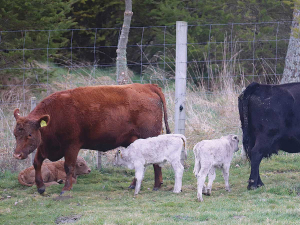
A major move is about to get underway to improve the quality and viability of dairy beef and cattle in NZ.
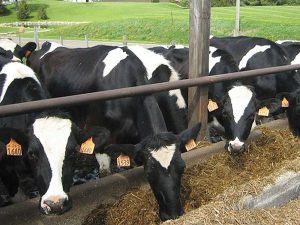
Veterinarians say changes to the code of welfare for dairy cattle provides a positive foundation for improved cattle welfare across the country.
Today, 15 October, is the International Day of Rural Women, which recognises rural women’s contribution to farming, communities and the environment.
Global dairy giant Lactalis has integrated its Australian operations with the Mainland Dairy consumer business it acquired from Fonterra earlier this year.
After almost two decades of sharemilking, saving and building equity, Aaron and Marcia Flay this year realised their long-held dream of settling on their first dairy farm.
Good medium to long term prospects for NZ beef, especially in the US, has heighted the focus on various initiatives to capitalise on this situation.
OPINION: It seems Canterbury processor Synlait is still in the doldrums.
OPINION: Get offside with New Zealand First leader Winston Peters at your own peril.




