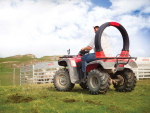
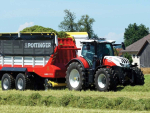
Rural contractors are getting guidance on how to deal with recent rising fuel prices.
Executive director of Rural Contractors New Zealand, Andrew Olsen, says he's had talks with Federated Farmers and explained the situation his members are in.
The organisation this past week put out a note to its members on how they might work their way through the present crisis.
He says where a contractor has a fixed price contract with a farmer there will need to be discussions between the two parties on how to deal with the situation and see if the contract can be amended to recognise the present situation.
"But as you may know, some contracts are approached in the traditional way of a shake of hand and that can leave a contractor a bit exposed," Olsen told Rural News.
"But overall, we are taking the not unreasonable view that our members deserve to be able to work for a living and not just at a reduced return to themselves," he says.
Olsen points out that his organisation does not get involved in the pricing of contracts and its sole focus is on price.
He says the covid crisis taught everyone how to deal with cost rises over a prolonged period and some of the lessons of that can be applied to the situation today.
He says world events have impacted on fuel prices for decades.
"We have models based on that, so hopefully memories aren't short. This has to be a survivable situation for anyone who is growing or farming and those that service them because everyone must be around tomorrow and in reasonable shape," he says.
Olsen also points out that farmers who do their own cultivation are facing the same issues as contractors.
He says contractors need to look to the future and see what the price of fuel may be and then decide what their toleranced is for absorbing this and what needs to be passed on.
'A Lot of Hysteria'
The head of Transporting NZ, Dom Kalasih, says there's a lot of hysteria being whipped up over rising fuel prices.
Kalasih told Rural News that some sections of the mainstream media are only looking for potential disaster stories rather than providing a true perspective of what is happening. And he adds that the industry didn't do itself any favours by talking about petrol rationing and carless days.
He says the reality is that fuel prices have moved up and down over the years and points to a benchmark for pricing - the Western Texas Intermediate, or WTL. He says this is currently sitting around US$94 a barrel last week, up from US$64 to $70, but points out that in 2022 it was US$120.
"While the present price is high, it's not like it's never been high," he told Rural News.
Kalasih says fuel is the second biggest cost in the rural sector, just behind wages, and accounts for about 20% of inputs.
He points out that even if fuel prices were to rise by 50%, which has never happened before, that would only equate to a 10% increase in transport cost.
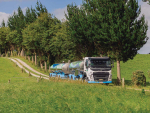
He says because it's a very busy time for rural transport operators, meat processing plants have reached out to transport operators and are looking at instead of adjusting transport prices on a monthly basis, doing this weekly and potentially a daily basis to take account of rising fuel prices.
"Transport is still a relatively low margin game and to be fair there are too many transport operators making a margin of 10%. If the price of fuel goes up by more than 10%, they are going to be losing money," he says.