New Zealand agritech company Halter has announced unveiled a new direct-to-satellite technology solution for its smart collars for beef cattle, unlocking virtual fencing for some of the country's most remote farming regions.
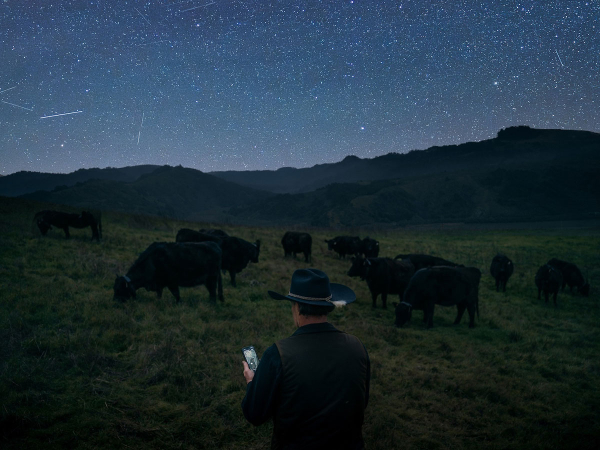
Developed in partnership with Starlink and One NZ, the technology allows Halter collars to connect directly to satellites, eliminating the need for ground infrastructure like long-range radio towers entirely.
Solving connectivity constraints in remote farming
Up until now, Halter's solar-powered, GPS-enables collar systems required long-range radio towers on farm. With the Starlink connection, the collars will be able to communicate directly with satellites.
It means Halter is the first company in the world to offer via satellite, unlocking the technology for previously out of reach beef farms, particularly in regions like Central Otago, Gisborne and Southland's high country.
Internal modelling estimates that direct-to-satellite capability will expand access to Halter for New Zealand beef farms by more than 20%. It also positions Halter to expand into more remote markets globally, such as South America and parts of Africa.
'A Game Changer'
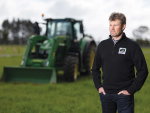
Halter chief executive and founder, Craig Piggott says that connectivity was previously a blocker for remote and/or large operations. He says the direct-to-satellite technology solves that issue.
"With One NZ and Starlink, we've removed that barrier," Piggott says.
"Farmers managing animals on remote, rugged terrain can now access the same tools as operations with full cellular coverage," he adds. "Combined with our new suite of product features, these farms can be even more productive."
Bevan McKnight, lessee of Northburn Station in the Dunstan Mountains, Central Otago runs 200 angus cattle and 11,000 merino sheep on 13,000 hectares.
He describes the technology as 'a game-changer'.
"Virtually fencing our extensive station using Halter will be a game-changer for land utilisation," McKnight says.
"For the first time, we'll be able to graze large blocks of land that have never been touched by our cattle, because we had no way of managing them there."
'Kiwi Innovation At Its Absolute Best'
Jason Paris, One NZ CEO, says Halter is an example of "Kiwi innovation at its absolute best", adding that the telecommunications provider is excited to back the company's expansion of rural connectivity.
"It's not every day you're helping cows connect to satellites in space, so that New Zealand farmers can access world leading technology that improves stock management," he says.
"That's exactly the kind of outside of the box thinking we love to see, and love to get behind."