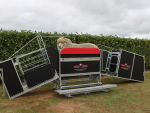
Te Pari Acquires NZ Sheep Handler Brand Combi Clamp
Oamaru-based livestock handling specialist Te Pari has bought Combi Clamp, the New Zealand manufacturer of Combi Clamp manual sheep handlers.




 increase font size
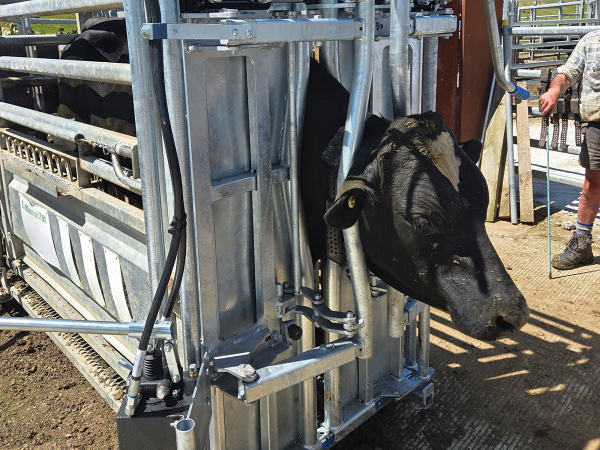 Handling specialist Te Pari has developed CollarBoss.
With wearables becoming the “must have” for dairy and, more recently, for beef operations, fitting collars for virtual fencing or health monitoring can be an awkward and potentially risky job in the cattle yards.
Handling specialist Te Pari has developed CollarBoss, a specially designed head-bail system with an integrated neck extender, to offer safe, controlled access when installing or adjusting cow collars.
Designed and manufactured to complement the proven Te Pari C1000 Head-bail – fitted as standard on the company’s manual and pneumatic cattle crushes – the accessory uses hydraulically-operated neck extenders to the front of the head-bail to gently and securely position the cow’s neck, to offer clear access to fit collars without putting operators in harm’s way.
CollarBoss makes the process straightforward and controlled, utilising a hand-operated hydraulic pump, removing the need for a power supply or electric actuation, with the benefit of making the unit suitable for remote set-ups around a property.
Showcased at the recent Southern Field Days, the system was awarded 1st place in the Farm Innovation Awards, recognising the practical value it delivers to farmers considering adopting the use of wearable collar technology. The system can be retrofitted to existing compatible systems, allowing you to upgrade your setup without replacing the entire crush.
Visit www.tepari.com
Oamaru-based livestock handling specialist Te Pari has bought Combi Clamp, the New Zealand manufacturer of Combi Clamp manual sheep handlers.
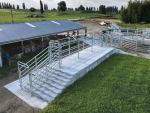
With the artificial breeding season creating increased activity and the need to handle cattle safely and efficiently, a dedicated AB race is becoming increasingly popular on New Zealand dairy farms.
For Ashburton farmer Craig Hickman, technology hasn’t replaced the way he farms, it’s strengthened how he operates day to day.
Every farmer has had that cow that looked fine for the morning milk but was off by the arvo. By the time something was visibly wrong, the problem had been building for days.
Tru-Test collars are "the best investment I've ever made in farming," says South Otago sharemilker Kevin Louw. "I absolutely love them."


Mark Hooper has been appointed the new chair of NZPork, the industry organisation representing New Zealand pig farmers.
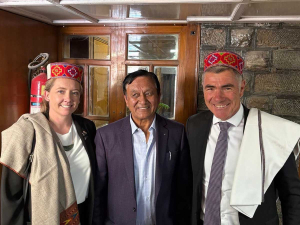
As the India-New Zealand free trade agreement enters into force, New Zealand’s apple industry has reaffirmed its commitment to the long-term development of India’s apple sector.
Fonterra shareholders can begin voting on Tuesday 20 October in the 2026 Board of Directors’ election, a Co-operative Council election in one Ward, and seven Annual Meeting resolutions.
National’s pledge to introduce 19 new national standards shows the party is serious about getting Wellington out of farming, Federated Farmers says.
The National Party’s policies to make it easier to grow fresh vegetables, secure reliable water and energy and simplify farm planning are practical changes that will give growers the confidence to invest, according to Horticulture New Zealand (HortNZ).
Fonterra Co-operative Group chief financial officer Andrew Murray has resigned to take up a role outside the dairy giant.


OPINION: The same mainstream media muppets that brought you Jacindamania in 2017 have been flat out pimping for the Opportunities…
OPINION: Your old mate reckons the atrocious way farmers in the UK are treated by their lords and masters in…




