Federated Farmers Warn Government Is Running Out of Time on Freshwater Reform
With six months until the election, Federated Farmers says the Government is running out of time to deliver its long-promised reform to the country's freshwater system.




 increase font size
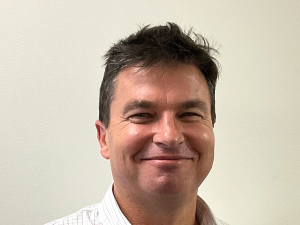
 Michael Blackwellis, chair of Waimakariri Water Zone Committee.
OPINION: When I started writing this piece, I was sitting in my Kaiapoi office on a sweltering 30-degree summer’s day, and I could hear faint “plops” as youngsters pulled “phat manus” and “bombs” off the bridge into the Kaiapoi River as generations before them have done.
Do they know that the river is deemed “unsuitable” for swimming with E. coli levels of up to 2,420 per 100ml? This information is available on LAWA’s website, Land, Air, Water Aotearoa (LAWA) - Can I swim here? It makes for sobering reading. With levels this high, we should supply these youngsters with full PPE gear to wear over their shorts. The saddest fact is that this story is repeating itself from Cape Reinga to Bluff.
We are witnessing the systemic collapse of New Zealand’s freshwater systems as our environment can no longer handle the extreme pressure we have placed on it through decades of urban and rural intensification. We have taken too much from our environment and we must start giving back.
Change is coming with a renewed focus on healthy waterways through the National Policy for Freshwater Management (NPS-FM), which the Government announced in August 2020, as well as Plan Change 7 to the Canterbury Land & Water Regional Plan (PC7), which progressed through submissions and a hearing in front of independent hearing commissioners last year.
I attended the PC7 hearing in December and it boosted my spirits to observe the passion our community has for improving Waimakariri’s waterways. I hope the changes that come out of PC7 will be bold and far reaching.
The concept of Te Mana o te Wai underpins the NPS-FM and places the highest value on the health of freshwater systems. This philosophy is the new basis for how we, as a society, interact with our environment. The NPS-FM creates a framework for change, but we must also change how we think as council bodies, as communities, as businesses, and as individuals about how our systems/practices must shift from productive growth mode to sustainability mode, and how we can live within an acceptable environmental footprint. On an individual level, we need to realise how, over the long term, that wet paddock or riverbed block would benefit the planet if it were left to revert to a wetland or a more natural state.
This year the Waimakariri Water Zone Committee will focus on priority areas and working with the community to improve our waterways.
We will support change through three newlyformed catchment groups – the Sefton Saltwater Creek Catchment Group, the Landcare Working Group, and the Biodiversity Group.
We are ahead of the curve in Waimakariri in terms of engaging with farmers, waterway conservation groups and the wider community, but we still have a long journey ahead to restore our rivers and streams.
We must work together in a united way to leave our land and water for future generations to inherit in a better state than when we found it.
Whatungarongaro te tangata, toitū te whenua - As man disappears from sight, the land remains.
Michael Blackwellis is chair of Waimakariri Water Zone Committee.
With six months until the election, Federated Farmers says the Government is running out of time to deliver its long-promised reform to the country's freshwater system.
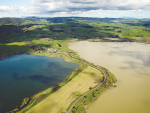
Waikato is home to a diverse range of lakes, and experts say they urgently need better management and restoration.
OPINION: As decisions around freshwater rules edge closer, the message from dairy farmers is clear.
OPINION: In a victory for common sense over virtue signalling, David Parker's National Policy Statement (NPS) work on freshwater is now dead in the water.
Primary production select committee chair and ACT MP Mark Cameron recently contributed to the Resource Management (Freshwater and Other Matters) Amendment Bill - Second Reading in Parliament. Here are excerpts from his speech:


Pāmu has released its FY26 Integrated Annual Report, reporting a Net Operating Profit of $113 million, more than double the $49 million recorded in FY25.
Meat Industry Association data, released alongside the Red Meat Sector conference in Wellington, shows export value climbing across the US, China, UK and Canada.
Applications are set to open for the 2027 Zanda McDonald Award, a trans-Tasman award recognised for identifying and fast-tracking talented young leaders in agriculture and agribusiness.
The Royal New Zealand College of General Practitioners (the College) and Hauora Taiwhenua Rural Health Network are calling for investment in a proposed new training pathway for rural GPs, warning that many rural practices are struggling to recruit while a large share of the existing workforce nears retirement.
Federated Farmers has called on Central Otago District Council (CODC) to drop or vote down a plan to truck sludge from Alexandra and Cromwell to farmland near Lauder, warning it would compound an "outrageous" situation created by a separate council's decision weeks earlier.
Synlait has swung to second-half profit as operations stabilise, but the dairy processor still posted a $75.4m annual loss.
OPINION: It seems Canterbury processor Synlait is still in the doldrums.
OPINION: Get offside with New Zealand First leader Winston Peters at your own peril.