
Rural Mobile Coverage Worse After 3G Shutdown, Survey Finds
Mobile phone coverage and reliability are deteriorating in rural areas, and farming families are bearing the cost, according to a Federated Farmers survey.




 increase font size
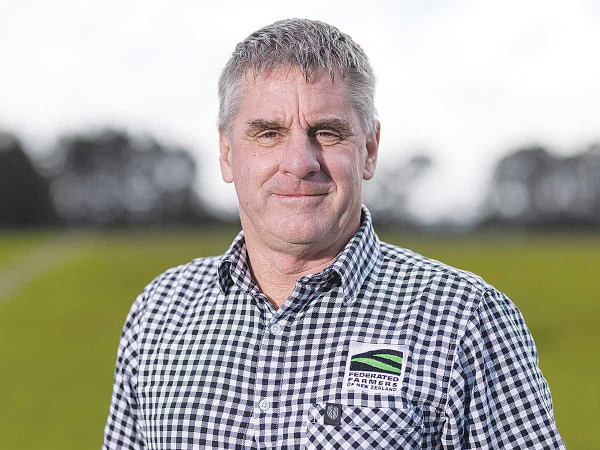 Colin Hurst, Federated Farmers' freshwater spokesperson.
With six months until the election, Federated Farmers says the Government is running out of time to deliver its long-promised reform to the country's freshwater system.
Colin Hurst, Federated Farmers' freshwater spokesperson, says that while progress has been made on repealing or replacing some of the previous Government's freshwater rules, too many of the rules still sit on the books.
He pointed to the 2020 National Policy Statement for Freshwater Management as a source for concern.
"Former Environment Minister David Parker brought in a swag of poorly written freshwater rules in mid-2020," he says.
"The current Government came into office promising to unwind them and put things right for farmers.
"The clock is really ticking now and we’re getting genuinely concerned they’ll run out of time."
When elected, the Coalition Government said it would replace Labour’s freshwater targets with rules allowing more flexibility.
Nearly three years on, Parker’s National Policy Statement for Freshwater Management 2020 remains law.
"It’s good the Government has hit pause on regional councils coming up with new rules to try to achieve the unachievable freshwater targets," Hurst says.
He says early drafts of those plans showed significant areas of farmland would need to be retired to come close to the targets.
"But in the background, Parker’s policy still sits on the books, which means resource consents must be tested against it and Environment Court decisions will also consider it.
"It’s continuing to cause real headaches across the country.
"There’s also the risk that any change in Government would mean it can be immediately turned back on and implemented."
Hurst says the current Government also promised changes to make vegetable growing and on-farm water storage permitted activities - but again, that’s yet to happen.
New Freshwater Farm Plan regulations also haven’t been completed, he adds.
Much of the freshwater reform agenda depends on replacement of the current resource management framework.
Mark Hooper, Federated Farmers' Resource Management Act (RMA) reform spokesperson, says bringing in new legislation to replace the RMA was one of the Government’s flagship policies.
"The RMA is by far the biggest handbrake on the growth of our agricultural sector and rural economies," he says.
"From expensive resource consents to unachievable freshwater targets, these difficulties for farmers all sit under the RMA legislation.
"We were really pleased when the Government introduced two bills to replace the RMA last year, but a deep dive into the wording revealed some significant flaws.
"The Natural Environment Bill, in particular, is so poorly drafted that it risks making things even worse for farmers than the current RMA."
Hooper says a major gap right now is the lack of detail around what will replace the current national policy framework.
"What we’ve got in front of us with the Natural Environment Bill is essentially the framework for the new system.
"But a lot of the real detail will sit in national policy direction and national standards, and that’s the part we haven’t seen yet," he says.
"That creates uncertainty. Farmers are being told change is coming, but we still don’t know what the replacement for things like the National Policy Statement will actually look like."
He says, in the meantime, farmers remain stuck operating under the very rules the Government has promised to replace.
"Farmers were told there would be new national standards for things like vegetable growing, water storage and gravel extraction, but none of that has happened yet.
"So, despite all the talk of major reform and quick wins, nothing has really changed in practice and the old system is effectively still live."
Hooper says that uncertainty is weighing on farmer confidence and investment decisions.
"People want clarity. They want to know what the rules of the game are before they make long-term investment decisions - and right now, that certainty just isn’t there."
Hurst says credit must go to the Government for moving quickly to repeal Labour’s replacement RMA in 2023, and make fixes to stock exclusion rules and winter grazing rules.
"Farmers also breathed a sigh of relief at last year’s law change to roll over existing resource consents into a promised new resource management system.
"Those are all good things - but the job is far from done."
Hurst says there’s cautious optimism about new Environment Minister Nicola Grigg, who comes from a strong farming background.
"For Nicola Grigg, I think there’s a real opportunity here to cut through the noise and deliver what farmers have been waiting for.
"She’s shown she understands the issues, but I guess the challenge now is whether she can turn that into action."
With only months left in the Government’s term, Hurst says time is running short.
"Farmers are watching closely, because what happens next will shape how this works on the ground for years to come.
"The Government needs to get cracking."
Mobile phone coverage and reliability are deteriorating in rural areas, and farming families are bearing the cost, according to a Federated Farmers survey.
Central Otago District Council (CODC) has voted against a plan to spread treated sewage sludge from Cromwell and Alexandra on farmland near Lauder, a decision Federated Farmers says reflects strong opposition from rural residents.
Federated Farmers has called on Central Otago District Council (CODC) to drop or vote down a plan to truck sludge from Alexandra and Cromwell to farmland near Lauder, warning it would compound an "outrageous" situation created by a separate council's decision weeks earlier.
Federated Farmers says new legislation replacing the Resource Management Act will cut red tape, unlock investment and help grow New Zealand's export-led economy, after the Planning Bill and Natural Environment Bill passed their third reading in Parliament yesterday.
Leading figures from the major political parties will be questioned on their primary sector policies at the Rural Issues Debate at Mystery Creek Events Centre, Hamilton, on 30 September.



Fonterra Co-operative Group chief financial officer Andrew Murray has resigned to take up a role outside the dairy giant.
A major move is about to get underway to improve the quality and viability of dairy beef and cattle in NZ.
Veterinarians say changes to the code of welfare for dairy cattle provides a positive foundation for improved cattle welfare across the country.
Today, 15 October, is the International Day of Rural Women, which recognises rural women’s contribution to farming, communities and the environment.
Global dairy giant Lactalis has integrated its Australian operations with the Mainland Dairy consumer business it acquired from Fonterra earlier this year.
High country stations, mixed sheep and beef farms, Māori-owned farms, corporates and family operations are among the nine commercial farms taking part in the Livestock Innovation Farming Transformation programme, known as LIFT.



OPINION: The same mainstream media muppets that brought you Jacindamania in 2017 have been flat out pimping for the Opportunities…
OPINION: Your old mate reckons the atrocious way farmers in the UK are treated by their lords and masters in…




