Ah Tatua, You've Done It Again!
Waikato milk processor Tatua has again declared a record milk payout to farmer shareholders, leaving other processors in the dust.




 increase font size
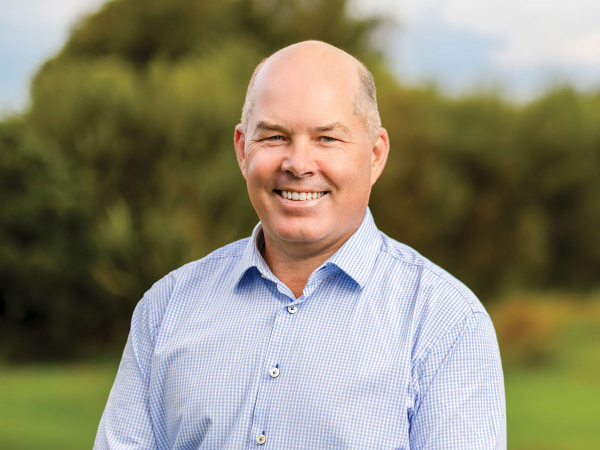 Synlait chief executive Richard Wyeth says the key to recovery is operational stability and quality.
Canterbury milk processor Synlait is blaming what it calls "a perfect storm" of setbacks for a big loss in its half year result for the six months ended January 31, 2026.
CEO Richard Wyeth said the numbers were “frustratingly disappointing”.
“They are the result of a period where Synlait faced multiple headwinds and had little choice as to how to deal with them. They reflect a severe lack of optionality, not effort, and they do not define the company’s future – although recovery will take time.”
The results show and EBITDA loss of $34.7 million, with underlying EBITDA of $4.1 million, a reported net loss after tax of $80.6 million and an underlying net loss after tax of $27.3 million.
Net debt rose 88% to $472.1 million – an increase of 88%. Forecast base milk price for the 2025/26 season is $9.50/ kgMS with additional premium payments taking the total forecast average milk payment to $9.90/kgMS.
The company says manufacturing challenges at its Dunsandel plant resulted in a need to rebuild customer inventory. Changes to its manufacturing plan resulted in it having surplus milk, some of which could not be sold and therefore had to be processed into relatively low-value whole milk powder (WMP). Then, to “deliver the perfect storm”, the price of WMP decreased sharply at the end of the 2025 calendar year resulting in significant losses in Synlait’s Ingredients portfolio.
Wyeth told Dairy News that the company had “got behind” in its advanced nutrition production.
“The reality is when you’re making advanced nutrition and you don’t execute that well, you make a lot of stock food.
“So that’s ultimately the challenge of this business model. The rewards are very high when you do it well, but they’re very poor when you don’t.
“The nature of any manufacturing is you never, hand on heart, go: ‘We’re going to have 100 percent foolproof manufacturing’. But we have improved our quality out of sight.”
Wyeth said the key to recovery is operational stability and quality.
“What I’ve done is tried to bring the focus back onto those core areas of the business and uh, as if we execute well, over the next four to five months, then that’ll give us the ability to get into 2027, in more of a steady state.
“What I’d say over the last 12 to 18 months, the business has been incredibly reactionary, and we’ve had very little commercial fixability or optionality, and at the end of the day, that’s led to these results being the way they are.”
Farmers Happy To Stay
Richard Wyeth said that the result does not reflect Synlait’s future. This week it will receive $307 million from the sale of its North Island assets – its Pokeno plant and associated facilities, which it is selling to the Abbott group – which would go a long way to removing debt.
The result is a far cry from the same period last year, when Synlait had come through a challenging period when many suppliers had issued notices to quit but were then rescinding them on the back of an improved performance, partly due to increased investment from partners A2 and Bright Dairy.
However, Wyeth said there were now no current cease notices. Supplying farmers understood why the results are the way they are, and the company would be paying a very competitive milk solids price.
Prominent Canterbury dairy farmer Willy Leferink, who was one of the farmers who lodged a cease notice last year then withdrew it, is now happy to stay with Synlait.
He said there had been some serious manufacturing issues but they had been recognised and sorted out.
“It’s quite an art, to bring that quality product, the whole time.” Meanwhile, the company has released a roadmap to recovery, dubbed as ‘Stabilise, Simplify and Scale’.
It would:
Chair George Adams said that behind the roadmap sat a real determination to ensure the coming 12 to 24 months would be seen as a period where Synlait under promised and over delivered.
Waikato milk processor Tatua has again declared a record milk payout to farmer shareholders, leaving other processors in the dust.
Synlait has swung to second-half profit as operations stabilise, but the dairy processor still posted a $75.4m annual loss.
OPINION: It seems Canterbury processor Synlait is still in the doldrums.
Speculation of a possible joint move by Fonterra and a2 Milk to buy Synlait raises a much bigger strategic question, says agribusiness expert Dr Nic Lees.
A revolving door of chief executives at milk processor Synlait is a warning sign, says Lincon University senior lecturer in agribusiness Nic Lees.


Farmers are being encouraged to rethink how they manage waste on farm with the launch of ruralwastesorted.co.nz, a new website bringing together practical tips, real farmer experiences and resources.

New Zealand Winegrowers (NZW) is celebrating the India-New Zealand Free Trade Agreement (FTA) coming into force today, bringing New Zealand wine improved access to one of the world’s fastest-growing economies.
New Zealand’s red meat sector has welcomed the India-New Zealand Free Trade Agreement taking effect, which removes India’s 33% tariff on New Zealand sheepmeat.
More than 95 per cent of New Zealand’s forestry and wood exports to India can now enter tariff free as the New Zealand-India Free Trade Agreement comes into force today.
Federated Farmers is backing Feilding High School’s call to keep Agriculture and Horticultural Science as a standalone subject in Year 11.
Food and fibre exports have returned a billion- dollar bonus to the country.

OPINION: It seems Canterbury processor Synlait is still in the doldrums.
OPINION: Get offside with New Zealand First leader Winston Peters at your own peril.




