
Fonterra Lifts Milk Price to $9.50/kgMS for 2026/27
Fonterra has revised its Farmgate Milk Price forecast for the 2026/27 season, lifting the midpoint and narrowing the range on the back of improving global dairy commodity prices.




 increase font size
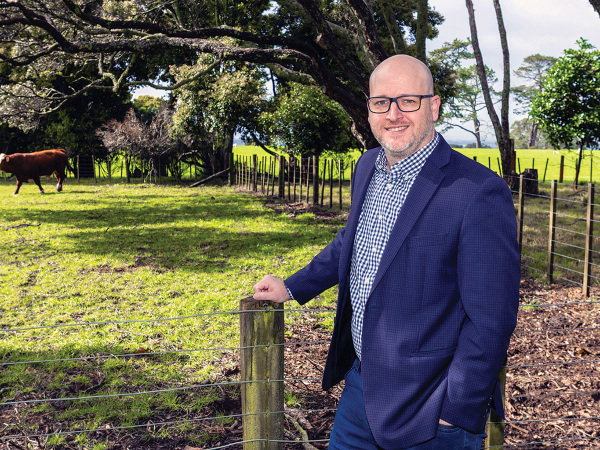 ANZ agricultural economist Matthew Dilly believes the final milk price for this season will exceed even the most optimistic forecasts offered in recent months.
Strong demand for high dairy protein products is keeping prices elevated but the Middle East crisis could make an impact in the coming months.
The final milk price for this season, which finishes at the end of next month, is set to exceed even the most optimistic forecasts offered in recent months.
ANZ agricultural economist Matt Dilly says last week's ceasefire is very welcome news, but it's too early to say how durable it will be.
"Even in the best-case scenario, there will still be ripple effects across markets and it will take some time before things return to normal," Dilly told Dairy News.
The ANZ Bank has lifted its milk price forecast for this season to $9.85/kgMS, 15c above Fonterra's forecast mid-point.
"This forecast is hardly bold; at this stage of the season Fonterra has already locked in most components of their pricing formula," he adds.
But he cautions that demand could emerge as a concern.
Price-sensitive Asian economies are key customers for New Zealand dairy and are among the most impacted by rising fuel costs.
Dilly says that dairy demand may weaken the longer the current situation lasts, especially in markets where dairy products are not traditional staples.
"The drop in last week's Global Dairy Trade (GDT could indicate that importers have rebuilt inventories to their satisfaction, and that the bearish global supply and demand situation will become more relevant in the coming months."
ANZ's price revision comes despite the GDT auction recording its first price fall this year.
Dilly says global dairy prices have had quite a turnaround in 2026 after ending 2025 on the slide. The GDT price index is up 22% since the start of the year.
"Initially, rising geopolitical risk lifted most commodity prices, including dairy," he says.
"Then in late February that risk turned to reality.
"This trend had very little to do with dairy directly, although the bearish end to 2025 led buyers to assume they could patiently wait for prices to fall further.
"The price surge through the end of March shows how quickly that mindset changed, despite prices falling 3.4% at the latest GDT auction."
"For the current 2025/26 season, this means the final milk price will exceed even the most optimistic forecasts offered in recent months."
With Fonterra's full earnings guidance for continuing operations raised from 45-65c/share to 50-65c/share, a full shared up farmer could get over $10.20/kgMS. Last season, Fonterra paid $10.16/kgMS as milk price and a 57 cent fully imputed dividend - one of its highest ever returns to its shareholders.
Fonterra chief executive Miles Hurrell also had a word of caution for farmers.
The revised forecast reflected improvement in global commodity prices and the co-op's strong underlying margins and cost control, but he noted that significant volatility remains, particularly as the conflict in the Middle East continues.
Fonterra has revised its Farmgate Milk Price forecast for the 2026/27 season, lifting the midpoint and narrowing the range on the back of improving global dairy commodity prices.
Milk powder prices are keeping farmgate prices up, helping processors offset the dip in milk fat prices.
Case IH has unveiled its redesigned next generation Puma Series tractors, said to offer improvements in connectivity, operator comfort, fuel efficiency and drivability.
Cameron Reed lives between two worlds.
A milk glut around the world shows no sign of easing, putting downward pressure on farmgate milk prices for the next few months.


Federated Farmers has welcomed new rural policies released by ACT, saying they align closely with its own election priorities.

Rural Contractors NZ says proposed changes to land transport rules for agricultural vehicles are a welcome response by the Government to out of date regulations which have seen members hit with huge fines.
Alliance is calling for final applications for its 2027 Graduate Programme, with applications closing on Sunday 25 October.
Decades piloting planes has ensured vet and farmer David Hayes is focused on safety. So, after a serious accident while welding on farm, he is sharing his experience so others can learn from it.
Canterbury milk processor, Synlait Milk has confirmed Leon Fung as its chief executive officer.
OPINION: Making it easier to collect rainwater and use it to grow crops and livestock is a no brainer.


OPINION: It seems Canterbury processor Synlait is still in the doldrums.
OPINION: Get offside with New Zealand First leader Winston Peters at your own peril.




