What the 2026 Election Means for Rural Landowners
OPINION: The farm policy on the table this election, what it could mean for land, and why the market you're in today still matters most




 increase font size
 The dairy sector has proven to be the standout performer with dairy sales increasing by 38.2% in the 12 months to March 2026.
The latest data from the Real Estate Institute of New Zealand (REINZ) reveals a mixed rural property market due to consistent inflation concerns.
Data released last month by REINZ suggests the market is shaped by increased positivity and confidence, reflecting the combination of strong commodity prices, improved balance sheets, accessible credit, and a marked shift in public perception of the sector.
REINZ rural spokesperson Shane O’Brien says concerns remain regarding cost inflation for the rural sector, with tight on-farm operating costs.
“These pressures continue to weigh on overall sector confidence, prompting businesses across the rural economy to reassess budgets, adapt operating models and look for greater efficiency as they navigate a persistently challenging cost environment, in many sectors,” O’Brien says.
The dairy sector has proven to be the standout performer with dairy sales increasing by 38.2% in the 12 months to March 2026.
Key regions, including Northland, Otago and Southland, were especially active with dairy confidence flowing through into broader provincial economies.
“Performance has been supported by strong farmgate returns, with demand clearly concentrated in tier-one properties,” O’Brien says.
He says that activity is driven primarily by largescale family businesses and farmer-to-farmer transactions.
According to REINZ’s report, while overall rural confidence has been at its highest since the 2008 Global Financial Crisis, dairy has proven to be the primary engine of that confidence.
“Buyers have re-engaged with the market following a more stable outlook from processors and improved liquidity from recent seasons – specifically in South Otago where market activity reached levels not seen in the last 7-8 years,” the report states.
The first quarter of 2026 recorded an increase of transactions, supported by strong underlying demand.
According to the REINZ analysis, in the 12 months to March 2026, there were more dairy farm sales exceeding $10 million than in any equivalent 12-month period since records began in 1997.
“Buyers across New Zealand tend to prioritise farms that deliver consistent performance, with proven production, established infrastructure, and being environmentally compliant while most farming sectors have displayed varied activity this quarter,” O’Brien says.
The report says that seasonal conditions have generally been helpful to the dairy sector across New Zealand, supporting pasture growth and production, reducing pressure on supplementary feed and helping farms maintain output.
However, the report states the main area of concern for the sector is cost inflation.
“Diesel prices initially raised concerns due to their immediate impact on production costs, but the flow-on impact, notably fertiliser prices, will continue to contribute to rising farm input costs,” the report states.
“Dairy support farms benefited from the strength of the broader dairy outlook, including recent Fonterra payouts and dairy expansion generally, all of which have translated into demand for support land in dairy-intensive regions.”
Looking ahead, the REINZ report says it will be interesting to see what impact the Fonterra capital payments have on the market.
“In the meantime, buyers remain very disciplined and focused on quality assets.”
OPINION: The farm policy on the table this election, what it could mean for land, and why the market you're in today still matters most
The Real Estate Institute of New Zealand (REINZ) has released its latest rural property report, providing a detailed view of New Zealand’s rural real estate market for the 12 months ending December 2025.
Buoyed by strong forecasts for milk prices and a renewed demand for dairy assets, the South Island rural real estate market has begun the year with positive momentum, according to Colliers.
Farm sales are on the rise. According to recent data from the Real Estate Institute of New Zealand (REINZ), there was an 18.9% increase in farm sales for the three months ending August 2024 compared to the same period in 2023.
It could be that buyers are hunting out the right farm to purchase as farm sales drop for the three months ended December 2023. That’s according to the Real Estate Institute of New Zealand (REINZ).


Farmers have until the end of this week to help shape DairyNZ’s future focus.
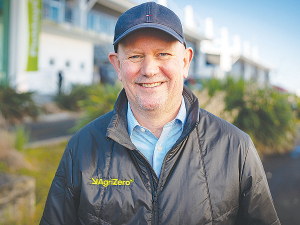
Wayne McNee, chief executive of AgriZeroNZ, has resigned and will leave the organisation on 15 January 2027.
The New Zealand dairy sector set a record in the 2025/26 season, producing more than two billion kilograms of milksolids for the first time.
Milk powder prices are continuing their merry run, firming up a potential $10/kgMS farmgate price this season.
Teachers are welcoming the outgoing Government’s U-turn allowing agriculture and horticultural science to remain a standalone Year 11 subject.
Outgoing ACT MP and dairy farmer Mark Cameron says Saturday’s election result reflects voters deeply impacted by the cost of living.

OPINION: It seems Canterbury processor Synlait is still in the doldrums.
OPINION: Get offside with New Zealand First leader Winston Peters at your own peril.