Federated Farmers Welcomes ACT’s New Farming Policies
Federated Farmers has welcomed new rural policies released by ACT, saying they align closely with its own election priorities.




 increase font size
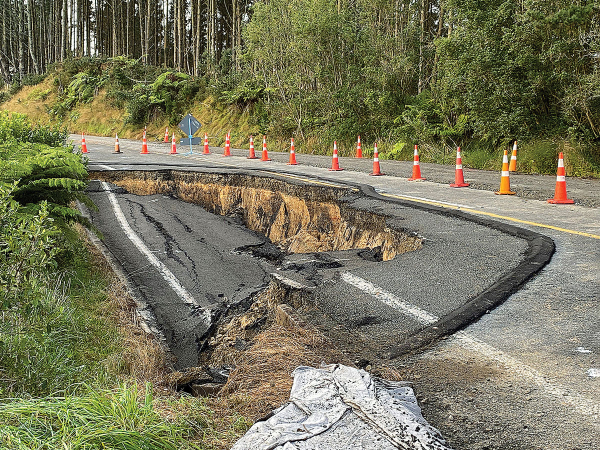 Federated Farmers says the Government needs to rapidly re-prioritise its road funding policies and ensure that people in rural areas are not left stranded for weeks on end. Photo Credit: NZ Transport Agency.
Make rural roads a priority.
That's the message from Federated Farmers president Andrew Hoggard in light of massive damage to roads following cyclones Gabrielle and Hale, and other major weather events, especially in the north and east of the North Island.
As Dairy News went to press, some farmers in Hawke's Bay and Tairawhiti were still stranded on their properties, without power and communications. Hoggard says this is unacceptable.
He says the Government needs to rapidly re-prioritise its road funding policies and ensure that people in rural areas are not left stranded for weeks on end.
"Some of the roads are not fit for purpose. Two years ago I went up to Gisborne what struck me was the number of bridges and tenuous roads that, if they go, whole areas would be cut off, which is exactly what has happened now," he told Dairy News.
Hoggard says if the plan is not to put in alternative route options, then the main roads need to be bulletproof and able to withstand major weather events.
He says if people in rural areas don't have options to get to and from their properties, it becomes a very tricky situation. He says lack of access means that stock and other products can't be taken off, milk not collected and essential supplies cannot be brought in.
"It's critical because who would want to live somewhere where, if you have a young family and in an emergency you want to get them out of there, you can't. The thought of being trapped with your family in an event is pretty bloody scary, especially if you have kids or family members with special medical needs," he says.
Hoggard says the risk of poor access means that people are going to think twice about living in rural areas and this could lead to more trees being planting in some places, which he adds is not the greatest.
Hoggard points out the sometimes unrecognised strategic importance of places such as Gisborne and its hinterland in terms of food production, noting its contribution of sheep and beef and fresh vegetables.
Federated Farmers has welcomed new rural policies released by ACT, saying they align closely with its own election priorities.
Federated Farmers is backing Feilding High School’s call to keep Agriculture and Horticultural Science as a standalone subject in Year 11.
As part of its Election 2026 coverage, Rural News asked political parties how they would help pull the arable sector out of the doldrums. Here's what they said:
National’s pledge to introduce 19 new national standards shows the party is serious about getting Wellington out of farming, Federated Farmers says.
OPINION: Rivers never sit still. They start as snowmelt and rain in the high country, pick up a creek here and a stream there, and carry all of it down to where it's needed.


Federated Farmers has welcomed new rural policies released by ACT, saying they align closely with its own election priorities.

Rural Contractors NZ says proposed changes to land transport rules for agricultural vehicles are a welcome response by the Government to out of date regulations which have seen members hit with huge fines.
Alliance is calling for final applications for its 2027 Graduate Programme, with applications closing on Sunday 25 October.
Decades piloting planes has ensured vet and farmer David Hayes is focused on safety. So, after a serious accident while welding on farm, he is sharing his experience so others can learn from it.
Canterbury milk processor, Synlait Milk has confirmed Leon Fung as its chief executive officer.
OPINION: Making it easier to collect rainwater and use it to grow crops and livestock is a no brainer.


OPINION: It seems Canterbury processor Synlait is still in the doldrums.
OPINION: Get offside with New Zealand First leader Winston Peters at your own peril.




