Stihl Launches BT140, Its First Battery-Powered Auger
With battery tools becoming more widespread and more importantly, productive and reliable, it was only time before we saw augers or post-hole borers.




 increase font size
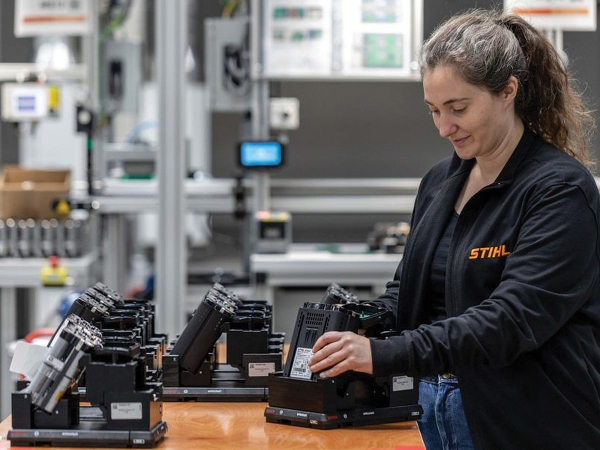 Today, more than one in four of all Stihl products sold worldwide are battery-powered.
STIHL outdoor products, especially petrol chainsaws and brush-cutters, have always been firm favourites with farmers and rural dwellers.
Early battery powered tools were always a little ho-hum – you either loved them or hated them – but the development of new battery technologies over the last decade or so, means they offer a creditable alternative to petrol.
Today, more than one in four of all Stihl products sold worldwide are battery-powered, with the company aiming to increase this share to approximately 35% by 2027 and 80% by 2035. Those statistics will explain why the Stihl Group has opened its first battery-only production site in Oradea, Romania to produce battery packs and battery-powered tools.
Covering a total area of over 33-acres, the 10.7-acre production building will ramp up operations to produced one million battery packs by 2026. By 2028, output is expected to rise to 1.8 million battery packs, alongside 1.7 million battery-powered tools. The site currently employs around 135 people, with expectations for this to rise to around 700 by 2028.
Production initially focuses on battery-powered blowers and AP battery packs from the professional Stihl range. Over time, the portfolio will expand to include additional battery-powered equipment such as brush cutters and chainsaws.
The new €125 million plant will play a central role in meeting the growing demand for battery-powered products across European markets, while expanding the company’s global network and strengthening its position in the fast-growing battery segment.
“It is a vital addition that will secure our long-term competitiveness in Europe and support our customers with high-performance products developed and built for professionals and demanding consumers worldwide,” he adds.
With battery tools becoming more widespread and more importantly, productive and reliable, it was only time before we saw augers or post-hole borers.
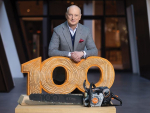
Most rural properties wouldn’t be without a chainsaw, so it’s fitting to celebrate the centenary of Andreas Stihl inventing the first portable chainsaw in a Stuttgart workshop in 1926.
If someone turns up on your farm, selling Stihl 461 chainsaws, please shout out. That’s the message from NZ Young Farmers.
Chainsaw accidents are on the rise and it’s time to make some noise about this, says chainsaw maker Stihl.
EVERY SINGLE day more than six people in New Zealand, on average, injure themselves with a chainsaw – a scary statistic which is on the rise and has prompted STIHL to power up its Chainsaw Safety Awareness Week campaign.



The Royal New Zealand College of General Practitioners (the College) and Hauora Taiwhenua Rural Health Network are calling for investment in a proposed new training pathway for rural GPs, warning that many rural practices are struggling to recruit while a large share of the existing workforce nears retirement.
Federated Farmers has called on Central Otago District Council (CODC) to drop or vote down a plan to truck sludge from Alexandra and Cromwell to farmland near Lauder, warning it would compound an "outrageous" situation created by a separate council's decision weeks earlier.
Synlait has swung to second-half profit as operations stabilise, but the dairy processor still posted a $75.4m annual loss.
LIC shareholders have elected a new North Island representative to the co-operative's Board, along with five representatives to its Shareholder Reference Group (SRG), following the company's Annual Meeting held in Invercargill.
Farmers across parts of Southland and South Otago are continuing to deal with difficult conditions after a prolonged run of wet weather, with pressure building around feed supply, stock management, pasture damage, farm infrastructure and everyday workloads.
Federated Farmers says it welcomes Labour's commitment to reviewing the Sharemilking Agreements Act, calling on other major parties to do the same.




OPINION: It seems Canterbury processor Synlait is still in the doldrums.
OPINION: Get offside with New Zealand First leader Winston Peters at your own peril.