LIC Chief Says BVD Eradication in NZ Is Within Reach
A dairy industry leader believes eradicating the common and costly disease, Bovine Viral Diarrhoea (BVD) is within reach.




 increase font size
 DairyNZ chief executive Campbell Parker.
According to the New Zealand Dairy Statistics 2024/25 report, New Zealand dairy farmers are achieving more with fewer cows.
The report, released by DairyNZ and Livestock Improvement Corporation (LIC), reveals total milksolids production rose 2.9% in 2024/25 to 1.94 billion kilograms, despite a 0.5% fall in cow numbers to 4.68 million.
The lift was driven by record-high productivity per cow, with the average cow producing 414 kilograms of milksolids, up 14kg on last season.
Campbell Parker, chief executive of DairyNZ, says the results reflect farmers' strong focus on performance and adaptability despite a range of challenges over the past few years.
“Farmers continue to focus on doing things smarter and driving productivity, including managing their herds more efficiently, improving feed use, and leveraging science and technology to lift production per cow, while also responding to higher milk prices last season,” says Parker.
“The trend towards fewer, larger herds is continuing, but the focus on high-performing, healthy animals remains strong, with fewer cows producing more milk. It’s a real credit to farmers’ skill, resilience, and ongoing investment in herd improvement and farm management. That combination of efficiency and innovation keeps New Zealand dairy farming at the forefront internationally.”
Meanwhile, herd improvement activity strengthened notably in 2024/25, with farmers continuing to invest in data and genetics to support long-term gains.
A total of 3.84 million cows were herd-tested, which is a 5 percent increase from last season, with 82 percent of the national herd now tested in 2024/25. The proportion of cows mated to artificial breeding (AB) also increased slightly to 81.5 percent.
LIC chief executive David Chin highlights farmers’ strong commitment to genetic progress and herd performance, driven by their focus to lift productivity across their businesses.
“Farmers now have access to the most accurate data and advanced genetic tools ever available, and they’re using these to make very smart, highly targeted breeding decisions,” says Chin.
“The record milk production per cow is no coincidence. It’s the result of decades of genetic improvement and a relentless focus on cow efficiency. Genomic evaluations, milk quality, and herd testing have all become integral as farmers identify and breed from their top-performing cows.”
Chin says the long-term trend towards crossbreeding is another sign of farmers' focus on breeding a balanced, fertile and highly efficient herd.
“Holstein-Friesian/Jersey crossbreds now account for just over 61 percent of the national herd. This reflects farmers’ confidence in cows that combine strong production with high milksolids, good conformation and fertility — key traits for a resilient national herd.”
The average dairy co-operative payout (including dividends) was $10.75 per kilogram of milksolids, an increase from $8.90 in the previous season. When adjusted for inflation, the 2024/25 payout was $0.90 above the five-year inflation-adjusted average of $9.25 per kilogram of milksolids.
Parker says dairy farmers continue to play a large role in contributing to the New Zealand economy.
“Looking ahead to the current 2025/26 season, we will likely see the impacts from the extreme wet weather experienced in some regions during spring flow through. However, there are some positives, with strong production at the start of the season, accompanied by a stronger than average retro payment and reduced interest rates, which will likely improve the cash position of many farmers.”
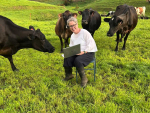
A dairy industry leader believes eradicating the common and costly disease, Bovine Viral Diarrhoea (BVD) is within reach.
Today, 15 October, is the International Day of Rural Women, which recognises rural women’s contribution to farming, communities and the environment.
LIC shareholders have elected a new North Island representative to the co-operative's Board, along with five representatives to its Shareholder Reference Group (SRG), following the company's Annual Meeting held in Invercargill.
The first major update to the Dairy Cattle Code of Welfare in more than a decade has been released, marking what DairyNZ describes as an important step in ensuring animal welfare standards continue to evolve alongside scientific evidence and on-farm realities.
Have a plan in place for your cows and staff.


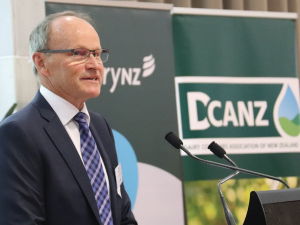
Dairy processors are ready to further boost New Zealand’s export earnings but want the incoming government to match their ambition with good policy.
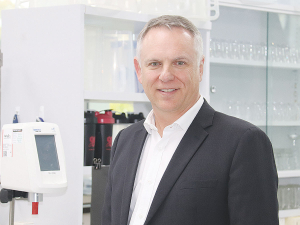
Massey University is best placed to solve the “problems” facing the dairy industry, says vice chancellor, Pierre Venter.
Synlait's longest serving employee – a man who joined the Canterbury-based milk processor even before it began processing milk – is now its newest executive.
A dairy industry leader believes eradicating the common and costly disease, Bovine Viral Diarrhoea (BVD) is within reach.
A farmgate milk price of $10/kgMS this season is firming up as milk powder prices soar and the New Zealand dollar weakens.
Federated Farmers has welcomed new rural policies released by ACT, saying they align closely with its own election priorities.


OPINION: It seems Canterbury processor Synlait is still in the doldrums.
OPINION: Get offside with New Zealand First leader Winston Peters at your own peril.




