
Feds Back National’s 19 Farming National Standards
National’s pledge to introduce 19 new national standards shows the party is serious about getting Wellington out of farming, Federated Farmers says.




 increase font size
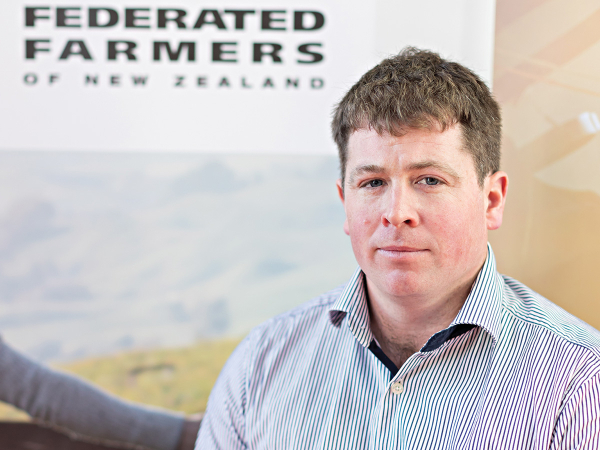 Federated Farmers dairy section chair Karl Dean.
Keep focused on things that can be controlled on farm.
That's the message from Federated Farmers dairy section chair Karl Dean as farmers come to terms with a seventh straight drop in dairy prices on the Global Dairy Trade (GDT) platform.
"We can't control the milk price, so we just need to keep focusing on the things we can control on farm," Dean told Dairy News.
Last week's GDT auction recorded the seventh straight drop in the price index - the 3% drop, the second largest among the seven drops. Whole milk powder prices, primary determinant of Fonterra's farmgate milk price, has seen six consecutive drops. Six months ago, WMP price was around US$4374/MT; last week's overnight auction saw the WMP price drop to US$3452/MT.
Dean says that no dairy farmer likes to wake up in the morning to see the GDT prices have dropped.
"But I don't think anyone will be surprised to see what's happening," he says.
"When you look at historic trends, dairy prices and other commodities always work in cycles. Record highs can't last forever - even if we wish they could."
Dean doesn't think farmers need to worry yet and should continue to keep on top of things they can control.
"A big part of that will be keeping on top of costs where we can, paying down some debt, and investing in the resilience of our farms during the good times."
The drop in global dairy prices is being attributed to record global milk production, spurred by high farmgate milk prices.
NZX head of dairy insights Cristina Alvarado says strong milk production across the US, EU, Argentina and New Zealand continues to support ample availability of milk powders.
She believes buyer remain focused on hand-to-mouth purchasing rather than stock-building, which is keeping price pressure contained but persistant.
"Milk availability is expected to remain solid in the near term, adding further pressure to prices if demand does not strengthen," Alvarado says.
Dean attributes the jump in milk production to "just the dairy cycle in action".
"When prices go up, we usually see a corresponding lift in production internationally - including here in New Zealand," he says.
"Those big international producers really start pumping feed into their systems to take advantage of the higher prices, but eventually we reach a tipping point.
"What we're starting to see now are early signs that global prices, where they have higher costs of production, are falling quicker than we've seen here in NZ."
New Zealand dairy farmers might drop production a little bit, but most will just keep farming as the local climate and grass growth allows, says Dean.
"With our pasture-based systems, production isn't tied as closely to international prices as other countries who feed a lot of grain or other feed in their systems.
"Those farmers have a lot more levers to pull to lift production as prices allow but can also dial down production quickly when prices soften."
Fonterra is forecasting a farmgate milk price range of $9 to $11/kgMS with $10 as the midpoint. However, the string of price drops on GDT is expected to put downward pressure on the forecast milk price.
Dean expects the mid-point to come down and the range to narrow when Fonterra updates its forecast.
He is urging farmers to keep a close eye on how international commodity prices are tracking and anticipate a drop in the milk price.
"At this point in the cycle it's all about just focusing on the things you can control within your business, keeping a lid on costs, and making changes to your budget early."
National’s pledge to introduce 19 new national standards shows the party is serious about getting Wellington out of farming, Federated Farmers says.
Mobile phone coverage and reliability are deteriorating in rural areas, and farming families are bearing the cost, according to a Federated Farmers survey.
Central Otago District Council (CODC) has voted against a plan to spread treated sewage sludge from Cromwell and Alexandra on farmland near Lauder, a decision Federated Farmers says reflects strong opposition from rural residents.
Federated Farmers has called on Central Otago District Council (CODC) to drop or vote down a plan to truck sludge from Alexandra and Cromwell to farmland near Lauder, warning it would compound an "outrageous" situation created by a separate council's decision weeks earlier.
Federated Farmers says new legislation replacing the Resource Management Act will cut red tape, unlock investment and help grow New Zealand's export-led economy, after the Planning Bill and Natural Environment Bill passed their third reading in Parliament yesterday.


National’s pledge to introduce 19 new national standards shows the party is serious about getting Wellington out of farming, Federated Farmers says.
The National Party’s policies to make it easier to grow fresh vegetables, secure reliable water and energy and simplify farm planning are practical changes that will give growers the confidence to invest, according to Horticulture New Zealand (HortNZ).
Fonterra Co-operative Group chief financial officer Andrew Murray has resigned to take up a role outside the dairy giant.
A major move is about to get underway to improve the quality and viability of dairy beef and cattle in NZ.
Veterinarians say changes to the code of welfare for dairy cattle provides a positive foundation for improved cattle welfare across the country.
Today, 15 October, is the International Day of Rural Women, which recognises rural women’s contribution to farming, communities and the environment.



OPINION: It seems Canterbury processor Synlait is still in the doldrums.
OPINION: Get offside with New Zealand First leader Winston Peters at your own peril.




