
BNZ and Pāmu Launch New Native Forest Revenue Model for New Zealand Landowners
Bank of New Zealand (BNZ) and Pāmu (Landcorp Farming Limited) have developed a new way for landowners to earn revenue from existing native forests.




 increase font size
 Doug Steel, BNZ
The chance of a $10-plus milk price for this season appears to be depleting.
According to BNZ senior economist Doug Steel, if current market conditions remain the same for the rest of the season a milk price around the mid-$9s could be expected.
“While a lift in global milk production is no surprise, the pace of it from major producing regions has been rapid and earlier than implicitly assumed in our base case,” says Steel.
More milk puts downward pressure on this season’s milk price forecasts in NZ. Fonterra has a range of $9 to $11/kgMS, with a midpoint of $10/kgMS.
But Steel says the chance of more than $10/kgMS for Fonterra’s 2025/26 milk price appears to be depleting.
“Some improvement in GDT prices would seem necessary from here to achieve a $10 milk price or a meaningfully lower effective NZ dollar than we have assumed.”
Earlier in the dairy season BNZ had a point forecast of $9.50/kgMS for Fonterra’s milk price for the 2025/26 season. A few months ago, it was lifted to $10.25 as the global milk production response to previous price strength was modest and some offshore production was hindered by disease.
But Steel says supply conditions have clearly changed.
With evidence that the global production response has ramped up significantly BNZ is reverting to its lower milk price point forecast of $9.50 for the 2025/26 season as a reflection of current risks.
The bank says its milk price thinking for the following 2026/27 season remains lower than 2025/26, toward $9.
“This broad view has long been predicated on global supply responding to previous price strength. If global milk supply expansion remains rapid, like it has on occasion in the past, and demand doesn’t strengthen sufficiently, the risk of a sharper drop and sub-$9 milk price next season will increase.
“Current momentum is in that direction. Conversely, if global supply expansion were to slow meaningfully, like it did in 2021, downward price pressure could quickly fade.
“On that possibility, it is notable that global dairy prices no longer look elevated relative to global grain prices.
A relatively low effective NZD conversion rate would offer some support to local milk prices.”
Wide Forecast
Doug Steel says the bounds around any milk price forecast remain wide.
As the past three months has shown, supply conditions can change rapidly and need to be continuously monitored, he says.
“Ditto demand, foreign exchange, and trade conditions. Many outcomes remain possible, but it is important to acknowledge the current downward pressure on prices and risks from rapidly expanding global milk supply.”
He says a $9.50 milk price in 2025/26 would be a solid outcome, albeit lower than the prior season’s $10.16/kgMS.
“On an inflation-adjusted basis, a $9.50 milk price outcome would still sit above its long-term average,” he says.
“NZ dairy sector revenue this season also looks to be supported by more production. Early season NZ milk production has been strong. The prospect of a La Nina weather pattern affecting milk flows is on the risk radar to monitor over coming months. It is one of many on the radar worth watching closely.”
Bank of New Zealand (BNZ) and Pāmu (Landcorp Farming Limited) have developed a new way for landowners to earn revenue from existing native forests.

Bank of New Zealand (BNZ)will expand its First Farm support with a new funding boost designed to help more farmers and growers take their next step into farm ownership.
The new dairy season is kicking off with plenty of risks to the forecast farmgate price, both upside and downside, says ANZ agricultural economist Matt Dilly.
OPINION: NZ First knows its market and feeds it a constant diet of how ‘good’ the good old days were, promising to resurrect policies and icons of a bygone era.
The red meat sector finds itself in "a very rare set of circumstances", says Federated Farmers meat and wool industry chair Richard Dawkins.



National’s pledge to introduce 19 new national standards shows the party is serious about getting Wellington out of farming, Federated Farmers says.
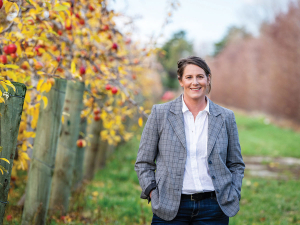
The National Party’s policies to make it easier to grow fresh vegetables, secure reliable water and energy and simplify farm planning are practical changes that will give growers the confidence to invest, according to Horticulture New Zealand (HortNZ).
Fonterra Co-operative Group chief financial officer Andrew Murray has resigned to take up a role outside the dairy giant.
A major move is about to get underway to improve the quality and viability of dairy beef and cattle in NZ.
Veterinarians say changes to the code of welfare for dairy cattle provides a positive foundation for improved cattle welfare across the country.
Today, 15 October, is the International Day of Rural Women, which recognises rural women’s contribution to farming, communities and the environment.




OPINION: It seems Canterbury processor Synlait is still in the doldrums.
OPINION: Get offside with New Zealand First leader Winston Peters at your own peril.




