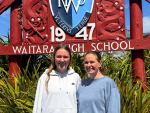
Pāmu Welcomes Paige Burston as First Foundation Scholar
Pāmu has welcomed Taranaki student Paige Burston as its newest First Foundation Scholar, supporting her journey towards a career in agriculture and animal science.




 increase font size
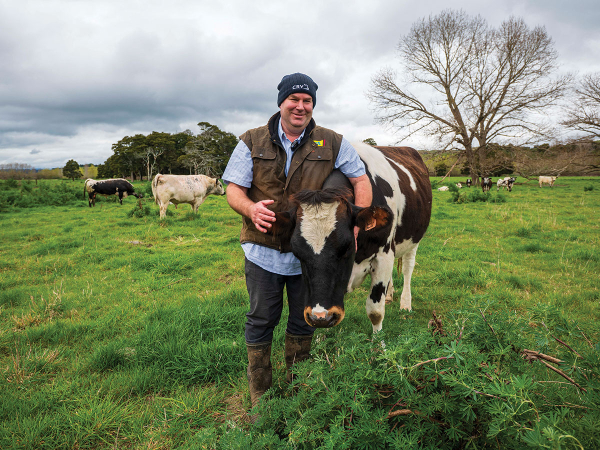 Andrew Hoggard
OPINION: Rural school buses is a topic I have had a great deal of correspondence on over the last couple of months.
Like many other people from a rural background, I caught a bus to school every morning and got one back every afternoon. The same bus initially dropped me at my primary school before it then headed onwards to where I would go to intermediate, and then it would go onto what would be my college, and the reverse route in the afternoon. So, by the time I got home there was no “staying cool after school” for me, apologies to all those not around their fifties who won’t get that joke.
But having the school bus was essential, with my parents busy in the milking shed, they didn’t time to do much more than to zip home from the milking shed, pick us up, then a quick run to the end of the road to the bus stop. The crucial thing here is they couldn’t drop us off on their way to work, they were already at work.
For rural families, access to services such as school buses is particularly important if we are to attract and retain workers on farms. New Zealand is a significant food-producing nation, and the reliable supply of food — both domestically and globally — depends on having skilled, committed people working in our primary industries. But we cannot attract those people without removing the barriers that make rural life impractical for families. One of the most immediate of those barriers is the school run.
In the most rural areas of the Manawatu, all of the secondary school choices are in Palmerston North unless you live a little closer to Feilding. But for areas like Rongotea, Opiki, and Ashurst, your college will be in Palmerston North, and there is a choice for families of where to go. Previously a bus would go to those villages, pick up all the kids heading into Palmerston North, and go to one spot where all the kids might transfer to a different bus to get to the right school. It was a situation that everyone was okay with.
Recent changes mean that buses will only pick up children in those locations if they are going to their Ministry of Education proscribed school.
The outcome is now that some parents are needing to arrange private transport to get kids to school, or they have had to pull them out of the existing college in which they were settled and drop them in a new one. From talking to parents, it sounds like busses that were once full, now have lots of empty seats on them, so I’m not sure any savings or efficiency has been made. I have written to the Minister on this relaying the concerns of local communities on this and putting forward a couple of suggestions.
In the sort of situation we see in the Manawatu, surely rural kids should be entitled to get on the bus going to into town regardless of what school they happen to attend within that town or city. But if the parents want to send their kids to a college which isn’t the closest then either it’s on them to pay for the additional transportation or arrange that themselves. Or within reason they get credited the value of that travel.
While I understand the policy is under review, the Minister in her reply did say that it was the primary role of parents to get their children to school. Given the food and fibre sector contributes around 80% of our good exports, my view is that we need to do everything we can to support those that power New Zealand’s economy – those that live and work in the regions and rural areas.
Andrew Hoggard is a Manawatu dairy farmer and Associate Minister for Agriculture.
Pāmu has welcomed Taranaki student Paige Burston as its newest First Foundation Scholar, supporting her journey towards a career in agriculture and animal science.
OPINION: Well, the silly season is upon us and all us politicians are running around shaking babies and kissing hands, or maybe the other way around.
It was billed as a chance for all the political parties to woo the rural vote, but question marks hang over just how effective this was.
There's been widespread support from the primary sector for the Government's announcement on changes to freshwater farm plans that come under the Natural Environment Bill, which is now set to replace the existing RMA.
Kaikōura families affected by July's severe storm have found a practical solution to a problem that's kept some children away from regular schooling for weeks: a washed-out section of Inland Kaikōura Road, which has stopped the local school bus from running its usual route.

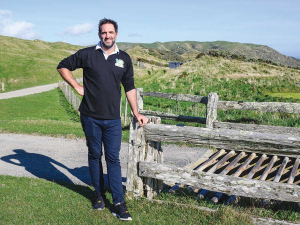
Returning to the family dairy farm after playing 20 years of professional rugby around the world is no easy task.

After delivering another record farmgate milk price to 100 supplying farms, independent milk processor Tatua is entering thee new financial year with a positive outlook.
Managing feed by sticking to a firm plan has helped the Southern Dairy Hub (SDH) demonstration farm survive an extremely wet winter, says the farm's acting general manager Greg Delaney.
A record farmgate milk price and strong global demand is laying the foundation for continued growth of organic dairy farming in New Zealand.
Mobile phone coverage and reliability are deteriorating in rural areas, and farming families are bearing the cost, according to a Federated Farmers survey.
HelloFresh New Zealand has launched a limited-edition Country Cookout Box of Southern-inspired meals, arriving as the 2026/27 rodeo season gets underway.

OPINION: It seems Canterbury processor Synlait is still in the doldrums.
OPINION: Get offside with New Zealand First leader Winston Peters at your own peril.




