
India FTA Removes 33% Tariff on NZ Sheepmeat
New Zealand’s red meat sector has welcomed the India-New Zealand Free Trade Agreement taking effect, which removes India’s 33% tariff on New Zealand sheepmeat.




 increase font size
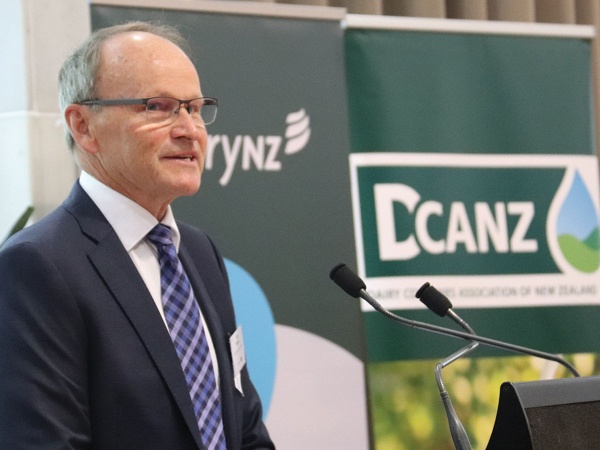 Guy Roper
OPINION: As negotiations advance on the India-New Zealand FTA, it’s important to remember the joint commitment made by Indian Prime Minister Narendra Modi and New Zealand Prime Minister Christopher Luxon at the beginning of this process in March: for a balanced, ambitious, comprehensive, and mutually beneficial agreement.
It's alignment with that commitment that the New Zealand dairy industry is seeking from the remaining negotiations.
India’s priority to protect and advance the development of its small farmers is acknowledged and understood. It’s a sensitivity that was known when the negotiations began, and it’s one that can be managed while pursuing an outcome that meets the commitment made by our respective Prime Ministers. In the rapidly growing Indian market, there is significant scope for New Zealand dairy products to play a complementary role to locally produced milk, thereby supporting mutually beneficial outcomes for both countries.
New Zealand largely exports dairy ingredient products for use by food manufacturers and food service providers in other countries. This is very different to fresh market supply in those countries. At the heart of our dairy ingredient trade is a value-chain partnership between New Zealand suppliers and importing customers who use those ingredients to make products for either domestic consumption or for export to third-country markets. This makes our ingredients an input into further economic activity that grows prosperity for both countries.
A recent trip to India by the Executive Director of the Dairy Companies Association of New Zealand highlighted the unmet demand from Indian customers for such products. That demand is driven by the nutritional needs of a large domestic population alongside ambitions to also grow Indian food exports.
She was told of the potential value the supply of New Zealand dairy ingredients would have in enabling continuity of food manufacturing activity during the ’lean period’ each year for India’s own milk supply. Continuity of ingredient supply is important for manufacturers to grow their brands, both domestically in India and in other markets, contributing as it does to local jobs, revenue and export growth. Strengthening Indian food manufacturing by creating conditions for the continuity of ingredient supply will improve rather than detract from opportunities for Indian farmers.
The executive director was also told of a desire to import New Zealand’s world-class mozzarella, cheddar, and cream products so Indian food service and hospitality businesses could meet growing demand in the out-of-home dining sector.
India has a vibrant dairy industry, but these are examples of products that are not traditionally part of its production mix and where complementary trade is possible. This would mirror the export of Indian dairy products to New Zealand, which is set to expand following announcements last week that another Indian dairy cooperative is set to join the existing export of a range of products to New Zealand and Australia.
There is also demand in India for specialist protein dairy ingredients pioneered by New Zealand, such as milk and whey protein concentrates. These products have a range of specialist uses, including in sports nutrition and medical nutrition applications to ensure patients receive the highly digestible proteins they need. During the visit, Indian medical professionals spoke of this need, and there was interest in New Zealand's high-quality infant formula.
There’s no doubt a trade agreement that includes commercially meaningful outcomes for dairy products will create benefits for both sides. And with New Zealand producing just 2.5% of global milk supply, our role in export markets will only ever be complementary to India’s local milk production anyway.
Suggestions India has never opened its trade to dairy products are not correct. In some of its other trade agreements, India has agreed to eliminate tariffs on a range of dairy-based products, including infant formula, dairy nutritional powders, ice cream, casein, caseinate, and whey protein concentrate.
With India having been able to liberalise trade in dairy products for other countries, what logical reason could there be to not do the same for unsubsidised, high-quality, New Zealand products? Especially when the unmet demand for our products is evident and the Prime Ministers have committed to a deal that is ambitious, balanced, and comprehensive.
Not achieving a commercially meaningful outcome for dairy in this agreement would be a lost opportunity for progress in the ambition to double the value of New Zealand exports, especially with dairy accounting for a third of New Zealand’s total goods trade. Conversely, a good outcome would serve the national interests of both countries into the future.
Guy Roper is chairman - Dairy Companies Association of New Zealand
New Zealand’s red meat sector has welcomed the India-New Zealand Free Trade Agreement taking effect, which removes India’s 33% tariff on New Zealand sheepmeat.

More than 95 per cent of New Zealand’s forestry and wood exports to India can now enter tariff free as the New Zealand-India Free Trade Agreement comes into force today.
Zespri has welcomed the entry into force of the India-New Zealand Free Trade Agreement today, calling it a significant milestone that will support long-term growth in one of the world’s largest and fastest-growing consumer markets.
A seasoned horticulturist has been appointed to deliver the Apple Action Plan, a key initiative of the India-New Zealand Free Trade Agreement.
National’s much-touted free trade deal with India featured in the Rural Issues Debate at Mystery Creek, Hamilton on Wednesday night.



Federated Farmers has welcomed new rural policies released by ACT, saying they align closely with its own election priorities.

Rural Contractors NZ says proposed changes to land transport rules for agricultural vehicles are a welcome response by the Government to out of date regulations which have seen members hit with huge fines.
Alliance is calling for final applications for its 2027 Graduate Programme, with applications closing on Sunday 25 October.
Decades piloting planes has ensured vet and farmer David Hayes is focused on safety. So, after a serious accident while welding on farm, he is sharing his experience so others can learn from it.
Canterbury milk processor, Synlait Milk has confirmed Leon Fung as its chief executive officer.
OPINION: Making it easier to collect rainwater and use it to grow crops and livestock is a no brainer.


OPINION: It seems Canterbury processor Synlait is still in the doldrums.
OPINION: Get offside with New Zealand First leader Winston Peters at your own peril.




