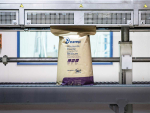
Milk Powder Prices Prop Up Farmgate Milk Price
Milk powder prices are keeping farmgate prices up, helping processors offset the dip in milk fat prices.




 increase font size
 ANZ agricultural economist Matt Dilly says there are both upside and downside risks to the farmgate milk price.
The new dairy season is kicking off with plenty of risks to the forecast farmgate price, both upside and downside, says ANZ agricultural economist Matt Dilly.
While Fonterra's forecast mid-point olf $9.75/kgMS signals a strong start, ANZ is forecasting $9.20/kgMS.
Dilly says they expect downward pressure on dairy prices and upward pressure on the NZ dollar as the season progresses.
Downside risks include a global economic downturn, which would decrease dairy demand.
Dilly says that if the Middle East conflict gets resolved, lower oil prices may put downward pressure on dairy and many other commodities as oil and gas exports return to normal.
"It would also likely push the NZ dollar higher, hurting farmgate returns demominated in NZ dollar."
There are also upside risks including an emerging El Nino, which usually leads to poor milk production in the Southern Hemisphere.
The ongoing Middle East conflict also has the potential to lead all commodity prices sharply higher, including dairy.
Dilly says dairy prices are often correlated with crude oil and other commodities.
"In addition, food producers globally are facing higher fertiliser prices, which in the end will be passed onto consumers."
Dilly believes the cost of production for many farms this season will be different.
"The conflict in the Middle East has lifted costs for diesel, fertiliser, and most other petrochemical-derived farm inputs.
"While some prices have drifted lower since peaking at the height of the conflict, diesel retail prices are currently up 70% in New Zealand relative to pre-conflict levels.
"In addition, interest rates are higher as financial markets adjust to the prospect of higher inflation and wider risks to the global economy."
DairyNZ recently updated their breakeven milk price for 2026/27, revising it up from $8.36/kgMS to $8.79.
Dilly says that while their forecast is higher at $9.20/kgMS, this will still be uncomfortably close to breakeven for some farms.
"There is a wide range of uncertainty around any milk price forecast at this point in the calendar, and a wide range of cost structures across farms, so a milk price below breakeven for some is very possible.
"At any rate, narrower margins will put cost management into focus this season."
Milk powder prices are keeping farmgate prices up, helping processors offset the dip in milk fat prices.
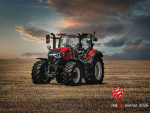
Case IH has unveiled its redesigned next generation Puma Series tractors, said to offer improvements in connectivity, operator comfort, fuel efficiency and drivability.
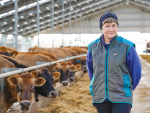
Cameron Reed lives between two worlds.
A milk glut around the world shows no sign of easing, putting downward pressure on farmgate milk prices for the next few months.
Farmers and growers are powering the economy with export revenue at record highs.

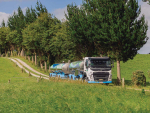

Farmer-owned fertiliser company, Ballance Agri Nutrients is welcoming National’s plan to negotiate security agreements with key supplier countries to protect New Zealand-bound products from export restrictions and greater supply chain certainty.

Carrfields has announced the appointment of Stu Hall to the newly created role of chief operating officer, Carrfields Ltd, reflecting the continued growth of their agribusinesses and the need to ensure the company has the leadership capacity and support in place as it pursues the emerging opportunities ahead.
New Zealand's role is not to compete with Indian growers, according to NZ Apples and Pears.
The potato industry is celebrating the success of two rising stars - James Blair, the 2026 Young Grower of the Year and runner-up and innovation award winner, Amber Davy.
Twenty-eight emerging leaders from across the horticulture sector spent two days last month learning valuable skills and connecting with industry experts.
There are five entrants in this year’s Young Horticulturist of the Year, competing in a series of technical, practical, business and leadership challenges.
OPINION: It seems Canterbury processor Synlait is still in the doldrums.
OPINION: Get offside with New Zealand First leader Winston Peters at your own peril.




