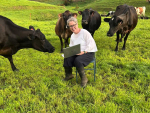
International Day of Rural Women: Two DairyNZ Farmers’ Stories
Today, 15 October, is the International Day of Rural Women, which recognises rural women’s contribution to farming, communities and the environment.




 increase font size
 Mark Storey, DairyNZ
Farmers should be cautiously optimistic as the 2026/27 season kicks off, says DairyNZ.
It follows the release of the industry body’s quarterly update, which forecasts a breakeven price of $8.79/kgMS.
DairyNZ also forecasts that farm working expenses will likely hit $6.19/kgMS, up from a forecast $5.84/kgMS this time last year, while operating profit will drop to $3.88/kgMS.
Mark Storey, DairyNZ’s head of economics, says this is largely due to the crisis in the Strait of Hormuz.
He says that the crisis has caused increases in prices for fuel, feed, and fertiliser, but also indirect price increases.
“For the first time in doing this forecast, we’ve presented our analysis as a package of scenarios,” Storey told Dairy News.
One scenario, the faster recovery scenario, would see the Strait reopen in July 2026 and export restrictions on energy and fertiliser lifted by December 2026.
The expected scenario sees the Strait reopen in August 2026, with restrictions lifted by May 2027.
Meanwhile, the prolonged disruption scenario has the Strait reopening in September and restrictions lifting by December 2027.
Storey says that scenario would also likely see interest rates rise as well.
“The prolonged disruption scenarios aren’t unrealistic,” he says.
“The consequence of that scenario is that it would take longer for things to come back to normal,” he adds. “In fact, some of these price increases may become sort of a new normal.”
“The longer the disruption takes matters because what might become a short… shock effectively isn’t only embedded in the prices this season but would come into the 2027/28 season as well.”
He says that, typically, after a shock – for example, the Russia-Ukraine conflict or the Covid-19 supply chain disruptions – prices don’t return to the baseline that existed prior to the shock.
“You’re getting this upward stickiness and that’s what concerns us with this current crisis… it takes a long time before these prices come back to their pre-shock baseline, if at all,” Storey says.
He says that, while it’s not always the case, the risks around those price shocks tend to concentrate around springtime.
“We are strongly recommending that farmers look at different scenarios in their cash flow forecasts, that they don’t plan for the best case, that they actually have some more pessimistic scenarios in place that they’ve identified and they be very selective with their nitrogen fertiliser use.”
He says farmers also need to plan for higher fertiliser and feed prices to persist into the 2027/28 season.
The good news, Storey says, is that farmers are coming into the 2026/27 season off the back of a good production year which had a good milk price, meaning they are in relatively good cash positions.
“It’s all about using that buffer they’ve built well in a season where the margins may become much more constrained.”
Today, 15 October, is the International Day of Rural Women, which recognises rural women’s contribution to farming, communities and the environment.
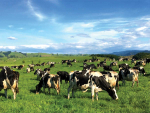
The first major update to the Dairy Cattle Code of Welfare in more than a decade has been released, marking what DairyNZ describes as an important step in ensuring animal welfare standards continue to evolve alongside scientific evidence and on-farm realities.
Have a plan in place for your cows and staff.
DairyNZ deputy chair Cameron Henderson has been re-appointed unopposed for another term.
OPINION: The stats speak for themselves.


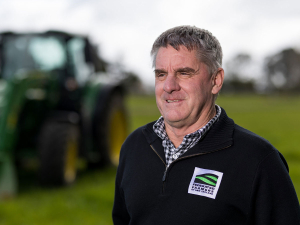
National’s pledge to introduce 19 new national standards shows the party is serious about getting Wellington out of farming, Federated Farmers says.
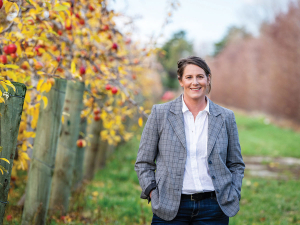
The National Party’s policies to make it easier to grow fresh vegetables, secure reliable water and energy and simplify farm planning are practical changes that will give growers the confidence to invest, according to Horticulture New Zealand (HortNZ).
Fonterra Co-operative Group chief financial officer Andrew Murray has resigned to take up a role outside the dairy giant.
A major move is about to get underway to improve the quality and viability of dairy beef and cattle in NZ.
Veterinarians say changes to the code of welfare for dairy cattle provides a positive foundation for improved cattle welfare across the country.
Today, 15 October, is the International Day of Rural Women, which recognises rural women’s contribution to farming, communities and the environment.




OPINION: It seems Canterbury processor Synlait is still in the doldrums.
OPINION: Get offside with New Zealand First leader Winston Peters at your own peril.




