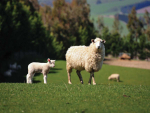
Early Weaning Lambs: What the Massey Trials Found
Farmers with high-quality feed available in late spring could consider weaning at least a proportion of their lamb crop early to benefit both lambs and ewes.




 increase font size
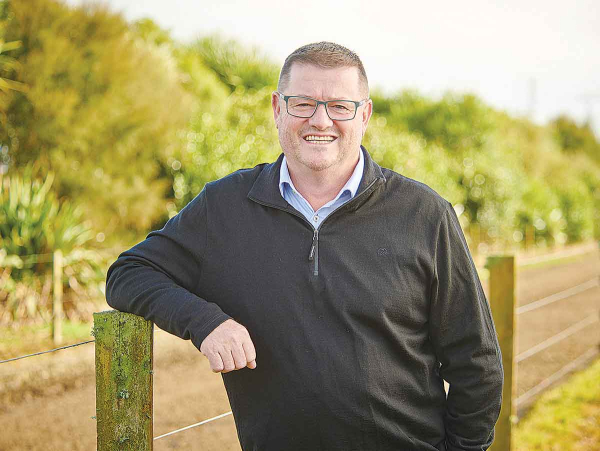 DairyNZ chief executive and Foot and Mouth Disease Council chair, Campbell Parker.
OPINION: It's no surprise that "world-class biosecurity" continues to dominate as the top priority for agribusiness leaders, holding the number one spot for the 16th consecutive year in KPMG's latest agribusiness report.
It's something that often comes up when I'm talking with colleagues across the sector and it's something I take seriously as chair of the Foot and Mouth Disease (FMD) Council.
For dairy farmers and processors, biosecurity is not an abstract idea to be debated, it's something they practice every day.
Whether that's cleaning gear, controlling farm access, keeping accurate NAIT records, and isolating new or returning stock.
While farmers play their role, they are right to expect the right systems and support from government, and sector bodies like DairyNZ.
They should be confident that if an outbreak occurs, the response is swift, coordinated, and practical on the ground.
At DairyNZ we're listening and are already taking steps.
Last year, we signed a Foot and Mouth Disease Operational Agreement which sets out how the dairy, sheep and beef, deer, and pork sectors, along with meat and dairy processors, and government, will prepare and respond in the unlikely event of a FMD outbreak.
Importantly, it means industry will have legally binding participation in decision-making, ensuring that farmers' interests, knowledge, and input is heard.
The agreement was signed at Fieldays last year, and we have made significant progress in that time.
The FMD Council, representing partners in the Agreement, has helped direct investment to the readiness gaps that matter most, including operational planning, workforce readiness, governance, compensation, vaccine access, equipment stocks, and communications.
Readiness is not just about technical plans. It also depends on leadership, clear decision-making, and strong working relationships between industry and government before a crisis.
Exercises running throughout this year are testing roles, escalation pathways, and governance so that decisions can be made quickly and with confidence.
Together, these activities are designed to strengthen confidence, expose gaps early, and make sure decisions can be made quickly to minimise the impact of the outbreak.
Workforce planning is critical in an FMD response. To reduce the impact on businesses, market access, and the wider economy, the system needs to move quickly. The Council's workforce planning project is focused on building a practical plan for a medium-scale response, so industry and government are clear on the roles, skills, and people needed to move quickly. It includes processes, contracting arrangements, secondment settings, and training and refresher planning so people can be deployed quickly and sustained over time.
Compensation settings are also currently under review, informed by the lessons we learnt from the Mycoplasma bovis response. That experience highlighted the importance of well-designed compensation to build farmer confidence in early reporting and cooperation, and to support farmers' cash flow while claims are processed. For an FMD response, the emphasis is on a simpler, faster, and more practical systems, with clear record-keeping requirements and timely financial support for farmers.
We are also making sure that we have enough equipment in the case of an outbreak. It's critical we have a well-maintained stock of laboratory diagnostic supplies for rapid testing. This means we can act fast with response teams having access to the right equipment and tools straight away.
Significant progress has been achieved in vaccine readiness this year. New Zealand already has access to an international FMD vaccine bank, and the FMD Council has identified a preferred supplier for the next five years, with industry involved in procurement negotiations.
This will help preserve preferential access to key antigens and reduces the time needed to make vaccines available, strengthening response options if an outbreak occurs.
Plans and systems matter, but they need to go hand in hand with strong leadership. Success in a crisis will ultimately depend on the ability to lead together, make decisions quickly, maintain trust, and return to full international trade as soon as possible.
Because when it comes to biosecurity, the cost of complacency is far greater than the effort of vigilance.
Campbell Parker is DairyNZ chief executive and Foot and Mouth Disease Council chair.
Farmers with high-quality feed available in late spring could consider weaning at least a proportion of their lamb crop early to benefit both lambs and ewes.
Today, 15 October, is the International Day of Rural Women, which recognises rural women’s contribution to farming, communities and the environment.
The first major update to the Dairy Cattle Code of Welfare in more than a decade has been released, marking what DairyNZ describes as an important step in ensuring animal welfare standards continue to evolve alongside scientific evidence and on-farm realities.
Have a plan in place for your cows and staff.
Bovine Viral Diarrhoea (BVD) is sometimes viewed as a dairy industry issue, but the reality is that the disease can have serious consequences for beef breeding herds as well.



Federated Farmers has welcomed new rural policies released by ACT, saying they align closely with its own election priorities.

Rural Contractors NZ says proposed changes to land transport rules for agricultural vehicles are a welcome response by the Government to out of date regulations which have seen members hit with huge fines.
Alliance is calling for final applications for its 2027 Graduate Programme, with applications closing on Sunday 25 October.
Decades piloting planes has ensured vet and farmer David Hayes is focused on safety. So, after a serious accident while welding on farm, he is sharing his experience so others can learn from it.
Canterbury milk processor, Synlait Milk has confirmed Leon Fung as its chief executive officer.
OPINION: Making it easier to collect rainwater and use it to grow crops and livestock is a no brainer.

OPINION: It seems Canterbury processor Synlait is still in the doldrums.
OPINION: Get offside with New Zealand First leader Winston Peters at your own peril.




