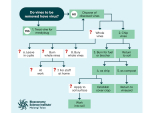
Removing Grapevines Safely: Disposal Options Compared
I am often asked by industry people, what are the options for removing a grapevine without producing a phytosanitary problem? Can it be done sustainably? What will it cost me?




 increase font size
 Nigel Little
A new company set up to cultivate and supply seaweed for animal methane mitigation studies believes it could be a game changer for the dairy industry.
Asparagopsis Technologies Limited (ASTEC) is supplying research-grade asparagopsis armata for animal methane mitigation studies, ensuring continued access to one of the world's largest land-based cultivation facilities dedicated to this emerging field of research.
Following CH4 Global's decision to focus on its Australian operations, former leaders from the business partnered with Ocean Beach Aquaculture Park to retain the specialised infrastructure and cultivation expertise developed in Bluff.
The new company will supply high-quality asparagopsis biomass to research institutions undertaking controlled and commercial-scale methane reduction trials internationally.
ASTEC executive director Nigel Little says the company supplies asparagopsis biomass to Australia, USA, Japan and Europe - especially Scandinavia, Netherlands and Ireland for research.
"These are the countries where a number of universities and research institutes have already been studying asparagopsis and where we believe there is demand for larger scale follow-on trials," Little told Rural News.
Asaparagopsis-based feed additives are being offered for sale in Australia and Europe today where they are already approved for sale as a natural feed supplement.
CH4 Global is the leading commercial supplier with their Methane Tamer product, which is formulated with 100% asparagopsis.
However, in New Zealand, all methane inhibitors regardless of type - from natural plants being used as herbal medicines like asparagopsis - through to synthetic chemicals, like novel ingredients, have been arbitrarily classified as Vet Medicines under the NZ legislation.
Little says only one product (using a synthetic chemical) has been submitted for approval to date, and no products have yet been approved.
He believes asparagopsis would be an excellent solution as a natural, safe and affordable inhibitor for high value dairy applications in New Zealand, such as organics, A2 and infant formula. It could be easily added - less than 50 grams per milking - to existing feed supplements given while milking.
“But a lot more investment will be required to prove the exact benefits of asparagopsis in NZ’s farming systems and to collect the data necessary to make a Vet Medicine application, and there doesn’t seem to be any interest in the research sector in NZ to do this work.”
Interest in asparagopsis continues to grow as research demonstrates its potential to significantly reduce enteric methane emissions in ruminants.
However, access to consistent, research-grade material has remained a constraint for many institutions, with much of the global supply directed into proprietary commercial programmes. ASTEC has been established to address this gap by providing researchers with reliable access to high-quality cultivated biomass for independent trials across diverse production systems, cattle breeds and feeding regimes.
The Ocean Beach Aquaculture Park is among the world’s largest land-based asparagopsis cultivation facilities, with existing production capacity of approximately 20,000 daily doses per month and significant scope for future expansion as international research demand grows. The facility leverages naturally cold Southern Ocean water and purpose-built bioreactor infrastructure, drawing on cultivation expertise developed over several years.
FutureFeed holds and licenses global IP for the use of asparagopsis seaweed as a livestock feed ingredient, shown to lower ruminant methane emissions by 80% or more.
FutureFeed chief executive Alex Baker says methane from cattle and sheep dominates New Zealand’s carbon footprint.
“The rising sustainability expectations and competition in global export markets mean this has to change. Accelerating seaweed supply is critical to bring about change, and we are excited to see Asparagopsis Technologies’ actions towards that goal.”
I am often asked by industry people, what are the options for removing a grapevine without producing a phytosanitary problem? Can it be done sustainably? What will it cost me?
Pāmu has released its FY26 Integrated Annual Report, reporting a Net Operating Profit of $113 million, more than double the $49 million recorded in FY25.
Environment Minister Nicola Grigg has announced details of a new rural plastics recycling scheme.
Almond hulls sourced from Australian orchards may have the potential to help New Zealand cows reduce emissions, boost milk yield and lower input costs.
DairyNZ deputy chair Cameron Henderson has been re-appointed unopposed for another term.


Federated Farmers has welcomed new rural policies released by ACT, saying they align closely with its own election priorities.

Rural Contractors NZ says proposed changes to land transport rules for agricultural vehicles are a welcome response by the Government to out of date regulations which have seen members hit with huge fines.
Alliance is calling for final applications for its 2027 Graduate Programme, with applications closing on Sunday 25 October.
Decades piloting planes has ensured vet and farmer David Hayes is focused on safety. So, after a serious accident while welding on farm, he is sharing his experience so others can learn from it.
Canterbury milk processor, Synlait Milk has confirmed Leon Fung as its chief executive officer.
OPINION: Making it easier to collect rainwater and use it to grow crops and livestock is a no brainer.





OPINION: The same mainstream media muppets that brought you Jacindamania in 2017 have been flat out pimping for the Opportunities…
OPINION: Your old mate reckons the atrocious way farmers in the UK are treated by their lords and masters in…




