Watermetrics highlights smarter water monitoring for farms
Water management is an integral component of sustainable farming practices, according to Watermetrics.




 increase font size
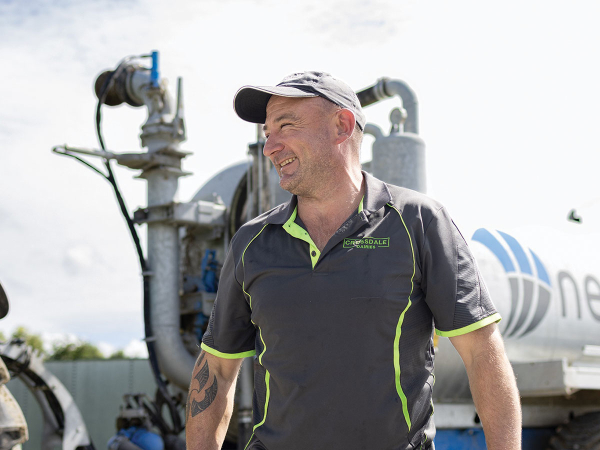 Pahiatua farmer Jamie Harris has put in place a simple effluent management system.
Tararua district farmer Jamie Harris milks around 400 cows using a split calving system on his farm, Crossdale Dairies.
Jamie’s farm at Pahiatua sits between two rivers, so the soil is good, silt loam, and hardly a stone gets overturned when he’s ploughing a field, but they do get quite a bit of rain and not so much sun as other parts of New Zealand. They are using a System 3, but the goal is to get back to no brought in feeds. To do that they need more crops.
Taking control of costs
Jamie’s way of thinking is that he can’t control the payout each year on his milksolids; that’s out of his hands. But what he can take control of are his costs. Rein in his costs, and he can get back onto firmer ground.
That is the plan, to make dairy farming more cost-effective by reducing his dependence on artificial fertiliser and boosting his crop production by spreading effluent.
Enough effluent to cover the farm
Jamie has put in place a simple effluent management system. With his system, he only needs to use one pump. He has a 40-a-side cowshed with a 1,100-square-metre feed pad. He dry scrapes into a bunker at the end of the feed pad once the cows come out.
That bunker is connected to a sump, which in turn is connected to a 500,000L holding tank via an effluent pump. Gravity can send effluent back to either the sump or bunker that Jamie uses to fill his Nevada slurry tanker. You’d think that 500,000 litres is a lot of storage, but not when it rains all the time. It was a headache, but now all of that effluent is being used efficiently and spread across the whole farm for nine or ten months of the year.
Unproductive land transformed
They had leased some land that had been very unproductive for a dry stock farm. The paddock wasn’t growing a lot of grass, so they decided to grow a winter crop and make better use of the land. For fertiliser, they thought the most costeffective choice would be effluent. That has been a very wise choice.
20% increase in crops
They have always grown maize and like to have about a tonne of maize per cow. Since using effluent, they have been able to grow four tonnes more per hectare than they did before. This is a fantastic result for them. A crop that gave marginal returns is now producing a good profit. The soil is great here but they don’t get the sun that other farms would enjoy. They have gone from producing 20 tonnes per hectare to 24 tonnes per hectare and they have done that two years in a row and that growth is down to the effluent.
Slurry Tanker Covers 100% of Farm
Before the farm had a slurry tanker, Jamie Harris says they could just cover 12 hectares with buried and fixed effluent lines and covered a further five- or six-hectares using drag hoses. Now they cover 100% of the farm, all 190 hectares. Using the slurry tanker to spread the effluent, even the furthest paddocks are growing at the same pace as the nearest paddocks to the cowshed.
 |
|---|
|
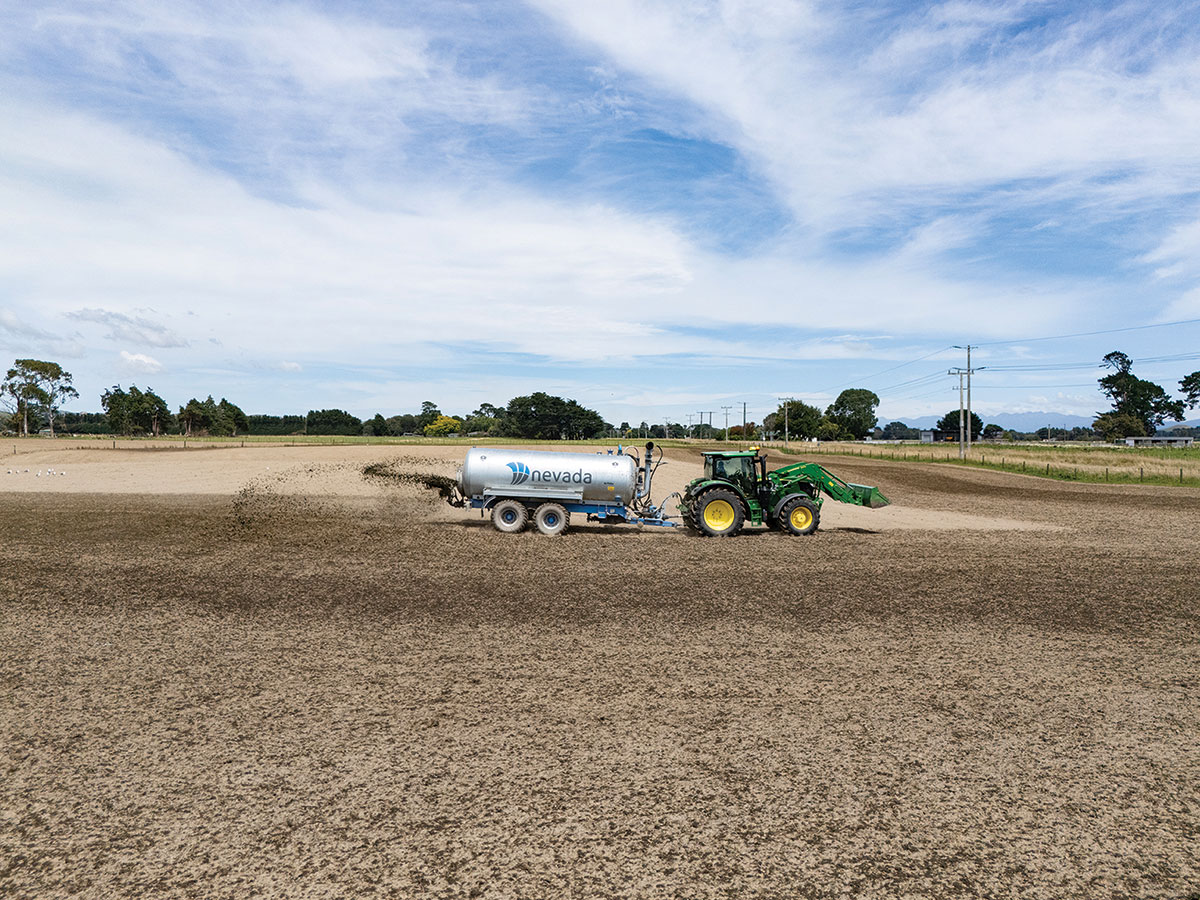
The slurry tanker helps spread the effluent to all 190ha. |
Jamie did his research and opted for the Nevada 14,750L slurry tanker with a lease-to-buy arrangement that he was very happy with. It has tandem axles and big flotation tyres that protect the ground from getting churned up. He can just sit in the cab and operate it in comfort from there, simple and clean. The auto-fill arm drops into the bunker, fills up the tanker in minutes, and he can be off spreading while his staff is washing down the cowshed. It is simple, efficient and saved him a considerable amount of money on artificial fertiliser costs.
For him the biggest benefit is that he has been able to get nutrients to all parts of the farm. His soil health has improved, and crop production has been his biggest surprise. He has saved thousands in artificial fertiliser costs, and his plan to become self-sufficient is well underway. His recommendation is, do your research, and it will quickly point you to a Nevada.
Water management is an integral component of sustainable farming practices, according to Watermetrics.
Two farmers and two farming companies were recently convicted and fined a total of $108,000 for environmental offending.
A Taupiri farming company has been convicted and fined $52,500 in the Hamilton District Court for the unlawful discharge of dairy effluent into the environment.
Founded in Germany as recently as 1977, today, the Fliegl Group employs more than 1100 workers, offering an expansive range of transport solutions, from their base in Bavaria.
Fonterra has invested in a new effluent pond mobile dosing service to support farmers to reduce emissions and make progress towards its on-farm emissions reductions target.



The potato industry is celebrating the success of two rising stars - James Blair, the 2026 Young Grower of the Year and runner-up and innovation award winner, Amber Davy.
Twenty-eight emerging leaders from across the horticulture sector spent two days last month learning valuable skills and connecting with industry experts.
There are five entrants in this year’s Young Horticulturist of the Year, competing in a series of technical, practical, business and leadership challenges.
A seasoned horticulturist has been appointed to deliver the Apple Action Plan, a key initiative of the India-New Zealand Free Trade Agreement.
New Zealand's citrus growers have been told to compete on the value built into their fruit rather than the volume they grow.
Hawke's Bay fruit growers are being reminded of the need to prepare for whatever the El Niño weather system may bring in the coming months.


OPINION: It seems Canterbury processor Synlait is still in the doldrums.
OPINION: Get offside with New Zealand First leader Winston Peters at your own peril.