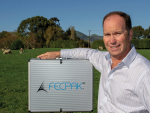
FECPAK Launches Faster Facial Eczema Testing for Farmers
Parasite testing platform FECPAK has launched a facial eczema testing solution that delivers faster results.




 increase font size
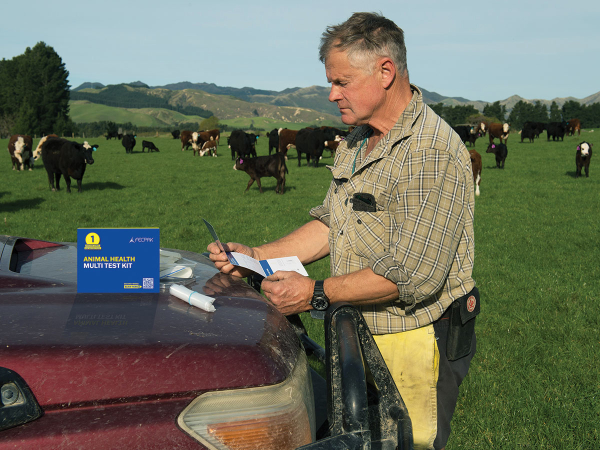 A farmer using FECPAK animal health test kits.
New Zealand innovation company Techion, best known for its animal diagnostics platform, FECPAK has signed an exclusive strategic partnership with Farmlands to bring independent animal health disease intelligence to its customers.
The collaboration is an important step in supporting farm sustainability.
Through the partnership, Farmlands customers will have easy access to FECPAK's on farm and in-store diagnostic testing range, allowing timely and informed decisions when managing disease.
The aim is also to slow the growing challenge of drench resistance while improving animal health, productivity and farm returns.
Techion founder and managing director, Greg Mirams says for more than 20 years, FECPAK has been trusted by farmers for faecal egg count (FEC) testing.
"With FECPAK extending its test menu using its world-leading new digital and AI-enabled technology, we're pleased to have a partner in Farmlands, who can work with us to give farmers access to faster, targeted, independent animal health information."
Farmers visiting their local Farmlands store will see FECPAK's new Animal Health Multi Test Kits in one and three sample options, allowing farmers to select multiple tests from a single sample collection.
The initials test available include Faecal Egg Count (FEC), Facial Eczema (pasture and faecal), Liver Fluke and Worm ID - a new, cutting-edge test that identifies paraite species within hours of sample processing.
The FECPAK Animal Health Multi Test Kits are easy to use, with customers able to choose the test or tests they want, then have the cost of testing added to their Farmlands account.
This makes accessing professional-grade animal health diagnostics easily available.
If they wish, farmers can share the test results with their Farmlands rep, veterinarian or animal health provider.
Among th expanded FECPAK test range, Worm ID is said to be a significant advance in parasite diagnostics.
Traditionally, identifying the worm species relied on larval culture, which can be a slow, costly and labour-intensive process that could be taking up to two weeks.
FECPAK Worm ID uses digital images and analytical software to analyse the worm genus in the sample.
Worm ID is currently available for sheep, with cattle to follow shortly.
Greg Mirams continued, "knowing exactly what worm species are present allows farmers and animal health professionals to make informed and targeted drench decisions, offering a precision approach that is essential if we want to slow the development of drench resistance and protect the effectiveness of the product".
Farmlands will also stock FECPAK FECRT (Faecal Egg Count Reduction Testing), a practical, independent tool that helps farmers confirm whether the drench they are using is still effective.
Delivered as a DIY on‑farm kit, this allows farmers to test the effectiveness of their drenches more accessible and cost‑effective, with regular testing helps identify resistance early, before any significant production losses.
Parasite testing platform FECPAK has launched a facial eczema testing solution that delivers faster results.
Two long-standing New Zealand agricultural businesses are coming together to strengthen innovation, local manufacturing capability, and access to essential farm inputs for farmers across the country.
Farmlands Co-operative has announced Rachel Aldikacti will be its new chief sales officer.
Rural retailer Farmlands has released it's latest round of half-year results, labeling it as evidence that its five-year strategy is delivering on financial performance and better value for members.
Rural retailer Farmlands has reported a return to profitability, something the co-operative says shows clear progress in the second year of its five-year strategy.


Dairy processors are ready to further boost New Zealand’s export earnings but want the incoming government to match their ambition with good policy.
Massey University is best placed to solve the “problems” facing the dairy industry, says vice chancellor, Pierre Venter.
Synlait's longest serving employee – a man who joined the Canterbury-based milk processor even before it began processing milk – is now its newest executive.
A dairy industry leader believes eradicating the common and costly disease, Bovine Viral Diarrhoea (BVD) is within reach.
A farmgate milk price of $10/kgMS this season is firming up as milk powder prices soar and the New Zealand dollar weakens.
Federated Farmers has welcomed new rural policies released by ACT, saying they align closely with its own election priorities.




OPINION: It seems Canterbury processor Synlait is still in the doldrums.
OPINION: Get offside with New Zealand First leader Winston Peters at your own peril.




