'No downsides to OAD milking'
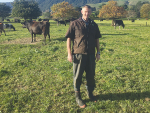
Matamata farmer Cam Houghton is an enthusiastic once a day milking advocate and is always looking to add to his farming knowledge, partly through attending SMASH events.




 increase font size
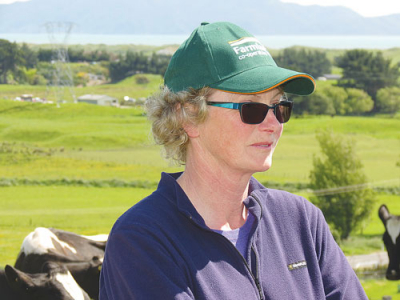 Christine Finnigan has been milking once a day for the past eight years.
The expertise of long-time OAD farmers is a standout at their discussion groups.
Reporter Peter Burke discovered this at a recent DairyNZ discussion group near Otaki.
One such farmer is Christine Finnigan, for eight years an OAD farmer in Manawatu. Her son also runs an OAD farm in the region.
She says in a year of wet weather OAD has made it easier to get through a difficult time.
“I have never struck wet like this before and we have been on the farm since 1995; it’s definitely been the worst. We’ve had a build-up of sand in tile drains and the water table has been really high.
Production has been down due to pasture damage caused by the constant wet,” she says.
But while this has been stressful, Finnigan says OAD is an advantage, lowering stress on the cows and on her. OAD milking has given her breathing space and time to think.
“Also with less walking we haven’t had any more lameness than normal despite the wet weather being hard on the cows: their teat condition with the mud and the races tend to pack up and they attract a lot of dirt. The difference this year is that you can’t see very far ahead. You have a general plan but you have to reassess the situation each day.”
Finnigan says she has had to adopt a very flexible farming system in the wet, even going as far as deciding day-to-day where to move the cows next, given the weather. The flexibility of OAD makes this possible.
Matamata farmer Cam Houghton is an enthusiastic once a day milking advocate and is always looking to add to his farming knowledge, partly through attending SMASH events.

Some dairy farmers in Southland are already moving to once a day (OAD) milking because they don’t have sufficient good pasture on which to graze their stock.
There was a large turnout on a recent DairyNZ webinar discussing once-a-day (OAD) milking, with participants joining in from Northland and Southland and all places in between.
Once-a-day (OAD) milking was up for discussion at a recent Small Milk and Supply Herds (SMASH) field day at Massey University.
A leading once a day (OAD) farmer says her farm is set to have a record year thanks to a combination of favourable circumstances – especially the weather.

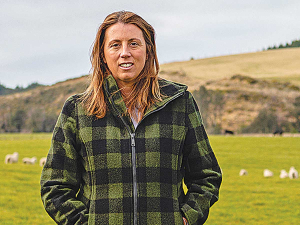
Red meat farmers are welcoming Labour’s plan to review the Emissions Trading Scheme and not to campaign on pricing agricultural emissions.
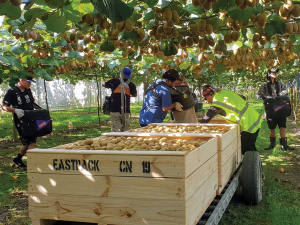
Where any worker in the kiwifruit industry is mistreated, we expect the authorities to take action.
Mid Canterbury Federated Farmers arable chair, Bevan Lill, said Beef + Lamb NZ data indicated that for the last six years, the average arable return on investment was about 0.8% while inflation ran about 4% - so the average arable farm was going backwards at about 3% a year.
Seed and grain companies share the concerns of arable farmers about the viability of their sector, says Seed and Grain New Zealand chief executive Dr Sarah Clark.
The New Zealand Institute of Forestry (NZIF) says unnecessary changes to New Zealand’s Emissions Trading Scheme (NZ ETS) will seriously erode investor confidence and result in significant reductions in forest planting rates.
For the first time in a quarter of a century, Federated Farmers has something positive to say about the Labour Party’s climate change policy leading into a general election.



OPINION: It seems Canterbury processor Synlait is still in the doldrums.
OPINION: Get offside with New Zealand First leader Winston Peters at your own peril.