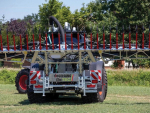
While round or large square bales have the dominant shares in the rural landscape, small square bales still play an important part, especially in the equine sector, but also where the large packages are not easily managed.
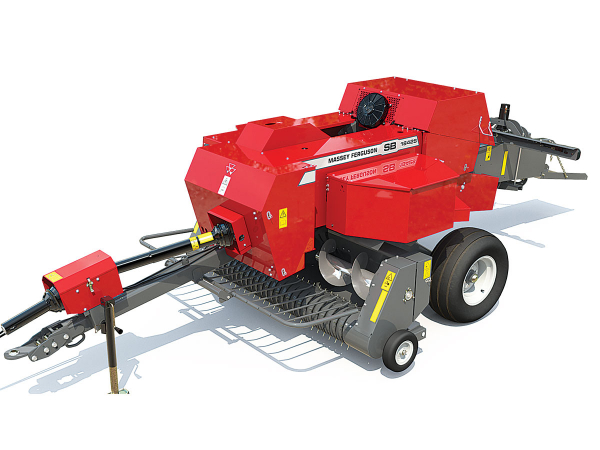
Massey Ferguson continues to service this demand, calling on many decades of experience with conventional small balers like the MF 124 or 128 that were extremely popular in the 1970’s. More recently, they have built on that experience and combined componentry, to create a simple machine that offers high capacity and bale density boosted by around 20%.
The MF 1800 Series in-line baler range, built at the AGGO Groups, Hesston factory in Kansas has recently been joined by the latest model, the MF 1842S, which is described as a premium, super heavyduty machine.
Configured to produce “standard”, 14” x 18” bales, the new model follows on from the MF 1840, which has earnt itself a reputation for performance, reliability and low costs of ownership, says the company.
The MF 1842S employs heavy duty, highcapacity components, brought over from the MF 185 large square baler and other high capacity models sold in North America.
Highlights of the new design include a 22% larger flywheel, with bigger bearing assemblies to deal with the extra weight and forces created. Working at 100rpm, the plunger stroke is also 24% longer, resulting in increased compression due to the extra torque generated by the larger diameter fly wheel. In addition, a new 34kg counterbalance, mounted on the connecting rod, evens out the peak loads imposed on the tractor and helps maintain a consistent plunger speed.
To complement the high-speed plunger, a new pick-up reel has been sourced from the MF 185 big square baler and is said to run about 37% faster than its predecessor. Additionally, a new pre-forming chamber, enlarged by 75% over existing designs, is said to increase the baler’s capability to produce square bales of a consistent size and density.