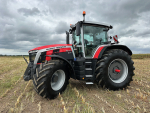
Massey Ferguson Unveils New Tractors at Fieldays
Long-term exhibitor at Fieldays, AGCO and its Massey Ferguson brand, have several new products on display.




 increase font size
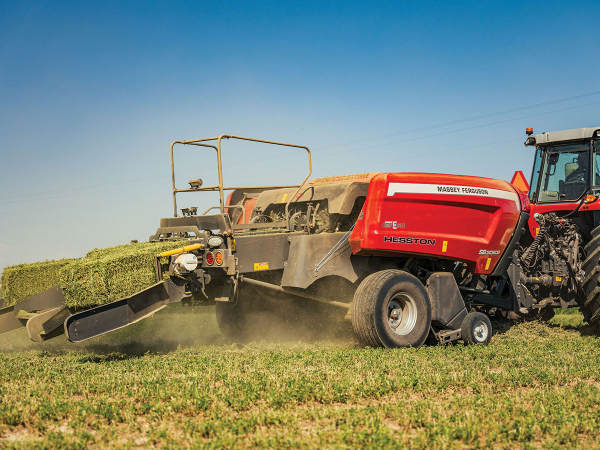 The baler’s unique layout enables it to produce two rows of bales during each pass.
Massey Ferguson has announced the release of the SB.1436DB small square baler to New Zealand, featuring a unique layout producing two rows of bales during each pass, doubling output over a single baler producing 14-by-18-inch bales.
“The SB.1436DB is built to meet the needs of modern hay producers who face increasing pressure from labour shortages, tight harvest windows and demanding quality standards,” said Josh Vroombout, senior marketing manager for Massey Ferguson Australia and New Zealand. “With its heavy-duty design and groundbreaking technology, this baler helps operators achieve better efficiency and superior results, reducing costs while increasing profitability.”
The 2.1 metre, tine to tine pickup width, conveys the crop into a single 14-by-36-inch chamber, before being separated by a splitting knife to create individual 14-by-18-inch bales. From there, the bales pass through a common density system that ensures consistent compression.
Independent knotter trips on either side of the baling chamber allow for precise bale lengths and consistency regardless of windrow variability by independently tying each bale to a preset length between 24 and 52 inches, even in variable windrow conditions. Completed bales are dropped through the bale chute into independent rows, simplifying handling and transport.
Operating at 90 strokes per minute with a 556mm stroke length, the MF SB.1436DB requires a 1000rpm PTO, a minimum of 120 PTO horsepower and a minimum tractor weight of 5000kg.
The baler features the SimplEbale system, an advanced electronic monitoring and control system that automates critical baling processes. The system ensures consistent bale density, weight and dimensions, allowing operators to focus on overall productivity. From the cab, operators can monitor flake thickness, flake count, bale length and bale weight in real time, ensuring maximum throughput, while also eliminating common operator errors that reduce productivity.
The SB.1436DB is engineered to keep operators in the field longer, featuring an increased twine capacity holds up to 20 balls, allowing up to 8000 bales before refilling, typically doubling the capacity of comparable balers.
The system includes automated knotter lubrication, reducing manual maintenance and ensuring consistent performance. Service-friendly access to critical components makes repairs and adjustments quick and easy, minimising downtime.
“The SB.1436DB is not just another baler; rather a testament to MF’s commitment to innovation and to the producers who depend on our equipment to succeed,” said Vroombout. “With this baler, we’re delivering the tools needed to achieve better productivity, better quality and better profitability.”
Visit www.masseyferguson.com
Long-term exhibitor at Fieldays, AGCO and its Massey Ferguson brand, have several new products on display.

Given that current diesel pricing is a bit like a ride on a fairground roller coaster, it should be no surprise to hear that manufacturers are looking for alternatives.
With the rapid rise of diesel prices since the start of the Iran conflict, farmers and growers are taking fuel consumption seriously as their bottom line is being eroded.
Since its official release to the New Zealand market in July 2025, the Massey Ferguson 5M Series has steadily solidified its position.
Massey Ferguson has announced the introduction of the MF 5M Series, offered over six horsepower steps from 95 maximum hp, to a new 145hp model, with 14 unique variants depending on the cab and transmission type.

Mobile phone coverage and reliability are deteriorating in rural areas, and farming families are bearing the cost, according to a Federated Farmers survey.
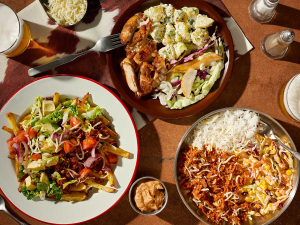
HelloFresh New Zealand has launched a limited-edition Country Cookout Box of Southern-inspired meals, arriving as the 2026/27 rodeo season gets underway.
Beef + Lamb New Zealand Incorporated (BLNZ Inc) is marking 40 years of promoting red meat to New Zealand consumers, citing its taste, family meals and nutritional benefits.
Pāmu has welcomed Taranaki student Paige Burston as its newest First Foundation Scholar, supporting her journey towards a career in agriculture and animal science.
Farmer-owned fertiliser company, Ballance Agri Nutrients is welcoming National’s plan to negotiate security agreements with key supplier countries to protect New Zealand-bound products from export restrictions and greater supply chain certainty.
Carrfields has announced the appointment of Stu Hall to the newly created role of chief operating officer, Carrfields Ltd, reflecting the continued growth of their agribusinesses and the need to ensure the company has the leadership capacity and support in place as it pursues the emerging opportunities ahead.
OPINION: It seems Canterbury processor Synlait is still in the doldrums.
OPINION: Get offside with New Zealand First leader Winston Peters at your own peril.