
El Niño Warning: NZ Farmers Urged to Plan Fert Early
Plan ahead and be patient. That’s the message to farmers and horticulturalists from the chairman of the NZ Agricultural Aviation Association, Kent Weir.




 increase font size
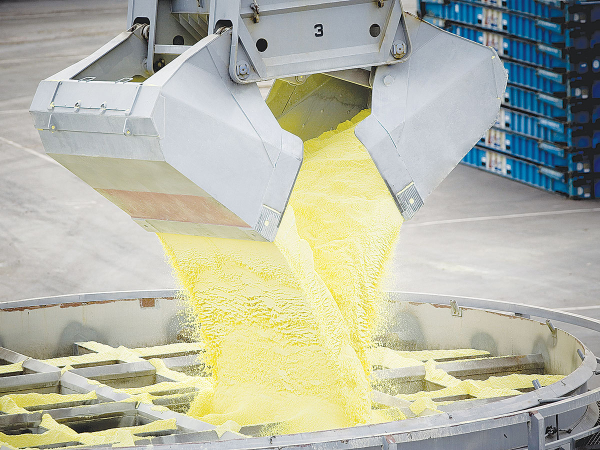
QU Dongyu, director-general of the Food and Agriculture Organization of the United Nations (FAO), has issued a warning saying that global fertiliser scarcity caused by disruptions in the Strait of Hormuz will lead to lower yields and tightening food supplies into 2027.
Ministerial Meeting of the MED9++ Countries on “Supporting Food Security and Access to Fertilizers” in Rome, Qu said the current disruptions are affecting far more than global energy markets.
“We meet at a moment of profound strain,” he told ministers and senior representatives from more than 40 countries and organizations. “This is not only a geopolitical crisis, but also a disruption at the core of the global agrifood system.”
Qu highlighted the strategic importance of the Strait of Hormuz, which under normal conditions carries substantial shares of globally traded oil, liquefied natural gas, sulfur and fertilizers.
Disruptions to maritime flows through the corridor, he warned, are already tightening fertilizer markets and increasing energy costs, with potentially severe consequences for agricultural production and food prices.
According to Qu, agriculture remains highly vulnerable because fertilizer application is tied to strict crop calendars that cannot easily be delayed.
“Agriculture operates within a crop calendar that cannot be postponed,” he said. “Fertilizers must be applied at specific moments in the crop cycle. If they do not arrive on time, yields are reduced, regardless of what happens later.”
Qu added that a delay of even a few weeks forces farmers to reduce fertilizer use or abandon application altogether.
He explained that the impacts seen today are not limited to current prices, but are transmitted forward into the next harvests, which would tighten food supplies into the last half of 2026 and 2027.
Qu noted that the impacts are particularly concerning because they coincide with critical planting and fertilization periods across major producing regions.
Import-dependent countries in Africa, Asia and parts of the Middle East are among the most exposed, especially those already facing acute food insecurity, economic fragility or climate-related shocks.
Qu emphasized that no country is insulated from the crisis and outlined three priority areas for coordinated action.
Qu stressed the importance of keeping supply chains functioning by facilitating alternative trade routes, avoiding export restrictions, supporting farmers’ access to agricultural inputs and protecting humanitarian supply chains.
Qu called for strengthened regional coordination, diversification of fertilizer and energy sources, and targeted support for the most vulnerable economies.
Qu underscored the need for structural transformation to reduce dependence on concentrated supply routes and fossil fuel-based inputs, including through investments in sustainable agriculture, renewable energy, innovative fertilizer solutions and stronger storage and logistics systems.
Qu welcomed the MED9++ initiative to strengthen cooperation on fertilizer access and food security, noting that the platform aligns with FAO’s Strategic Framework and its vision of the Four Betters: Better Production, Better Nutrition, a Better Environment and a Better Life, leaving no one behind.
He reaffirmed FAO’s commitment to continue providing technical analysis, policy support and convening capacity to help countries address the evolving challenges facing global agrifood systems.
The Ministerial Meeting of the MED9++ Countries on “Supporting Food Security and Access to Fertilizers” brought together ministers and senior representatives from over 40 Mediterranean and partner countries and organizations to discuss the implications of disruptions to global energy, fertilizer and food supply chains, and to strengthen regional cooperation on food security and agrifood system resilience.
Plan ahead and be patient. That’s the message to farmers and horticulturalists from the chairman of the NZ Agricultural Aviation Association, Kent Weir.
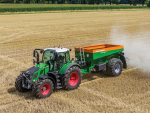
Amazone's ZG-TX combi spreader has been updated with several new features, centred around improved accuracy and easier operation.
OPINION: After hogging the media limelight for telling a NZ Chinese MP to "go back home", Winston Peters has decided to focus on a domestic issue - oil and gas drilling.
When it comes to annual rebates, it's been a long time between drinks for Ravensdown shareholders.
Ravensdown has reported a net profit before tax and rebate of $50.1 million for the year ended 31 May 2026.


Federated Farmers has welcomed new rural policies released by ACT, saying they align closely with its own election priorities.

Rural Contractors NZ says proposed changes to land transport rules for agricultural vehicles are a welcome response by the Government to out of date regulations which have seen members hit with huge fines.
Alliance is calling for final applications for its 2027 Graduate Programme, with applications closing on Sunday 25 October.
Decades piloting planes has ensured vet and farmer David Hayes is focused on safety. So, after a serious accident while welding on farm, he is sharing his experience so others can learn from it.
Canterbury milk processor, Synlait Milk has confirmed Leon Fung as its chief executive officer.
OPINION: Making it easier to collect rainwater and use it to grow crops and livestock is a no brainer.





OPINION: The same mainstream media muppets that brought you Jacindamania in 2017 have been flat out pimping for the Opportunities…
OPINION: Your old mate reckons the atrocious way farmers in the UK are treated by their lords and masters in…




