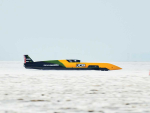
JCB Hydromax Sets 406mph Hydrogen Land Speed Record
JCB has set a new world land speed record of 406.320mph with its hydrogen-powered Hydromax.




 increase font size
 JCB has just released impressive financial results for the 2017 year.
Despite Brexit being foreshadowed as a handbrake on Britain’s exports to Europe, it seems the future holds no fear for construction and farm machinery maker JCB, which has just released impressive year 2017 financial results.
The company produced 75,693 machines, up from 66,011 in 2016, resulting in a sales turnover increase of about 28% to GBP 3.35 billion (NZ$ 7.37b), up from GBP 2.62b.
Earnings rose by 19% to GBP 341 million (NZ$ 685m), and the company notes that since 1975 the average return on investment has always exceeded 30%.
The global market is said to have risen by 21% in 2017, but JCB was ahead of trend with growth up 28%, much of it derived from big gains in its Loadall telehandler product range.
It has 22 factories worldwide, including 11 in the UK, and about 15,000 employees (7600 in UK).
Production figures for the 2018 year are trending upward: daily production is 500 machines. This continued growth is said to be the stimulus for building a GBP 50m factory at the Uttoxeter base for cab production, scheduled for opening in 2019.
JCB has set a new world land speed record of 406.320mph with its hydrogen-powered Hydromax.
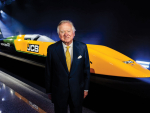
While its best known as a manufacturer of construction and agricultural machinery, JCB holds a significant place in the record books, with a surprising mix of land speed records, including the fastest diesel car in 2006, the fastest backhoe loader in 2014 and the fastest tractor in 2019.
British industrial and agricultural machinery manufacturer JCB has won a £152 million (NZ$348m) military contract with the US Marine Corps as part of the Tractor, Rubber Tired, Articulated-Steering Multi-Purpose (TRAM) vehicle programme.
There can't be many people who on seeing the distinctive bright yellow and red colour scheme, don’t think ‘JCB’. Indeed, JCB has largely become the generic name for all brands of excavators, not unlike the term Fridge or Hoover.
JCB has released details of its new Fastrac 6000 Series, filling the gap between the current 4000 Series (160- 240 horsepower) and the 8000 Series (330+ horsepower).



Federated Farmers has welcomed new rural policies released by ACT, saying they align closely with its own election priorities.

Rural Contractors NZ says proposed changes to land transport rules for agricultural vehicles are a welcome response by the Government to out of date regulations which have seen members hit with huge fines.
Alliance is calling for final applications for its 2027 Graduate Programme, with applications closing on Sunday 25 October.
Decades piloting planes has ensured vet and farmer David Hayes is focused on safety. So, after a serious accident while welding on farm, he is sharing his experience so others can learn from it.
Canterbury milk processor, Synlait Milk has confirmed Leon Fung as its chief executive officer.
OPINION: Making it easier to collect rainwater and use it to grow crops and livestock is a no brainer.




OPINION: It seems Canterbury processor Synlait is still in the doldrums.
OPINION: Get offside with New Zealand First leader Winston Peters at your own peril.




