Fieldays hold out the begging bowl
OPINION: When someone says “we don’t want a handout, we need a hand up” it usually means they have both palms out and they want your money.




 increase font size

A recently released coroner's report into the death of a South Canterbury farmworker in 2019 raised the question of the suitability of safety helmets currently being used on farms.
Coroner Heather MacKenzie recommended that the Police, Worksafe and Waka Kotahi (NZTA) run a joint safety campaign regarding the appropriate use of AgHat safety helmets and their limitations. This came about as the farmworker was riding a two-wheeled farm bike on the open road, he fell onto the road and subsequently died. At the time, he was wearing an AgHat 2, widely used on farms, designed for all terrain vehicles (ATVs) rather than a motorycle being used on the open road.
Interestingly, AgHats meet the twin safety standards of AS/NZ 1801:1997-Type 1 and NZ 8600:2002 (ATV). However, looking at several websites that sell this product, there is no mention of the fact that these ratings are only rated for use of speeds at up to 30km/h. Indeed, in some listings the features of multi-fit, weight and colour are given more importance than safety ratings.
Given that these safety standards feature the dates of 1997 and 2002, one wonders if they are fit for purpose given the huge changes in ATVs over the last two decades, particularly in performance, which in most cases is far in excess of 30km/h. Recently, this writer tested a machine, being sold as dual-purpose for farm and recreational use, where 100km/h+ could be brought up very quickly on the digital speedo.
Of course we need to commend those riders who are choosing to wear safety headgear as statistics show that doing so has the greatest potential to prevent serious injury or fatalities. But we need to see much more in-depth information at the point-of-sale to allow purchasers to choose the right headgear for their work environment.
On a broader note, UK research suggests that two thirds of ATV and UTV riders till don't wear a helmet, citing bizarre reasons such as they feel foolish wearing a helmet on their own farm, or the fact they don't ride fast enough to warrant wearing one.
The report by the University of Aberdeen found that 63.5% of riders owned a helmet, but only 29.9% reported wearing that helmet frequently or always. The research identified several underlying factors, many around personal perceptions, that stopped riders wearing helmets, including: ‘a helmet isn’t necessary for short rides; I am an experienced rider so don’t need a helmet; I don’t race or do stunts so a helmet isn’t necessary; as an adult, I look foolish wearing a helmet; none of my mates wear one; they are too hot; and, they are uncomfortable’.
Other comments included: ‘when I’m in a rush, I forget to wear my helmet; I can never find it when I need to use it; and, when I’m tired, I’m less likely to wear a helmet’.
The statistically proven fact is, wearing a helmet has the biggest potential to prevent serious injuries or fatalities compared to other safety devices, where benefits are not backed up by independent testing. Choose a helmet that fits well, is comfortable and doesn’t impair you from operating the vehicle safely, but most importantly – wear it!
OPINION: When someone says “we don’t want a handout, we need a hand up” it usually means they have both palms out and they want your money.
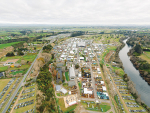
OPINION: With the 2024 edition of National Fieldays behind us, it would be fair to say that although the mood was positive – a plus, given the negative sentiment across the rural sector – you must wonder if this showcase format’s days are numbered.
OPINION: As 2022 is consigned to the history books and we trudge into 2023, it seems like a good time to look back at the decision by the NZ National Fieldays Society to move its annual event from June to December last year.
OPINION: As agriculture continues its march into the digital age - where farmers, paddocks, machines and inputs are all interconnected - one must wonder whether an individual or organisation could wreak havoc if they broke into operating systems.
Since Covid-19 reared its ugly head in early 2020, machinery manufacturers have faced and continued to face challenges and disruptions.


Federated Farmers has welcomed new rural policies released by ACT, saying they align closely with its own election priorities.

Rural Contractors NZ says proposed changes to land transport rules for agricultural vehicles are a welcome response by the Government to out of date regulations which have seen members hit with huge fines.
Alliance is calling for final applications for its 2027 Graduate Programme, with applications closing on Sunday 25 October.
Decades piloting planes has ensured vet and farmer David Hayes is focused on safety. So, after a serious accident while welding on farm, he is sharing his experience so others can learn from it.
Canterbury milk processor, Synlait Milk has confirmed Leon Fung as its chief executive officer.
OPINION: Making it easier to collect rainwater and use it to grow crops and livestock is a no brainer.


OPINION: It seems Canterbury processor Synlait is still in the doldrums.
OPINION: Get offside with New Zealand First leader Winston Peters at your own peril.




