DairyBase and MINDA Link Up to Cut Farmer Paperwork
Farmers can spend less time on paperwork, thanks to a new data sharing agreement between DairyNZ’s DairyBase and LIC’s MINDA software.




 increase font size
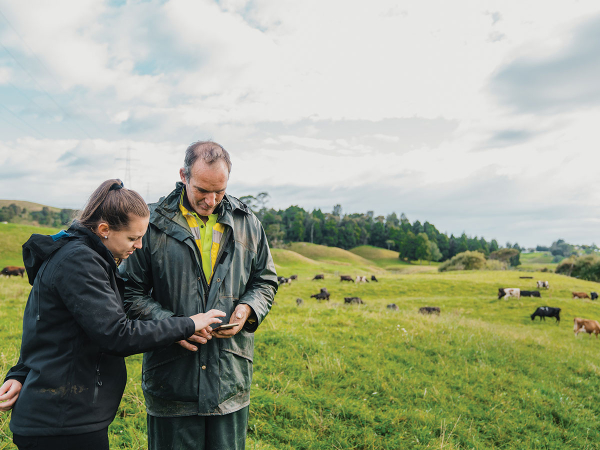 MINDA currently integrates with 16 agritech companies, with more currently underway.
Wearable collars, ear tags and boluses are becoming increasingly common on Kiwi dairy farms.
From activity monitoring to health alerts, technology is giving farmers earlier signals about what’s happening in their herd.
Wearables provide valuable insights for farmers, and even more value can be unlocked when that information links back to the rest of a farm’s animal records.
That’s where herd management systems like MINDA come in.
Used by around 90% of New Zealand dairy farmers, MINDA acts as a central hub for herd information. Each year, more than 40 million animal events are recorded in MINDA, from calvings and matings through to herd testing and treatments.
LIC’s head of farm software, Blair Smith, says the goal is making sure the growing volume of farm data works together in a way that’s useful for farmers.
“Wearables are generating more data than ever before. The important thing is making sure that information links back to the farmer’s herd records so they can use it to make decisions.”
Smith says integrations allow wearable alerts to flow directly into MINDA and appear in tools such as MINDA Groups to help farmers manage and sort animals.
“Heat alerts help identify animals that may be ready for mating, while health alerts can flag animals that may need attention. From there, farmers can act on that information by drafting animals to be mated or seen by a vet and recording those events directly in MINDA.”
Integrations also make it easier to set up new on-farm technology. Animal identification information already stored in MINDA can be shared with other systems, helping wearable providers identify animals and link alerts back to the right cow.
As well as wearables, ear tags and boluses, MINDA also integrates with in shed tech providers, farm management systems and milk processors, giving farmers more insight than ever before.
MINDA currently integrates with 16 agritech companies, with more currently underway. More than half of the herds using MINDA are already using at least one of those integrations.
Smith says it’s important to realise that control of what information is shared always sits with the farmer.
“Nothing gets shared unless the farmer says yes. They decide which companies their data goes to.”
“MINDA has always been about helping farmers improve their herd. Today that means supporting farmers to confidently adopt and apply new technology and helping them turn the resulting data into better on-farm decisions and ultimately better cows.”
Farmers can spend less time on paperwork, thanks to a new data sharing agreement between DairyNZ’s DairyBase and LIC’s MINDA software.
Two agritech companies have joined forces to help eliminate manual entry and save farmer time.
Halter and LIC have partnered to allow data flow between the Halter app and MINDA, saving farmers time.
This calving season will be a little different for dairy farmer Jo Forsyth thanks to a recent MINDA LIVE training session that marked somewhat of a ‘turning point’ in her confidence and utilisation of the technology.
LIC says it has made more than 60 improvements to its MINDA LIVE and MINDA App following farmer feedback.


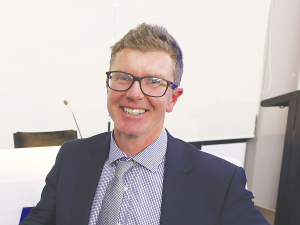
LIC shareholders have elected a new North Island representative to the co-operative's Board, along with five representatives to its Shareholder Reference Group (SRG), following the company's Annual Meeting held in Invercargill.
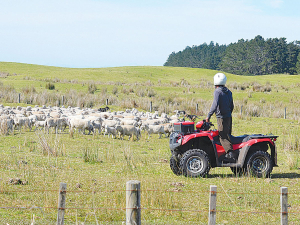
Farmers across parts of Southland and South Otago are continuing to deal with difficult conditions after a prolonged run of wet weather, with pressure building around feed supply, stock management, pasture damage, farm infrastructure and everyday workloads.
Federated Farmers says it welcomes Labour's commitment to reviewing the Sharemilking Agreements Act, calling on other major parties to do the same.
For Canterbury dairy farmers Sian Meijer and Rick Wobben, wearable technology has become one of their most valuable on-farm tools - helping manage 1850 cows across an expansive, high-performing dairy operation while improving efficiency, mating outcomes and day-to-day decision making.
Fonterra has unveiled its annual results for the 2026 financial year, posting $27 billion in revenue and close to $20 billion returned to New Zealand farmer owners and unit holders.
The first major update to the Dairy Cattle Code of Welfare in more than a decade has been released, marking what DairyNZ describes as an important step in ensuring animal welfare standards continue to evolve alongside scientific evidence and on-farm realities.
OPINION: It seems Canterbury processor Synlait is still in the doldrums.
OPINION: Get offside with New Zealand First leader Winston Peters at your own peril.