Federated Farmers' new dairy chair says he’s uncertain why OSPRI is only raising the TB Slaughter Levy for dairy cattle.
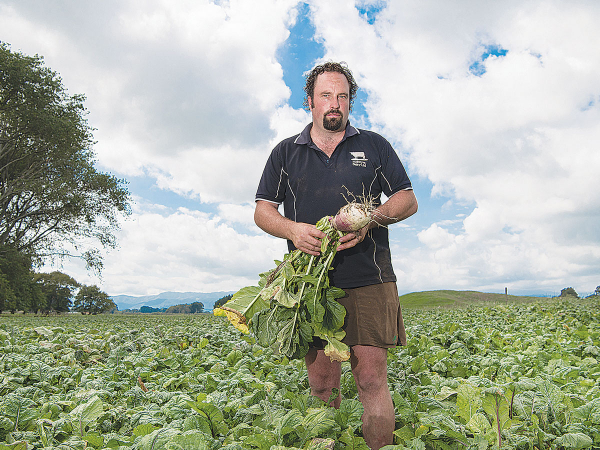
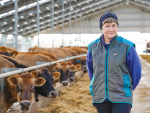
Richard McIntyre, who took over the dairy chair role in July, says OSPRI has been unclear as to why levy changes are only being targeted at dairy farmers.
“Dairy farmers already pay a significant levy via their milk production, which is collected on OSPRI’s behalf by DairyNZ,” he says.
McIntyre told Dairy News that he doesn’t believe the change has been adequately justified to dairy farmers, particularly in light of the fact that there has been no change in the levy for beef cattle.
From 1 October, the dairy slaughter levy for dairy cattle will change from $9.00 per head to $10.50 per head. Meanwhile, the cattle slaughter levy for beef animals will remain unchanged at $5.50 per head. Also remaining the same, at $11.50, is the live export levy.
McIntyre says that for a dairy farmer with a herd of 450 cows the increase could equate to as much as $135 per year.
He says the reasoning for the increase doesn’t seem to be immediately clear.
“If there was a calculation that was made, theoretically, based on inputs from this year, you’d wind up coming up with a number that wouldn’t be a round number,” McIntyre says.
He says it is strange that the levy for dairy cattle would go up by a round number but the beef cattle fee has remained the same.
He says dairy farmers are happy to pay the levy, so long as it makes sense.
“We’re all happy to pay our fair share, it’s not about trying to get away from that, but we want to understand that it is our fair share.”
OSPRI disease management general manager Danny Templeman says the change was part of an annual review under the TBfree Funders Agreement, designed to ensure that the overall funding of the TBfree programme agrees with agreed funding levels.
He says levies are adjusted to reflect the latest industry farm gate values and slaughter volumes for both dairy and beef stock.
“This year there is a need for a change in the levy rate for dairy stock, which is being driven by market conditions. The reason for the change in dairy cattle slaughter levies is the reduced slaughter volumes we’re seeing, combined with farm gate price increases for dairy this year.”