
Leon Fung confirmed as Synlait CEO
Canterbury milk processor, Synlait Milk has confirmed Leon Fung as its chief executive officer.




 increase font size
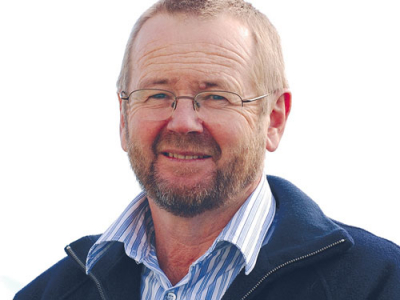 Synlait’s chairman Graeme Milne.
Synlait Milk’s annual meeting of shareholders yesterday highlighted that their record 2016 profit of $34.4 million showed their value added strategy is successful.
Synlait’s chairman Graeme Milne outlined how the company had grown rapidly and profitably since listing in July 2013.
“When we listed on NZX in 2013, we commenced a $250 million capital expansion programme to support our value added focus and growth strategy. The financial year ending 31 July (FY16) demonstrated the full benefit of this approach and delivered our strongest performance to date,” says Milne.
He said shareholder value had been created through the execution of Synlait’s strategy, resulting in a total shareholder return (TSR) of 55% since the initial public offering in 2013.
“We remain a growth company and will continue investing our profit into the business to pursue profitable growth opportunities.”
Synlait’s new growth phase was launched in September alongside a pro-rata rights offer, which was completed in October and raised $97.6 million in new equity.
It also facilitated Synlait’s dual listing on the Australian Securities Exchange (ASX) as a foreign-exempt issuer, commencing on 25 November 2016.
“Our new growth phase will see us invest approximately $300 million over three years to add more infant formula, consumer packaging and spray drying capacity, as well as value added cream capability and infrastructure requirements. The equity we raised in October will be used to pay existing debt and contribute towards this new capital expansion programme,” says Milne.
A key infrastructure requirement was to invest in an initial second site, which Milne expected to be identified before the end of the 2017 financial year.
John Penno, managing director and chief executive, discussed Synlait’s record profit in 2016 being the result of an almost fourfold year on year increase in canned infant formula volumes from 4,300 metric tonnes (MT) to 16,000 MT.
“Our ingredients business performed well in FY16, but our canned infant formula business played a major role and we expect it will continue to do so as our most established value added part of our company,” said Mr Penno.
“We expect the proposed Chinese regulations will likely moderate canned infant formula growth in FY17, and therefore we expect only modest growth in our FY17 earnings over FY16.”
Mr Penno outlined to shareholders that Synlait will continue investing in growth opportunities for new and existing products, customer development and internal systems and processes.
“Investment in customer and market development will also support volume growth to reduce reliance upon the China market. Combined with a focus on developing value added cream and adult nutrition opportunities for the business, we’re also focusing on making more from milk beyond infant formula.”
Synlait announced earlier in the day an increase in forecast milk price from $5/kgMS to $6/kgMS.
“We’ve responded to shift of prices in the global dairy market. Our increased forecast milk price will be well received by our 200 Canterbury milk suppliers, who will now have a higher cash flow than they had planned for at this stage in the season,” says Penno.
A change in Synlait’s Board of Directors was announced with the appointment of Min Ben as the fourth Bright Dairy-appointed director. Ben joined Bright Dairy in 2001 and is currently their PR Director. Ben replaces Li Ke, who resigned from Bright Dairy to pursue other interests in September 2016.
Canterbury milk processor, Synlait Milk has confirmed Leon Fung as its chief executive officer.
Waikato milk processor Tatua has again declared a record milk payout to farmer shareholders, leaving other processors in the dust.
Synlait has swung to second-half profit as operations stabilise, but the dairy processor still posted a $75.4m annual loss.
OPINION: It seems Canterbury processor Synlait is still in the doldrums.
Speculation of a possible joint move by Fonterra and a2 Milk to buy Synlait raises a much bigger strategic question, says agribusiness expert Dr Nic Lees.


Federated Farmers has welcomed new rural policies released by ACT, saying they align closely with its own election priorities.

Rural Contractors NZ says proposed changes to land transport rules for agricultural vehicles are a welcome response by the Government to out of date regulations which have seen members hit with huge fines.
Alliance is calling for final applications for its 2027 Graduate Programme, with applications closing on Sunday 25 October.
Decades piloting planes has ensured vet and farmer David Hayes is focused on safety. So, after a serious accident while welding on farm, he is sharing his experience so others can learn from it.
Canterbury milk processor, Synlait Milk has confirmed Leon Fung as its chief executive officer.
OPINION: Making it easier to collect rainwater and use it to grow crops and livestock is a no brainer.

OPINION: It seems Canterbury processor Synlait is still in the doldrums.
OPINION: Get offside with New Zealand First leader Winston Peters at your own peril.




