
Federated Farmers Welcomes ACT’s New Farming Policies
Federated Farmers has welcomed new rural policies released by ACT, saying they align closely with its own election priorities.




 increase font size
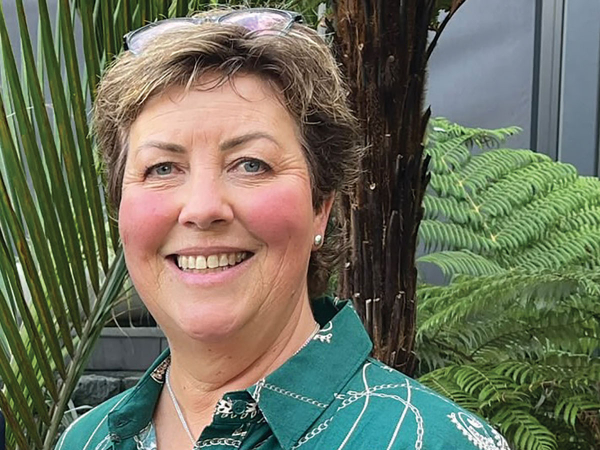 Sandra Faulkner says farmers’ views must be heard.
Certainty and a clear understanding of the needs of rural communities is a critical outcome in the series of government reforms that are taking place at present.
Sandra Faulkner, who's just been elected as Federated Farmers vice president says rural people's views must be heard and considered in the huge range of changes that are slowly making their way through the legislative hoops in parliament.
The massive reforms will see the abolition of regional councils, Resource Management Act (RMA) reform, and changes to the rules around fresh water.
She says Federated Farmers is working through the implications of the local government changes to ensure that rural issues such as pest management and flood control are properly met in the changes.
"These are generational legislative changes and will determine how our children and grandchildren farm in the future. I cannot overstate how important it is to get these changes right now," she told Dairy News.
To do this, Faulkner says it's important that rural people have input into the decision-making process and ensure that the right elected people are making the right decisions and are accountable for these.
She's been a Gisborne District Councillor before becoming involved in Feds and admits to being a fan of the unitary authority structure which central government is promoting.
Faulkner believes it is critical that communities up and down the length of the country - be they urban, peri urban or rural ratepayers - can feel they can trust those elected to make decisions on their behalf.
Most important, she says, is what rural people want from central government is a commitment that such changes can be delivered with a regional flavour.
"The other thing is certainty and clarity for those of us who are running big businesses on the land. We can't make decisions and pivot on the spot when you're working in a biological system. For us, it's certainty that allows us to farm across five to ten years. That is what we need for our businesses," she says.
One of Sandra Faulkner's key areas of interest is around adverse events and emergency management, which is now front and centre with legislation currently before parliament.
She says this issue, together with infrastructure, need to be taken out of the present three-year political cycle and there needs to be cross-party support that stretches out over 30 years, and in the process get an idea of the spend and bring some certainty.
"Hopefully with the emergency management legislation, politics will not interfere, and in terms of rural, those people who live at the end of the shingle road, across a bridge or u in the ranges will feel connected to our society and supported like those of us who live close to towns," she says.
While there is fierce competition for road funding and other forms of infrastructure, such as telecommunications, Faulkner says decision makers should think about where the export dollars come from - namely, rural communities.
"In terms of connectivity, farmers run multimillion dollar businesses and are required to do much of the so-called 'paperwork' electronically. For example, animal declarations, traceablility for our animals and most of our accounting systems are cloud based," she says.
But Faulkner says most important of all is having reliable connectivity during an adverse weather event such as recent floods in Wairarapa.
She says it's most important that families can reach out at critical times to those individuals or organisations that can offer assistance.
"That human connection is something that I cannot emphasise enough. You will see from Fed Farmers a real focus on making sure that those channels of communication are operating well and they cope with whatever mother nature throws them," she says.
Federated Farmers has welcomed new rural policies released by ACT, saying they align closely with its own election priorities.

Federated Farmers is backing Feilding High School’s call to keep Agriculture and Horticultural Science as a standalone subject in Year 11.
National’s pledge to introduce 19 new national standards shows the party is serious about getting Wellington out of farming, Federated Farmers says.
Mobile phone coverage and reliability are deteriorating in rural areas, and farming families are bearing the cost, according to a Federated Farmers survey.
Central Otago District Council (CODC) has voted against a plan to spread treated sewage sludge from Cromwell and Alexandra on farmland near Lauder, a decision Federated Farmers says reflects strong opposition from rural residents.


Federated Farmers has welcomed new rural policies released by ACT, saying they align closely with its own election priorities.

Rural Contractors NZ says proposed changes to land transport rules for agricultural vehicles are a welcome response by the Government to out of date regulations which have seen members hit with huge fines.
Alliance is calling for final applications for its 2027 Graduate Programme, with applications closing on Sunday 25 October.
Decades piloting planes has ensured vet and farmer David Hayes is focused on safety. So, after a serious accident while welding on farm, he is sharing his experience so others can learn from it.
Canterbury milk processor, Synlait Milk has confirmed Leon Fung as its chief executive officer.
OPINION: Making it easier to collect rainwater and use it to grow crops and livestock is a no brainer.




OPINION: It seems Canterbury processor Synlait is still in the doldrums.
OPINION: Get offside with New Zealand First leader Winston Peters at your own peril.




