Labour Vows to Change Tact on How to Handle Freshwater Rules
A Labour-led Government won’t be bringing back the controversial freshwater rules of 2020.



 increase font size
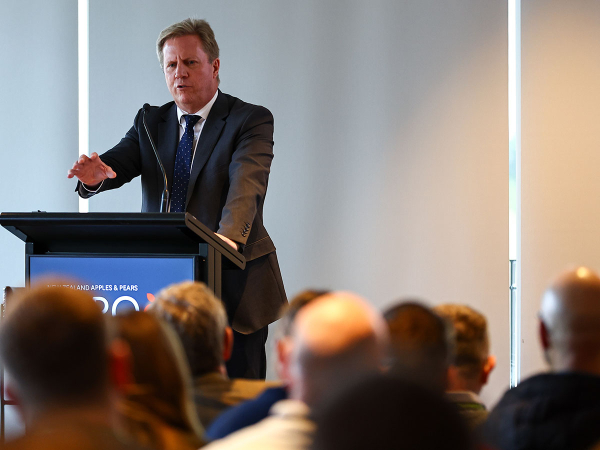 Todd McClay speaking at the New Zealand Apples & Pears Conference.
Agriculture Minister Todd McClay has admitted that a scheme bringing workers from Pacific nations to work on orchards has become too hard to navigate but says changes are coming.
Speaking at Apple and Pear New Zealand conference in Queenstown yesterday, McClay said the apple sector needs workers on site at harvest and pruning.
While the Recognised Seasonal Employer (RSE) scheme delivers them, it has become too hard to navigate, he says.
“Following a comprehensive review, Cabinet has agreed a package of changes,” he says.
“The objective is a scheme that cuts administrative burden, improves worker wellbeing, and gives you certainty as employers.”
Immigration Minister Erica Stanford will set out the full package at the Horticulture NZ conference in Wellington next week.
The RSE scheme allows New Zealand horticulture and viticulture businesses to recruit workers from eligible Pacific nations to plant, maintain, and harvest crops.
McClay also touched on access to water and the need for storage facilities for apple growing areas.
Her says the Government has consulted and has listened and is now replacing the Resource Management Act.
The Planning Bill and the Natural Environment Bill are before Parliament and will be passed this term, he says.
This week, the Select Committee reported back on the Natural Environment Bill and recommended a significant number of changes that will make it easier to grow and farm.
McClay says that one of the more important changes is the inclusion of food as a stated purpose in the bill, ensuring the primary sector is at the forefront of resource planning.
“Transition to the new system begins this year and will be complete around 2030,” he says.
“In the meantime, we have extended consents through the transition, updated the highly productive land policy, and made freshwater settings more practical.
“My test for the new system is simple: lower compliance costs, less duplication, and secure access to water for productive use.”
A Labour-led Government won’t be bringing back the controversial freshwater rules of 2020.

Beef + Lamb New Zealand (B+LNZ) says it welcomes the passage of the Natural Environment Bill and Planning Bill, calling the bills a positive step for sheep and beef farmers.
OPINION: A founding principle of Groundswell NZ is that farmers, and people generally, should be provided with full and accurate information about regulations that directly affect them.
It was billed as a chance for all the political parties to woo the rural vote, but question marks hang over just how effective this was.
Election years are always a concerning time for farmers, according to DairyNZ chair Tracy Brown.

Mobile phone coverage and reliability are deteriorating in rural areas, and farming families are bearing the cost, according to a Federated Farmers survey.
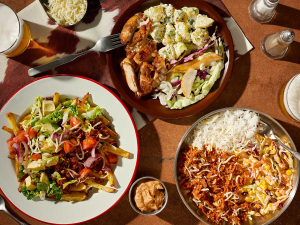
HelloFresh New Zealand has launched a limited-edition Country Cookout Box of Southern-inspired meals, arriving as the 2026/27 rodeo season gets underway.
Beef + Lamb New Zealand Incorporated (BLNZ Inc) is marking 40 years of promoting red meat to New Zealand consumers, citing its taste, family meals and nutritional benefits.
Pāmu has welcomed Taranaki student Paige Burston as its newest First Foundation Scholar, supporting her journey towards a career in agriculture and animal science.
Farmer-owned fertiliser company, Ballance Agri Nutrients is welcoming National’s plan to negotiate security agreements with key supplier countries to protect New Zealand-bound products from export restrictions and greater supply chain certainty.
Carrfields has announced the appointment of Stu Hall to the newly created role of chief operating officer, Carrfields Ltd, reflecting the continued growth of their agribusinesses and the need to ensure the company has the leadership capacity and support in place as it pursues the emerging opportunities ahead.



OPINION: The same mainstream media muppets that brought you Jacindamania in 2017 have been flat out pimping for the Opportunities…
OPINION: Your old mate reckons the atrocious way farmers in the UK are treated by their lords and masters in…