OPINION: While some international systems reward milk volume and encourage breeding for larger-framed, high-output cows, New Zealand farmers operate under a very different set of incentives.
Here, it’s kilograms of milksolids that matter most, from cows that graze pasture and that shifts the focus from size to efficiency.
A well-balanced, moderate-framed cow that converts feed into fat and protein, calves consistently, has a solid udder overall and maintains body condition often outperforms a bigger cow when you look at the whole system.
Success isn’t about producing the most litres, it’s about producing the right litres.
For example, a larger cow producing 7500 litres at 4.5% fat and 3.5% protein delivers around 600kg of milksolids. A moderately sized cow producing 6500 litres at 5.2% fat and 4.1% protein delivers slightly more, at around 605kg of milksolids. Despite producing less volume, the more efficient cow is delivering more value back to the farm.
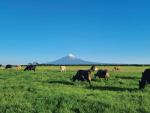
But production is only part of the equation. In a pasture-based system a cow will be required to eat around 100-150kg of fresh grass to gets its daily energy requirements (this varies depending on the moisture content of the grass – spring grass with a higher moisture content will require the cow to eat up to 150kg of fresh grass). That’s a lot of grass! Which is why we breed cows with good capacity. In more intensive systems that feed grain and concentrates, that same energy requirement could be achieved from significantly less bulk (around 20kg depending on the feed) which is why cows bred from those systems have less capacity – they don’t need it because they are not consuming the bulk.
The point here is that over time breeding companies have refined the physical characteristics of the cow to be optimal for a particular production system. It’s not that one breeding philosophy is better or worse than another – it’s about breeding programs responding to the constraints and incentives of the system they are breeding for. Pasture-based dairy farming requires cows with high capacity. They also require cows that can handle a walk of 1-2km a day, twice a day – so a moderately sized cow is better suited to this than a heavier cow. And a block calving system places different fertility demands on a cow than an all-year-round calving system. Some genetics can deliver strong production and look attractive on paper, particularly when you’re comparing individual animal performance. But if that production comes at the cost of fertility or longevity, it changes the profitability equation in a pasture-based system.
That’s why breeding decisions need to be made with the whole system in mind, not just a single trait.
At LIC, we’ve spent decades selecting cows that suit New Zealand conditions - balancing production with fertility, efficiency, udder overall, longevity and more. Because long-term profit doesn’t come from pushing one trait to the extreme, it comes from getting that balance right.
There’s no one ‘right’ cow. But there is a right cow for your system. And the better you understand the trade-offs, the better the decisions you’ll make for your herd and your business.
David Chin is chief executive officer LIC.