What Would Synlait Be Worth to Fonterra or a2 Milk?
Speculation of a possible joint move by Fonterra and a2 Milk to buy Synlait raises a much bigger strategic question, says agribusiness expert Dr Nic Lees.




 increase font size
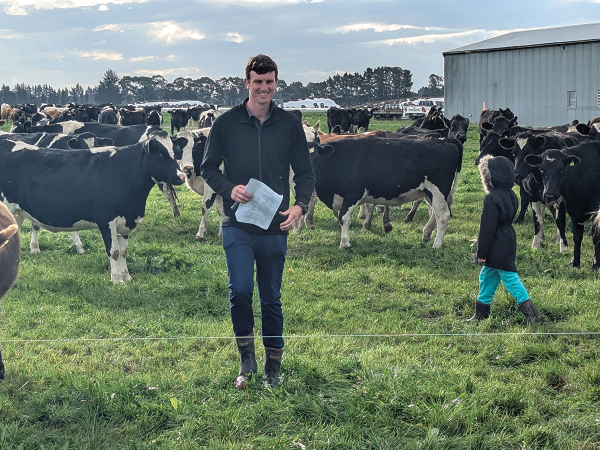 Farm part-owner and manager Peter O’Connor explains some of the decisions behind his new dairy conversion underway near Chertsey in Mid-Canterbury.
A young man just five years out of his Lincoln University degree already has his foot in the door of farm ownership, as equity manager of a large new dairy conversion now taking shape in Mid- Canterbury.
Peter O’Connor, from a prominent West Coast farming family, has partnered with Mid- Canterbury dairy farmers Will and Kim Grayling, and former DairyNZ chair Jim van der Poel and his wife Sue, in the Ashmount Farm conversion near Chertsey.
Formerly cropping land, the farm is 426 ha with consent to milk 1700 cows. The original plan was for O’Connor to run it with a 2IC, three herd managers with responsibilities for their own discrete herds and areas, two farm assistants, and casuals as required.
They have recently taken the opportunity to buy an adjacent 202 ha block, and consenting is underway to add that to the new conversion. That would bring the area to 628 ha and total cow numbers to around 2500, probably split across four herds.
The conversion featured at the recent South Island Dairy Event (SIDE) with a field trip to the farm, where DairyNZ’s Virginia Serra described O’Connor’s path as “quite an amazing progression.”
Describing himself as a naturally competitive person, O’Connor said he was lucky enough to have “a bit of success” in the Dairy Industry awards and Young Farmers.
The former DairyNZ scholar was the NZDIA Dairy Trainee of the Year in 2022 and runner-up to the New Zealand Young Farmer of the Year in 2023.
O’Connor said the key was building relationships and keeping in touch with people.
An example was volunteering, in his last year at Lincoln, to take the minutes for a farmer discussion group, and he said he built a lot of great contacts out of that.
“Connections are important. I can’t stress that enough.”
The partnership came about after O’Connor needed a job after returning from a year overseas.
Eyeing options such as farm manager or contract milking, he took a position as farm manager for the Graylings in May last year.
The Ashmount farm conversion plan was then formulated over several months of sitdown discussions with the Graylings, during which they found that their values aligned, said O’Connor.
“The more I look back and think about it, the less appeal contract milking has for me.
The good thing about this option is, you don’t just build a pile of cash. You’ve got debt that we’re servicing that we can leverage off.
“I’m pretty happy that this is how it’s ended up.”
With his fiancée Lydia, O’Connor is now fulltime at Ashmount overseeing the conversion.
The priority with the conversion was first getting pasture established, then stock water, fencing and irrigation. Staff accommodation and a modern rotary shed are now under construction and the first herd of in-calf heifers are on the land.
O’Connor said the farm’s biggest asset was heavy soils that retain nitrogen, which with good irrigation will help meet environmental targets. The consent stipulates putting effluent across 300 ha, which means that it will be able to be injected into all the pivots.
The farm will use proven technologies without going too cutting-edge.
O’Connor said the 80-bail shed will milk 500 cows an hour in the morning and 600 an hour in the afternoon, probably staffed in two shifts with two workers each.
It will feature slide pulsators, ProTrack automation, in-shed feeding, and cup removers, but no “extra technology” like milk meters.
Cow Manager wearables will handle heat detection.
“But apart from that it’s probably not too much else.”
O’Connor said that with the scale of the farm, it was important to put good people in place from the start, invest in them and give them responsibilities so they know they’re “getting somewhere” too. He emphasised the “massive” importance of communication with his herd managers.
“I’ll be putting a bit of responsibility on them but we’ll also have to be there to give them guidance and help them get those decisions right. We can’t expect them to get it right straight off the bat every day.
“From the get-go, creating good systems will help us to get efficiency and mean I’ll have time to be able to go and check on things and talk to people and make sure we’re getting those decisions right.”
Asked how the farm will provide him with equity growth, O'Connor explained that he has bought into not just parts of the operation but “a portion of everything.”
“So, if the farm does well, we do well.”
He said that once the debt level gets to a point where the shareholders feel it is time to re-leverage, he could use his dividend to buy a greater share, if that is what he wants and the other shareholders agree.
“That’s the long-term plan. We’ll just have to make some milk and make it work.”
Co-owner Will Grayling says: “The long-term goal or vision is that this will be Peter and Lydia’s farm. We’re not coming down here to live, and neither is Jim and Sue van der Poel.
“It’ll take him more than five years to achieve that, so we’ll get to be along for the ride for a bit.”
He added that the equity manager on another farm which the Graylings part-own under a similar equity structure has recently been able to increase his share after just three years.
Speculation of a possible joint move by Fonterra and a2 Milk to buy Synlait raises a much bigger strategic question, says agribusiness expert Dr Nic Lees.
For Taupiri dairy farmers Logan and Sian Dawson, their involvement in the NZ Dairy Industry Awards has been a key catalyst in the growth of their business - the experience helping shape how they approach the farm ownership pathway they are pursuing today.
Lynnette Hudson's 30-year obsession with Pinot Noir was sparked working vintage in Burgundy, seeing how subtle changes in terroir were expressed in the glass. It was, she says, "an elightening moment in every way".
A four year trial has reaffirmed that mixing plantain into dairy pastures can help reduce nitrogen losses to freshwater while maintaining milk production and profitability, say researchers.
Federated Farmers president Colin Hurst and his family raised a glass of milk last week to toast the start of a new addition to their farming operation at Makihihi, south of Timaru.


Decades piloting planes has ensured vet and farmer David Hayes is focused on safety. So, after a serious accident while welding on farm, he is sharing his experience so others can learn from it.
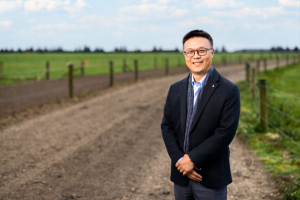
Canterbury milk processor, Synlait Milk has confirmed Leon Fung as its chief executive officer.
OPINION: Making it easier to collect rainwater and use it to grow crops and livestock is a no brainer.
As part of its Election 2026 coverage, Rural News asked political parties how they would help pull the arable sector out of the doldrums. Here's what they said:
Farmers are being encouraged to rethink how they manage waste on farm with the launch of ruralwastesorted.co.nz, a new website bringing together practical tips, real farmer experiences and resources.
New Zealand Winegrowers (NZW) is celebrating the India-New Zealand Free Trade Agreement (FTA) coming into force today, bringing New Zealand wine improved access to one of the world’s fastest-growing economies.

OPINION: It seems Canterbury processor Synlait is still in the doldrums.
OPINION: Get offside with New Zealand First leader Winston Peters at your own peril.




