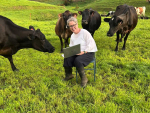
International Day of Rural Women: Two DairyNZ Farmers’ Stories
Today, 15 October, is the International Day of Rural Women, which recognises rural women’s contribution to farming, communities and the environment.




 increase font size
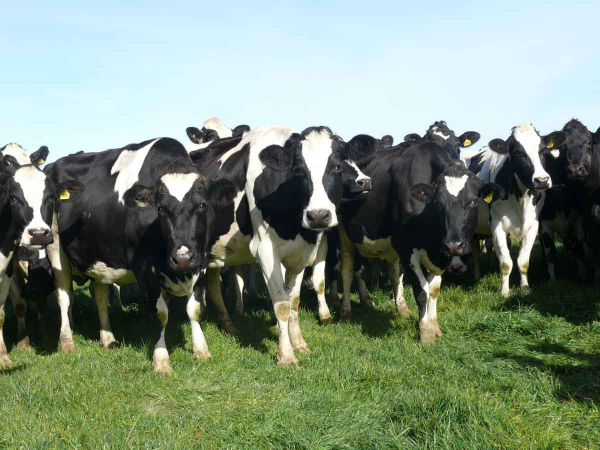 The NZ Dairy Statistics reveal a productive season.
New Zealand Dairy Statistics for the 2019/20 season reveal the season was a productive one for dairy farmers.
The statistics, released by DairyNZ and Livestock Improvement Corporation (LIC), show that New Zealand dairy companies processed 21.1 billion litres of milk, containing 1.90 billion kgMS, marking a 0.6% increase in milksolids from the previous season.
Meanwhile, the latest count reveals that New Zealand has 4.921 million milking cows, a 0.5% decrease from the 2018-19 season.
According to DairyNZ, this increase in productivity is due to farmer uptake of herd improvement tools such as herd testing and animal breeding.
“Interest in the highest genetic merit animals continues to grow year-on-year, with farmers investing in the latest artificial breeding technologies and indexes that focus on productivity, as well as animal welfare and the environment,” a DairyNZ spokesperson told Dairy News.
“Farmers are also considering feed quality for their herds, while seasonal factors such as weather conditions which affect feed also have an impact on milk production,” they said.
“These factors have all meant that despite cow numbers reducing, our cows are more productive than ever.”
They say that innovation and research will continue its role in ensuring the productivity of the national herd.
“New innovations, research and agritech solutions will also continue to play a role in ensuring that farmers can breed more productive and profitable cows.”
In the 2019-20 season, 3.68 million cows were herd tested.
Today, 15 October, is the International Day of Rural Women, which recognises rural women’s contribution to farming, communities and the environment.
The first major update to the Dairy Cattle Code of Welfare in more than a decade has been released, marking what DairyNZ describes as an important step in ensuring animal welfare standards continue to evolve alongside scientific evidence and on-farm realities.
Have a plan in place for your cows and staff.
DairyNZ deputy chair Cameron Henderson has been re-appointed unopposed for another term.
OPINION: The stats speak for themselves.



Fonterra Co-operative Group chief financial officer Andrew Murray has resigned to take up a role outside the dairy giant.
A major move is about to get underway to improve the quality and viability of dairy beef and cattle in NZ.
Veterinarians say changes to the code of welfare for dairy cattle provides a positive foundation for improved cattle welfare across the country.
Today, 15 October, is the International Day of Rural Women, which recognises rural women’s contribution to farming, communities and the environment.
Global dairy giant Lactalis has integrated its Australian operations with the Mainland Dairy consumer business it acquired from Fonterra earlier this year.
High country stations, mixed sheep and beef farms, Māori-owned farms, corporates and family operations are among the nine commercial farms taking part in the Livestock Innovation Farming Transformation programme, known as LIFT.

OPINION: It seems Canterbury processor Synlait is still in the doldrums.
OPINION: Get offside with New Zealand First leader Winston Peters at your own peril.




