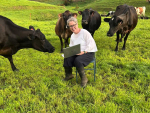
International Day of Rural Women: Two DairyNZ Farmers’ Stories
Today, 15 October, is the International Day of Rural Women, which recognises rural women’s contribution to farming, communities and the environment.




 increase font size
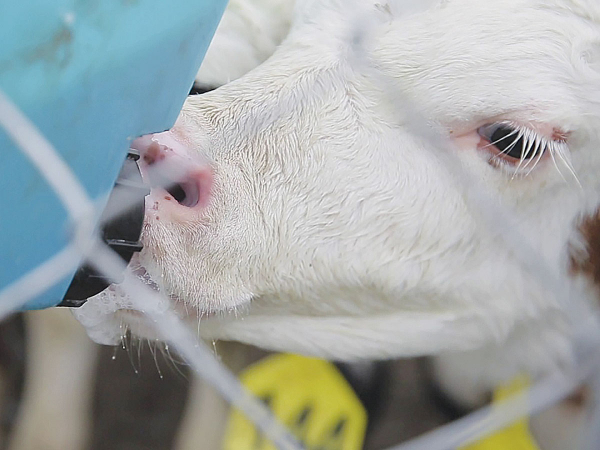 Gather your staff before calving to explain what they want their spring to look like.
Spend time with staff and set clear expectations for the upcoming calving season.
That's the message to dairy farm managers from DairyNZ's Helen Thoday who says that this coming season will be particularly challenging on dairy farms due to a series of effects caused by Covid-19.
She says it's probably more important than ever for managers to gather their team together before calving and spend some time with them to explain what they want their spring to look like. She says once calving starts it's too late to do this because the pressure is on and long and busy days are the norm.
Thoday says there are likely to be people in teams who are new to the industry, others new to that farm, and require careful instruction. She says it's possible, due to restrictions on migrant workers not being able to come to NZ, that some farms may be short staffed.
"Things like the care of expensive equipment, care of animals, what a good working day might look like, and also setting out what communication systems will be put in place such as daily or weekly meetings," she says.
An issue on some farms says Thoday will be dealing with workers from different cultures and for whom English is a second language. Some farm teams rely heavily on standard operating procedures, but this is not enough, she says.
"Managers can get uncomfortable about how to show and train people in a practical format. An important phrase to remember is 'I show you, you show me, you do it without me and I check after'. And don't move from two to three until they can do two," she says.
Thoday says people from some cultures are people pleasers and are often not keen to report bad news or to say they understand something when they clearly don't. Managers need to be aware of this and ensure staff feel free to talk openly with them. Using white boards in the dairy shed is one way of clarifying tasks and expectations.
"I think farm managers are becoming more experienced at taking team members that haven't had dairy experiences on a paced-learning basis. When I started on a dairy farm everything was taught on the RT radio at 100 miles an hour and it was pretty immersive in your first spring. And I had the benefit of being able to speak Engliish. But today I sense farmers are shifting away from telling staff what to do and explaining why a task needs to be done a certain way, and are also delegating more," she says.
Look After Your Staff
 |
|---|
|
DairyNZ's Helen Thoday. |
Helen Thoday sasy with new people coming into the dairy industry, managers should try and "suss out" the skills these people may have, and how these could be applied to their operations to breathe new life into the way they run their businesses.
She says, for example, a chef may have good time management skills which could be applied in a dairy shed. She says giving people responsibility, albeit small, right at the start is another way of making people feel respected and acknowledged.
Thoday says managers should also look beyond the staff they employ and also take an interest in their families. She says in the past it was expected that people left their personal problems at home, but nowadays there has been a change in thinking.
"It's widely accepted that if there are challenges outside of work they will impact on how you are feeling at work, so taking time to listen and to understand these issues is important. Some workers families are not able to return to NZ and so we have quite a few stories that people are quite saddened that their families are not with them. In other cases it may be about just dealing with modern life," she says.
Today, 15 October, is the International Day of Rural Women, which recognises rural women’s contribution to farming, communities and the environment.
The first major update to the Dairy Cattle Code of Welfare in more than a decade has been released, marking what DairyNZ describes as an important step in ensuring animal welfare standards continue to evolve alongside scientific evidence and on-farm realities.
Have a plan in place for your cows and staff.
DairyNZ deputy chair Cameron Henderson has been re-appointed unopposed for another term.
OPINION: The stats speak for themselves.


Mark Hooper has been appointed the new chair of NZPork, the industry organisation representing New Zealand pig farmers.

As the India-New Zealand free trade agreement enters into force, New Zealand’s apple industry has reaffirmed its commitment to the long-term development of India’s apple sector.
Fonterra shareholders can begin voting on Tuesday 20 October in the 2026 Board of Directors’ election, a Co-operative Council election in one Ward, and seven Annual Meeting resolutions.
National’s pledge to introduce 19 new national standards shows the party is serious about getting Wellington out of farming, Federated Farmers says.
The National Party’s policies to make it easier to grow fresh vegetables, secure reliable water and energy and simplify farm planning are practical changes that will give growers the confidence to invest, according to Horticulture New Zealand (HortNZ).
Fonterra Co-operative Group chief financial officer Andrew Murray has resigned to take up a role outside the dairy giant.




OPINION: It seems Canterbury processor Synlait is still in the doldrums.
OPINION: Get offside with New Zealand First leader Winston Peters at your own peril.




