DairyNZ Resilient Pastures Trial Expands Across North Island
Farms across the upper North Island are trialling different pasture mixes as part of a research programme that aims to build greater resilience into farming systems.




 increase font size
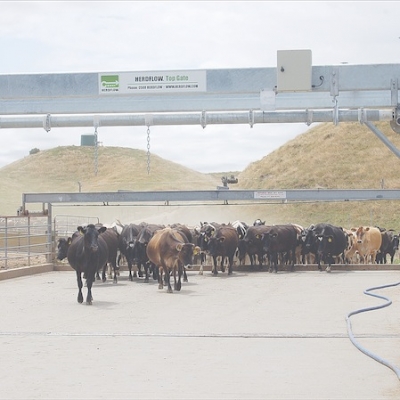
Producing the same quantity of milksolids from half the number of cows would be a winning formula for any farmer.
But for the 1100 owners of the Waerenga Pukahukiwi Ltd farm in Bay of Plenty, the need is to strike the right balance between profitability and protecting water quality.
Waerenga Pukahukiwi is a 1548ha (833ha eff) farm, owned by Ngati Pikiao, located 17km north-east of Rotorua; it borders on the north-eastern and northern shores of Lakes Rotorua and Rotoiti respectively. Nitrate leaching is a hot topic around the lakes and as owners Waerenga Pukahukiwi are leading by example.
Last week about 60 economists and academics, in Rotorua for the Australian Agricultural and Resource Economics Society Conference, visited the farm to see firsthand how the owners are balancing farming and protecting water quality.
The farm is modern and has a 70-bail rotary machine milking at least 1000 cows. Year-round they are fed 60% supplements – barley and maize – grown onfarm; little grass is grown onfarm due to climatic conditions.
The farm has a manager and six full-time staff.
Production this season is expected to top 370,000kgMS, higher than the 2001-02 season, when the farm had nearly 2000 cows. Annual nitrate losses in 2001-02 topped 43.7kg/ha; this season it is calculated at 31.2/kg/ha.
Waerenga Pukahukiwi chairman Clinton Hemana says nitrate leaching is kept low by onfarm management but the farm is “still in catch-up mode”.
“On one side our farming is inefficient and on the other side we are looking after the lakes,” he told visitors at the farm. “We all want the lakes to get better.”
He says with about 1900 cows 15 years ago, the farm had a larger nitrate leaching footprint. But with greater efficiency in nitrogen use and lower stocking rate, nitrate leaching has reduced. “Nitrate leaching is driven by urine patches and with fewer cows, there is less leaching.”
To lift production per cow, Waerenga Pukahukiwi focuses on mating management: 78% of the herd achieve six-week in-calf rate and body condition score on June 1 is a minimum of 4.8.
Nitrogen use is largely limited to the milking platform and cropped areas; it is applied in early spring to boost pasture intakes, in late spring to lift pasture quality and in autumn to lift pasture cover going into winter. Soil N tests are done before all cropping to optimise inputs.
A feed pad is used for all supplementary feeding to milking cows.
Historically, from 1955-1995, Pukahukiwi was a sheep and beef farm carrying 80% sheep and 20% cattle for most of this period, and changing to about 60% sheep and 40% cattle in the early 1990s. Several small blocks of pinus radiata were also planted. In 1995 a decision was made to amalgamate the business with the neighbouring Waerenga Incorporation under a company structure named Wae-Kiwi, and to convert the business of the farm to shared interests in a full scale dairy farm operation.
Waerenga Pukahukiwi’s business adviser Lee Matheson says it has been a long hard road to success for the farm.
Matheson says Waerenga Pukahukiwi had a good balance sheet and poor cash flow. Being owned by 1100 people, it was difficult to raise capital for development; the decision to convert to dairying was “pretty ambitious”. “But the owners took a long term view and the conversion has paid off; it has taken us 18 years to get here.”
In the early days of dairying the owners employed a sharemilker as they had no capacity to buy cows. This meant less income for shareholders because of regular capital spending on new fencing, lifting soil fertility and housing. “The profits were not high for a long time,” he says.
In 2007 the owners decided to buy out the sharemilker, exerting greater control over farming operations.
He says 12 years of consolidation has paid off for the owners, who are happy to balance making profit with keeping the lakes clean.
Farms across the upper North Island are trialling different pasture mixes as part of a research programme that aims to build greater resilience into farming systems.
There's been widespread support from the primary sector for the Government's announcement on changes to freshwater farm plans that come under the Natural Environment Bill, which is now set to replace the existing RMA.
Today marks the first day of operations for Waikato Waters, a new council-controlled organisation established by six district councils to deliver water and wastewater services for their communities.
OPINION: New economic modelling confirms what many of us in Hawke's Bay have long understood - getting water security right for this region is one of the most important decisions we face as a community. Not just for farmers, but for everyone who lives, works and builds a future here.
Zespri says it welcomes the recently signed Western Bay of Plenty Regional Deal, describing it as an important step towards supporting growth in the region and for New Zealand's kiwifruit industry.


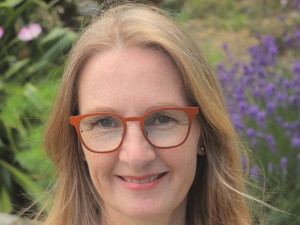
Seed and grain companies share the concerns of arable farmers about the viability of their sector, says Seed and Grain New Zealand chief executive Dr Sarah Clark.
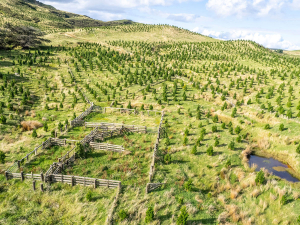
The New Zealand Institute of Forestry (NZIF) says unnecessary changes to New Zealand’s Emissions Trading Scheme (NZ ETS) will seriously erode investor confidence and result in significant reductions in forest planting rates.
For the first time in a quarter of a century, Federated Farmers has something positive to say about the Labour Party’s climate change policy leading into a general election.
A warning for New Zealand seed and grain companies – be prepared for an exodus of farmers from the arable sector.
Now in its fourth year, the 2026 Fencing Industry Awards, formed part of the proceedings of the FCANZ Conference, held in Nelson during August.
DairyNZ deputy chair Cameron Henderson has been re-appointed unopposed for another term.


OPINION: The same mainstream media muppets that brought you Jacindamania in 2017 have been flat out pimping for the Opportunities…
OPINION: Your old mate reckons the atrocious way farmers in the UK are treated by their lords and masters in…