
Rural NZ Welcomes $8.5m Government Health Package
Rural New Zealand is welcoming the Government’s recent package of rural healthcare initiatives.




 increase font size
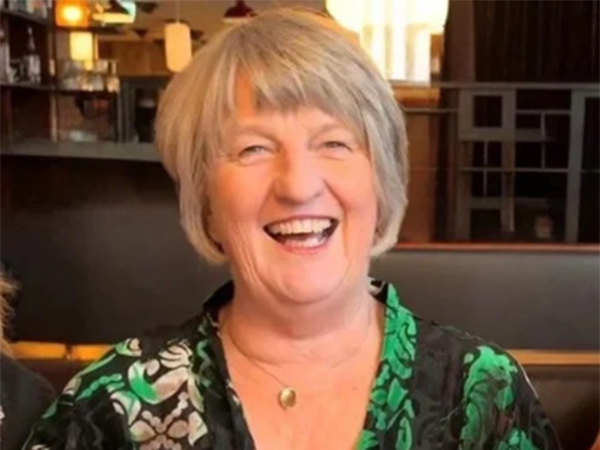 Rural Women New Zealand chief executive Sandra Kirby.
Rural Women New Zealand (RWNZ) has signed on to a formal complaint filed with the United Nations requesting an investigation into whether the government's changes to New Zealand's pay equity laws amounts to systemic discrimination against women.
The complaint was brought by Pay Equity Coalition Aotearoa (PECA), which includes the New Zealand Council of Trade Unions, Te Kāhui Tika Tangata Human Rights Commission and RWNZ.
The filing comes exactly a year after controversial new legislation was passed, cancelling existing pay equity claims and introducing stricter tests for bringing new claims.
Pay equity claims are raised to ensure people receive equal pay for work of equal value.
The cancelled claims covered more than 180,000 workers across sectors like care and disability support, education, health, and community and social services. The majority of the people impacted by those claim cancellations are women.
Sandra Kirby, chief executive of RWNZ, says the amendments were made without proper engagement and ignored the government's guidance regarding the protection of rural communities against policy changes that may negatively affect them.
"A year on, the women who lost their pay equity claims are still showing up, still caring for our elderly, still teaching our children, and still waiting to be paid fairly for it, in a system where the goalposts have been moved so far that many may never get there," Kirby says.
The complaint asks the United Nations to consider whether legislative changes have created systemic discrimination against women, particularly in relation to equality in employment and equal pay for work of equal value.
Both are protected under the Convention on the Elimination of All Forms of Discrimination Against Women (CEDAW), to which New Zealand is a signatory.
The United Nations will now assess whether the complaint is admissable.
If accepted, it will be sent to the New Zealand Government for a response. Then, the CEDAW Committee will consider the case and provide its views and recommendations.
RWNZ has been advocating on the equal pay issue since May 2025 when the Equal Pay Amendment Act passed without consultation.
The organisation submitted to the People's Select Committee on Pay Equity in August 2025.
"Workers across the country were hurt, but rural communities feel it in a particular way, because so much of what keeps them alive depends on work in health, education and care that has historically been undervalued and underpaid," says Kirby.
"For 100 years Rural Women New Zealand has believed rural women deserve fairness and dignity, and we’ll keep advocating until they have it,” she concludes.
Rural New Zealand is welcoming the Government’s recent package of rural healthcare initiatives.

Deputy Prime Minister and ACT Party leader David Seymour says advocacy group Rural Women New Zealand (RWNZ) has submitted against a controversial bill without consulting its members.
Women up and down the country are the glue that hold rural communities together, giving so much to so many, says the inaugural Rural Woman of the year award winner Kate Acland.
Rural Women New Zealand has announced the winners of the 2026 NZI Rural Women Business Awards.
Rural Women New Zealand this month submitted on the Draft Mental Health and a Wellbeing Strategy 2026-2036, because a person's postcode should not determine the quality of their mental health support.


Federated Farmers has welcomed new rural policies released by ACT, saying they align closely with its own election priorities.

Rural Contractors NZ says proposed changes to land transport rules for agricultural vehicles are a welcome response by the Government to out of date regulations which have seen members hit with huge fines.
Alliance is calling for final applications for its 2027 Graduate Programme, with applications closing on Sunday 25 October.
Decades piloting planes has ensured vet and farmer David Hayes is focused on safety. So, after a serious accident while welding on farm, he is sharing his experience so others can learn from it.
Canterbury milk processor, Synlait Milk has confirmed Leon Fung as its chief executive officer.
OPINION: Making it easier to collect rainwater and use it to grow crops and livestock is a no brainer.





OPINION: The same mainstream media muppets that brought you Jacindamania in 2017 have been flat out pimping for the Opportunities…
OPINION: Your old mate reckons the atrocious way farmers in the UK are treated by their lords and masters in…




