El Niño Warning: NZ Farmers Urged to Plan Fert Early
Plan ahead and be patient. That’s the message to farmers and horticulturalists from the chairman of the NZ Agricultural Aviation Association, Kent Weir.




 increase font size
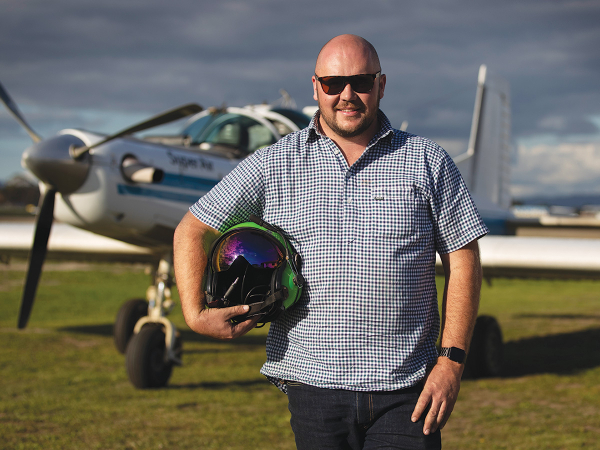 Agricultural Aviation Association chair, Kent Weir.
A warning to farmers and topdressing pilots to take extra care as Christmas approaches.
It comes from the chairperson of the Agricultural Aviation Association, Kent Weir, who says the months before Christmas are statistically the most dangerous of the year for pilots as the pressure goes on them to complete jobs before 'the man in red' arrives.
He says a lot of pressure goes on pilots from farmers and airstrip owners to get jobs done before Christmas and pilots can easily find themselves pushing on in conditions and circumstances where normally they wouldn't.
Weir is also the chief pilot for Super Air based at Hamilton and says the message to fellow pilots is to not compromise standard operating procedure and make good professional decisions. He says the top-dressing industry is having something of a renaissance with prices for sheep and beef moving upwards, which is prompting farmers to start applying fertiliser on the hill country.
"Some farmers haven't applied fertiliser on their properties for nearly two years. But now we are getting back to what you might call a 'normal' year, so pilots are busy again, hence the Christmas rush," he told Rural News.
Weir says this gap in fertiliser application on farms has several implications which need to be considered by both farmers and pilots. In the past, a pilot who has spread fertiliser on a farm at least every year would be familiar with the property, but in that gap of a couple of years, new technologies and hazards may have emerged.
On farms there are potentially new hazards such as halter towers and solar systems which, along with sundry wires strung across gullies, are hazards to both rotary and fixed wing pilots.
"What we are asking farmers to do is before any flying is undertaken, they give pilots a comprehensive hazard briefing - the same as they would to any person who came onto a farm. While a pilot may have top-dressed that farm before, new hazards could have sprung up. At the same time, we want our pilots to make sure they are fully briefed, ask questions and take nothing for granted before they undertake any work," he says.
Technology Easing Pilot Workload
The modern fixed wing or rotary aircraft have come a long way since the first topdressing trials were conducted in September 1948 using an RNZAF Avenger bomber. Later the Tiger Moth became the go-to machine. Today the cockpit of a topdressing aircraft contains a lot of technology with computers controlling when, where and at what rate fertiliser is released from the very powerful aircraft.
Kent Weir says the technology is taking the workload off the pilot by stopping them worrying about boundary fences and water ways. But he says there is also a risk that technology in the cockpit can be a distraction for the pilot.
“This automation is great as a safety tool when it’s working well. I just want to encourage pilots to use those tools appropriately and keep their eyes up out of the cockpit as much as possible. By it’s very nature, ag flying is about airmanship – stick and rudder focused – more so than any other facet of commercial flying,” he says.
For the casual observer, watching a topdressing aircraft or helicopter in action on a farm or orchard is somewhat mesmerising. It often brings back memories of the early barnstorming days of flying. But now of course it requires technology skills as well as actual airmanship.
Plan ahead and be patient. That’s the message to farmers and horticulturalists from the chairman of the NZ Agricultural Aviation Association, Kent Weir.
We are not a bunch of sky cowboys. That was one of the key messages from the chairperson of the NZ Agricultural Aviation Association (NZAAA) Kent Weir, speaking at an education day at Feilding aerodrome for 25 policymakers and regulators from central and local government and other rural professionals.
The FMG Young Farmer of the Year 2022 contest will be kicking off on 9 October 2021 for the new season’s qualifying rounds.
Top dressing today is pretty much at the same level as it was pre-Covid, according to the Agricultural Aviation Association (AAA).
John and Janet Spence are unique in the agricultural aviation scene in New Zealand.


National’s pledge to introduce 19 new national standards shows the party is serious about getting Wellington out of farming, Federated Farmers says.
The National Party’s policies to make it easier to grow fresh vegetables, secure reliable water and energy and simplify farm planning are practical changes that will give growers the confidence to invest, according to Horticulture New Zealand (HortNZ).
Fonterra Co-operative Group chief financial officer Andrew Murray has resigned to take up a role outside the dairy giant.
A major move is about to get underway to improve the quality and viability of dairy beef and cattle in NZ.
Veterinarians say changes to the code of welfare for dairy cattle provides a positive foundation for improved cattle welfare across the country.
Today, 15 October, is the International Day of Rural Women, which recognises rural women’s contribution to farming, communities and the environment.




OPINION: The same mainstream media muppets that brought you Jacindamania in 2017 have been flat out pimping for the Opportunities…
OPINION: Your old mate reckons the atrocious way farmers in the UK are treated by their lords and masters in…




