
Pouarua Water Storage Scheme Gets Government Backing
The Government is backing work on a community-led water storage scheme that could irrigate up to 11,000 more hectares of the Poverty Bay flats, Agriculture Minister Todd McClay says.




 increase font size
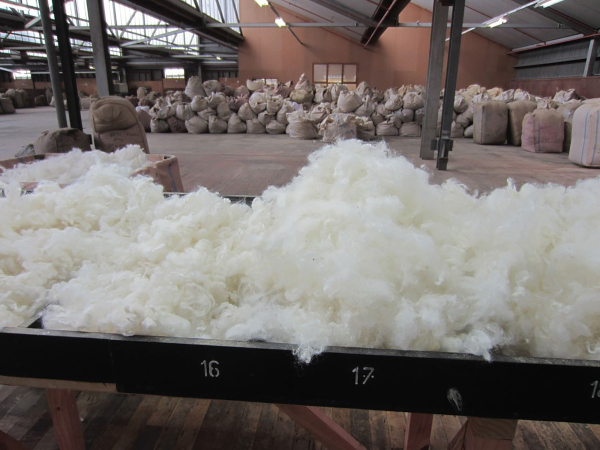 Wool prices were up 16% on last year and are set to enjoy modest rises in the coming years.
Against all the odds, the primary sector has turned in a stellar performance with export returns for 2026 hitting $64.3 billion - up 6% on the previous year.
The Ministry for Primary Industries (MPI) Situation and Outlook For Primary Industries (SOPI) report predicts that this trend will continue with primary exports reaching just over $70 billion by 2030.
This upsurge is led by significant increases in returns for dairy, meat and fibre, and horticulture.
The 150-page report - produced every six months - recaps the past year and forecasts what will likely be over the coming four years.
It also gives valuable insights on a range of issues including trade, climate change, geopolitical matters and the general economic conditions on the land.
Agriculture Minister Todd McClay says the report highlights a resilient high performing food and fibre sector driving healthy demand and prices for NZ's world class products.
"This is a strong result in a challenging global environment shaped by the Middle East conflict and trade policies in key markets that have disrupted supply chains and raised inflation and input prices," he says.
This increased in primary export earnings is led by dairy which currently accounts for 45% of the sector's revenue, followed by meat and wool at 22% and horticulture 15%.
For the current year (30 June 2026) dairy exports are expected to be worth a record $28.6 billion - up 5%, meat and wool $14.1 billion - up 14% and horticulture $9.5 billion - up 7%. Forestry returns are static as are arable exports.
Of the individual sectors, the dramatic increase in meat and wool returns of 14% comes on the back of a 9% increase last year.
Of note is that wool prices were up 16% on last year and set to enjoy modest rises in the coming years.
Dairy exports are up by just 5% and future increases are predicted to be modest percentage wise.
The increase in horticulture exports is due largely to kiwifruit being up by 16% to $4.8 billion this year and to a lesser extent apples and pears exports rising by 6% to $1.3 billion.
MPI predicts that by 2030 kiwifruit exports will be worth $5.3 billion.
While thee news for 2026 is good, MPI sounds some warning bells about the future, saying that disruptions from the Middle East conflict bring an "uncertain medium-term outlook that may compress margins". And adds that the longer-term outlook depends on the relative impact of the disruptions versus global competitors.
MPI notes that this situation also applies to our competitors, some of whom it says are not as well placed as us to deal with the vagaries of global trading conditions.
The report suggests that the compounding economic pressures will be felt harder by some businesses more than others and warns that firms exposed to energy, freight, fertiliser and other imported inputs will suffer most.
It suggests that demand for NZ's core exports will remain strong for the next six months but says that this may not continue for the rest of the year if the Middle East crisis is not resolved.
The report contains a section highlighting the NZ/India FTA and the benefits NZ exporters will gain in this market when the deal is finally signed off. This section of the report also stresses the importance and sometimes forgotten role that MPI staff play in the negotiation of FTAs and the trouble-shooting role they play in sorting out problems that occur from time to time in markets and facilitating improved access for our primary exporters.
MPI Director General Ray Smith says his organisation’s trade teams, both in NZ and overseas, continue to build and strengthen trade relationships to open further doors for exporters.
“I’ve been in a range of key markets over the past year and the one thing that always stands out is the positive reputation NZ has for producing high quality food and fibre products,” he says.
The Government is backing work on a community-led water storage scheme that could irrigate up to 11,000 more hectares of the Poverty Bay flats, Agriculture Minister Todd McClay says.

A Labour-led Government won’t be bringing back the controversial freshwater rules of 2020.
It was billed as a chance for all the political parties to woo the rural vote, but question marks hang over just how effective this was.
There's been widespread support from the primary sector for the Government's announcement on changes to freshwater farm plans that come under the Natural Environment Bill, which is now set to replace the existing RMA.
Testing confirms H5 bird flu in a single northern giant petrel, found dead on a remote Cape Palliser beach in the Wairarapa, says Dr Mary van Andel, the Ministry for Primary Industries' (MPI) Chief Veterinary Officer.



National’s pledge to introduce 19 new national standards shows the party is serious about getting Wellington out of farming, Federated Farmers says.
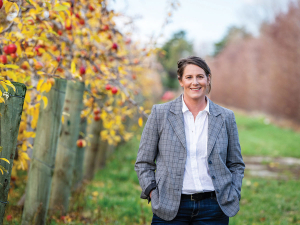
The National Party’s policies to make it easier to grow fresh vegetables, secure reliable water and energy and simplify farm planning are practical changes that will give growers the confidence to invest, according to Horticulture New Zealand (HortNZ).
Fonterra Co-operative Group chief financial officer Andrew Murray has resigned to take up a role outside the dairy giant.
A major move is about to get underway to improve the quality and viability of dairy beef and cattle in NZ.
Veterinarians say changes to the code of welfare for dairy cattle provides a positive foundation for improved cattle welfare across the country.
Today, 15 October, is the International Day of Rural Women, which recognises rural women’s contribution to farming, communities and the environment.





OPINION: The same mainstream media muppets that brought you Jacindamania in 2017 have been flat out pimping for the Opportunities…
OPINION: Your old mate reckons the atrocious way farmers in the UK are treated by their lords and masters in…




