
NZ Nature Fund Welcomes Active Investor Plus Visa Philanthropy Changes
The New Zealand Nature Fund (NZNF) has congratulated the government on recently announced changes to the Active Investor Plus (AIP) Visa Growth category.




 increase font size
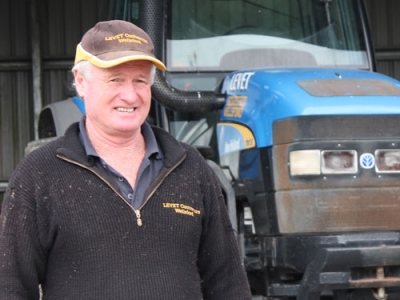 Steve Levet.
It was interesting to read how the Government has made changes to immigration rules to help Queenstown employers recruit much-needed temporary staff.
Immigration Minister Michael Woodhouse recently okayed a new streamlined visa process – from January until June 2015 – to allow employers in Queenstown to be temporarily exempt providing evidence of an attempt to recruit within New Zealand, except for roles Work and Income has identified it may be able to fill.
No doubt this will help tourism operators in the resort town find the necessary temporary staff they need to get them through their busy season.
While that's great for Queenstown's tourism sector, many rural contractors around the country will be asking why Minister Woodhouse and the Government continue to ignore similar requests from our sector?
Rural Contractors New Zealand has, for years, been telling government, opposition parties and bureaucrats that a similar scheme is also badly needed in the rural contracting sector, but this has so far fallen on deaf ears.
No doubt the tourism sector is an important and valuable part of New Zealand's economy and the Government is right to make provisions for that industry. However, similar exemptions are needed for the rural contracting sector as there is a major gap between rural contractors' needs for trained and experienced agricultural machinery operators and the unemployed New Zealanders who can do this work.
The rules on employing temporary, skilled people from overseas prepared to work 6-8 months each year need to be simplified, as do the regulations restricting people who have previously worked here in past seasons coming back to New Zealand to work.
Contracting is a seasonal business and one that uses sophisticated machinery that requires technical skills to operate productively. A major part of our workforce shortfall is met by bringing in skilled operators from overseas.
Frustratingly, despite many attempts made by Rural Contractors NZ to advocate similar ideas for the rural contracting sector, such as the recent tourism initiative, the Government and its bureaucrats still fail to acknowledge or understand this issue.
A dire shortage of suitable agricultural machinery operators means rural contractors rely on employing skilled people from overseas on a temporary basis each season and have done so for many years. Unfortunately, many of the applicants Work and Income NZ (WINZ) tries to fill these vacancies with either do not have the right skills and/or attitude to be successful.
We are talking about operating highly technical and very expensive items of machinery. It is unrealistic, unsafe and impractical to expect unemployed people to walk off the street and successfully take up these positions. The seasonal nature of rural contracting means workers with the right skills are only needed for a few months each year and we need a similar exemption and streamlined immigration process.
And with new workplace safety regulations coming into force, just how irresponsible would it be for a rural contactor to hire an untrained local person and then for them to have an accident or, even worse, get killed at work? You can bet your boots the
Government – in the guise of WorkSafe NZ – would then come down on the offending contractor like a tonne of bricks.
I hope it does not take an incident like this to occur, before the powers that be realise the desperate need for skilled, temporary staff in the rural contracting sector.
Meanwhile, RCNZ is also doing its bit to encourage locals to look at our sector by providing a career path for young people entering the sector. Our organisation has been encouraging schools to get better at promoting agricultural careers. We work closely with training organisations to promote industry qualifications up to diploma level – with remuneration above the average in many cases.
In the meantime, RCNZ will continue to work on the Government and its officials to lobby for changes to the rules on engaging overseas seasonal workers – such as those now enjoyed by the tourism industry – for the benefit of the rural contracting sector.
• Wellsford agricultural contractor Steve Levet is the president of Rural Contractors New Zealand (RCNZ).
The New Zealand Nature Fund (NZNF) has congratulated the government on recently announced changes to the Active Investor Plus (AIP) Visa Growth category.

OPINION: At a time when farmers are advocating for less government spending and no new taxes, the dairy sector is rightly concerned by ACT's new immigration policy.
ACT's new immigration policy has come under fire from farmers and the Government.
We are encouraged that employers are already engaging with two new visas for seasonal workforce recruitment.
New figures show dairy farmers are not only holding on to their international workforce, but are also supporting those staff to step into higher-skilled roles on farm.


National’s pledge to introduce 19 new national standards shows the party is serious about getting Wellington out of farming, Federated Farmers says.
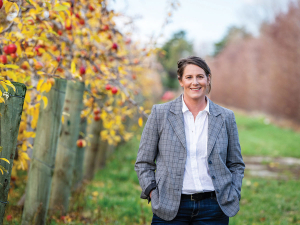
The National Party’s policies to make it easier to grow fresh vegetables, secure reliable water and energy and simplify farm planning are practical changes that will give growers the confidence to invest, according to Horticulture New Zealand (HortNZ).
Fonterra Co-operative Group chief financial officer Andrew Murray has resigned to take up a role outside the dairy giant.
A major move is about to get underway to improve the quality and viability of dairy beef and cattle in NZ.
Veterinarians say changes to the code of welfare for dairy cattle provides a positive foundation for improved cattle welfare across the country.
Today, 15 October, is the International Day of Rural Women, which recognises rural women’s contribution to farming, communities and the environment.




OPINION: It seems Canterbury processor Synlait is still in the doldrums.
OPINION: Get offside with New Zealand First leader Winston Peters at your own peril.




