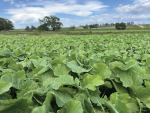
New Reviva Forage Rape Wins Over Dryland Farmers in First Year
It's only just hit the market, but a new forage rape bred for dryland farms has already won the approval of lambs and young cattle both north and south.




 increase font size
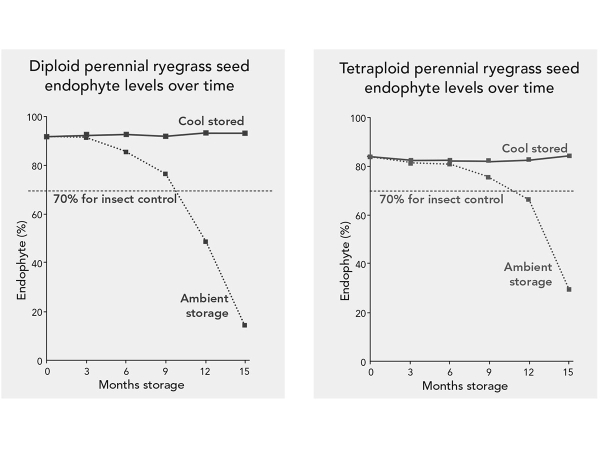
New industry trials confirm what matters most for perennial ryegrass seed this autumn: Cool, dry storage keeps endophyte viability above the 70% commercial threshold, according to pasture specialist Barenbrug.
Anything else risks dead endophyte and weak pasture, it says.
Scientists stored perennial ryegrass seed containing two common endophytes - AR37 and NEA2 - in six bag types under different conditions for 12 months.
The results for both were almost identical.
Only cool storage (4°C, 30% relative humidity) held endophyte viability at 83-92%, matching pre-storage levels.
Ambient storage (15-25°C, 65% relative humidity) dropped it to 54-68%, with most loss in the final three months.
Bag type made almost no difference, researchers concluded.
The study was led by Lincoln University and the Seed Industry Research Centre to find out how storage conditions and packaging affect seed quality and endophyte viability.
"The results are pretty sobering," says Barenbrug sales manager Jason Gardner.
"Buying seed without knowing its storage history is a gamble, and jeopardises what should be a highly profitable, multi-year return on investment."
Elevating the risk is the fact that most seed sold for autumn pasture renewal is at least 12 months old, as the window between harvest and sowing is too brief to process it all.
The findings challenge the industry assumption that ambient storage works fine for a year in New Zealand, Gardner says.
"It doesn't - not if you want reliable endophyte protection against pests and better pasture persistence."
Over 90% of perennial ryegrass seed in NZ contains endophyte.
"The research backs up the care and effort we've made for many years to cool store seed with endophyte in both the North and South Island and continually test and check its quality. Anything other than correct cool storage puts endophyte at risk."
Farmers can protect their investment in autumn pasture renewal simply by asking about the stewardship of their intended seed purchase and making an informed decision.
It's only just hit the market, but a new forage rape bred for dryland farms has already won the approval of lambs and young cattle both north and south.
Keeping cows happy and well fed at home this winter just got easier with the launch of a prolific new annual ryegrass bred to jump out of the ground even faster than its popular predecessor.
Pasture specialist Graham Kerr claims that one hybrid ryegrass in New Zealand continues to dominate industry yield trials, as it has done every year since it was launched in 2021.
It may still be under the radar for many, but one new pasture has been making waves for three different farmers lately.
Anxious about pasture persistence?


Farmer-owned fertiliser company, Ballance Agri Nutrients is welcoming National’s plan to negotiate security agreements with key supplier countries to protect New Zealand-bound products from export restrictions and greater supply chain certainty.

Carrfields has announced the appointment of Stu Hall to the newly created role of chief operating officer, Carrfields Ltd, reflecting the continued growth of their agribusinesses and the need to ensure the company has the leadership capacity and support in place as it pursues the emerging opportunities ahead.
New Zealand's role is not to compete with Indian growers, according to NZ Apples and Pears.
The potato industry is celebrating the success of two rising stars - James Blair, the 2026 Young Grower of the Year and runner-up and innovation award winner, Amber Davy.
Twenty-eight emerging leaders from across the horticulture sector spent two days last month learning valuable skills and connecting with industry experts.
There are five entrants in this year’s Young Horticulturist of the Year, competing in a series of technical, practical, business and leadership challenges.
OPINION: It seems Canterbury processor Synlait is still in the doldrums.
OPINION: Get offside with New Zealand First leader Winston Peters at your own peril.