
Risky business
OPINION: In the same way that even a stopped clock is right twice a day, economists sometimes get it right.




 increase font size
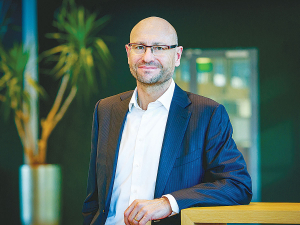
 Economist Cameron Bagrie says poltiicians spend too much time dealing with short-term imperative instead of focusing on long-term strategic issues.
The primary sector is leading New Zealand's economic recovery, according to economist and researcher Cameron Bagrie.
But what he calls 'jandal economics' is not helping the recovery.
He told Rural News that overall the primary sector is doing pretty well now due to a combination of good commodity prices and the weakness of the NZ dollar.
He says while the sector is having to face up to the same challenges as the rest of society, it is doing well.
These challenges include what ability the primary sector has to pass increased costs on to consumers and what resistance there might be to this.
"But the strength of the primary sector lies in its strong productivity story. Productivity in agriculture in NZ is typically 1.5% to 2%R for the past decades has been 0.3%. That tells you that there are an awful lot of sectors across NZ that have negative productivity and that's a major economic problem," he says.
Bagrie believes that because of low productivity, NZ is facing an income crisis rather than what is often termed a cost of living crisis.
He says when there is low productivity, there are low wages, and when this happens it is much harder to deal with because there is no flexibility.
He believes the biggest economic concern for NZ now is inflation, which hurts people, takes money out of their pockets and makes it harder for them to put food on the table.
"Inflation is not just issue number one by a small margin, it is issue number one by a big margin," he says.
Bagrie says NZ politicians are facing the conundrum of having to deal which this short-term imperative instead of focusing on long-term strategic issues. He says there is a real tension between the two, but adds that politics tends to focus on the short-term.
"We'd like to get people to take a deep breath and sit back and think about the long game: What are the priorities we need to be addressing over the next ten to twenty years such as sustainability, climate change, productivity, and infrastructure? But the stark reality is the cost of living is dominating the thinking," he says.
What NZ needs right now is certainty, says Bagrie, but he adds that is unlikely to happen soon due to wars and global political upheaval.
He says this is having an impact on politics here - especially as a general election looms towards the end of the year.
Bagrie notes that in the current polls the two main political parties, National and Labour, collectively have about 65% support with the remaining 35% spread amongst the minor parties.
With such a strong showing on the part of the peripheral parties, it leads to a situation where the tail is wagging the dog.
"We have got what I call 'jandal economics'. There are more economic flip flops here than the flip flops that walk the beach at Bondi in Sydney. This is a big problem because it doesn't always lead to the best policy option being adopted," he says.
The corollary of this says Bagrie is that it could lead to a series of one-term governments.
He points out that in the past, once elected, a party might reasonably expect to get at least two terms, but says now this may not be the case, a fact born out in recent elections overseas such as Australia and the UK where there is a rise in support for minor parties.
Like others, he notes the Irish situation where the two major centist parties, Fienna Fail and Fine Gael, formed an unlikely coalition to keep the periphery parties such as Sinn Fein and the Labour Party from having a say in the government.
"For this to happen here, both sides would have to swallow a few dead rats," says Bagrie.
He says people are hurting in NZ and politics is being dominated by the polls and popularism. One way of solving this is for politicians to stay away from social media, he says.
OPINION: In the same way that even a stopped clock is right twice a day, economists sometimes get it right.

OPINION: Noted economist and self-promoter Cameron Bagrie took one look at KPMG's recently released Financial Institutions Performance Survey on banks and zeroes in one key number that suggests banks are so risk averse in this country that they are probably stifling growth and innovation.
SIDE 2024 organisers have secured some key speakers for the event. Here are four of the keynote speakers:
Registrations are quickly filling up for the South Island Dairy Event (SIDE), New Zealand’s largest dairy conference.
"Absolutely breathtaking" is how well known economist Cameron Bagrie describes the current rural inflation rate of around 15%.

Farmer-owned fertiliser company, Ballance Agri Nutrients is welcoming National’s plan to negotiate security agreements with key supplier countries to protect New Zealand-bound products from export restrictions and greater supply chain certainty.

Carrfields has announced the appointment of Stu Hall to the newly created role of chief operating officer, Carrfields Ltd, reflecting the continued growth of their agribusinesses and the need to ensure the company has the leadership capacity and support in place as it pursues the emerging opportunities ahead.
New Zealand's role is not to compete with Indian growers, according to NZ Apples and Pears.
The potato industry is celebrating the success of two rising stars - James Blair, the 2026 Young Grower of the Year and runner-up and innovation award winner, Amber Davy.
Twenty-eight emerging leaders from across the horticulture sector spent two days last month learning valuable skills and connecting with industry experts.
There are five entrants in this year’s Young Horticulturist of the Year, competing in a series of technical, practical, business and leadership challenges.





OPINION: The same mainstream media muppets that brought you Jacindamania in 2017 have been flat out pimping for the Opportunities…
OPINION: Your old mate reckons the atrocious way farmers in the UK are treated by their lords and masters in…




