The grass can be greener — improving paddock values
Paddocks are among a farmer’s biggest and most important assets but occasionally they need a makeover in the form of regrassing.




 increase font size
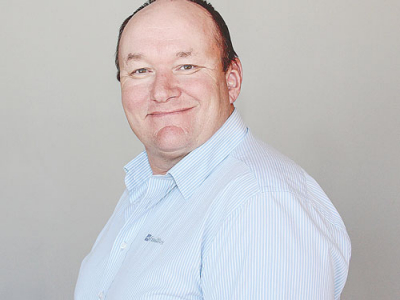 Brent Boyce.
Thinking back over the last 15 seasons or so, the average dairy herd in New Zealand had a targeted empty rate about the 4% mark. Today, 4% seems unachievable.
Over the last few years, weather notwithstanding, these empty rates have risen so that 10% empties is considered a pretty good result; and last year 15% was average.
There have been quite a few herds with 20%+ empties this last season; if you typically keep 25% replacements, you have little room for culling and your herd deteriorates. The herd’s profile quickly ages if you try to maintain numbers from inside the herd. There can only be limited culling for production or faults, and the herd’s productive improvement and BW/PW will remain static at best. This will have serious short and long term effects on farm profitability.
Apart from all the usual suspects and reasons for high empty rates, these possibilities for empty cows can also be added to the list:
But what do you do when you’ve done all that and things are still not improving?
More and more I believe the cows are ‘maxing out’. We have bred such superb lactating athletes on our pastoral system that they often have nothing left to give. Any extra stress or challenge will simply encourage anoestrus.
There has been a groundswell of change over recent seasons. Farmers are doing all those things above, but are adding back something that has been given insufficient credence over the years – good old-fashioned stockmanship. Far too much has been done to the cows, and not nearly enough has been done for the cows.
For the last 15+ years, I ask most of my farmers to identify their non-cycling and at risk cows (e.g. skinny/late calving/young) before the start of mating. These cows are separated from the main herd, and are put onto once-a-day milking at the start of mating. These cows were either run with the bull, artificially inseminated or a mixture of both.
Most of this mob is kept on OAD until the end of the main herd’s AI programme, and then go back into the herd on twice-a-day (2AD) at the end of AI. If a cow is in good condition and mated, then she can re-join the 2AD herd when mated. If she is still light, she stays on OAD until the end of AI so that she stays in-calf.
Every single farmer has recorded a reduction in empty rates from this OAD group compared to previous seasons – every single one. Those who ran them with the bull achieved the best results. Often this group of animals – the ‘worst of the worst’, had better mating results than the main herd – typically getting from 2-10% empties in this group.
I have some farmers putting their at-risk cows onto OAD before the PSM, whilst others are waiting until two-three weeks into mating to do this. The important point is that something is being done. For a light cow, or a cow that has been sick or lame or that had a tough calving, the best thing a farmer can do is give that cow time on OAD.
Some observations from the farmers concerned:
These at-risk cows held their condition, they went back onto 2AD well, and lasted to the end of the season.
These cows had numerous quick returns – every 5-10 days, and they often got AI’d.
The bull was having a strong teaser effect.
The main herd also appeared to cycle better when they saw the bull with this herd of OAD cows.
These are strictly farmer observations, and have no scientific data to back them up, just a lot of farmers realising they are onto something. All these farmers told me emphatically that they will do the same again this coming year -- and they do.
It is far too important for our profitability to go quietly into the night on this empty cow issue.
But if you do what you have always done, you’ll get what you’ve always got; be prepared to do something about the problem.
Paddocks are among a farmer’s biggest and most important assets but occasionally they need a makeover in the form of regrassing.
Phil Fleming, FarmWise consultant in Taranaki, on steps farmers can take to manage debt and come out on top.
LIC national FarmWise manager, Edward Hardie on the decisions dairy farmers need to make now for a good summer.
We have all had to deal with milk quality issues onfarm at some stage in our farming careers — whether it be a freezing point grade or high bulk somatics on the first pick-up or perhaps an antibiotic scare during the season.
It's past mid-September and as calving draws to a close it is time to ensure mating plans are in place.


As the cost-of-living crisis continues to put pressure on household grocery budgets, new figures show pork remains one of the most affordable fresh meat options for New Zealand families.
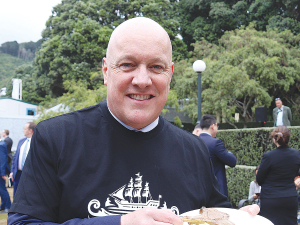
OPINION: In politics, credibility is and should be big. It must surely rank higher than charisma, which is quite trite and superficial. Yet, voters nowadays are often wooed and influenced by how someone looks or talks at a superficial level. TV plays a huge role in this.
Farmers can spend less time on paperwork, thanks to a new data sharing agreement between DairyNZ’s DairyBase and LIC’s MINDA software.
Kaikōura families affected by July's severe storm have found a practical solution to a problem that's kept some children away from regular schooling for weeks: a washed-out section of Inland Kaikōura Road, which has stopped the local school bus from running its usual route.
Rural New Zealand is welcoming the Government’s recent package of rural healthcare initiatives.
Interest in agritech and production animal systems has prompted Massey University's School of Agriculture and the Environment to new majors to its popular animal science degree.


OPINION: After hogging the media limelight for telling a NZ Chinese MP to "go back home", Winston Peters has decided…
OPINION: With fuel prices soaring, one would have expected most farmers to be reclaiming excise duty on petrol.