Interest in agritech and production animal systems has prompted Massey University's School of Agriculture and the Environment to new majors to its popular animal science degree.
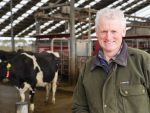
The head of the school, Professor Paul Kenyon, says feedback suggests that people want to work with production animals such as sheep, cattle, pigs and poultry.
He says they have people who want to work with companion animals such as horses and cats and dogs and ruminant systems.
"So, this major is basically around pasture management, agronomy, soil science and a bit about farm systems. The second major is around animal agritech," he told Dairy News.
Kenyon says remote sensing and technologies such as wearables are now very much in vogue in the primary sector and the major on animal agritech is about catering for this change.
"However, we are not trying to train people to develop new technologies, rather our course is designed to teach them how to use the new technologies and to fully utilise the benefits that they offer to farmers and horticulturalists," he says.
Kenyon says options really suit the likes of rural professionals and those who intend to go back and work on farms.
International Students
While a relatively low percentage of NZ students don't tend to stay at university and complete a PhD, this gap is filled by international students, according to Professor Paul Kenyon.
Conversely, there are only a few overseas students doing undergraduate degrees.
This latter trend is very much in the interests of 'NZ Inc', he says, and a lot of the science in our country is underpinned and supported by those international students.
Kenyon says they come to NZ, often supported by their own country, but sometimes just off their own bat, and in time they will become future leaders in agriculture and horticulture back home.
"NZ is seen as a favourable destination for them. It is wrong to think about them coming here and taking away our secrets. The agricultural and horticultural systems in the countries that many of these students are coming from are so different from ours, and so they are not taking secrets away. What they are learning about is just principles and concepts," he says.
Kenyon says the reality is they are helping us to create new knowledge that we otherwise wouldn't be able to get done.
He says the international students come from places such as Sri Lanka, China, South America, India and the wider Asian region.