The first Valtra tractor joined the Butler family's farming business in 2000, bought in a hurry to work on a Canterbury conversion and proving itself to be capable and reliable. The business has since owned another eight.
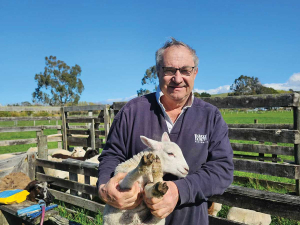
While Michael Butler helps oversee the running of the business' dairy farms, he and his wife Shanekea also own and operate the Waikato-based Spraylink agricultural spray contracting business which they bought in 2018.
The operation runs three dedicated spray trucks and two Valtra tractors equipped with trailed sprayers. When spraying goes quiet in January and February, the team shifts to baling, buying and baling standing grass from Fonterra, mostly for consumption by the family's own cows, with any surplus offered for sale.
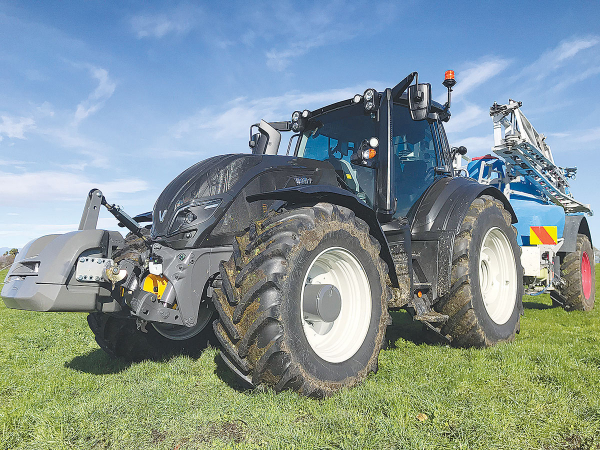
Currently four Valtra's are scattered over the family's dairy farms and contracting business, including a T174D, N143, N101 and an A92 model.
The latest, the T174D, is usually Michael's preferred tractor, who notes, "I bought it for myself and often spend many hours a day in it, so it helps to be comfortable. I like the air-conditioning, the sound system and the coolbox and there is room to move. I also ensured I ordered the top of the line seat as well. It's a quiet cab with a great layout and a good light atmosphere. It is not dark and miserable".
Featuring a 7.4-litre six-cylinder engine that meets Stage V EU emission regulations, AdBlue is part of the mix, but Michael says this isn't a problem. "It goes four to five days on a single tank and is just something you have to do to move with the times."
The direct CVT transmission is ideal for spraying duties, as the operator does not have to think about gears. "You just put your foot on the accelerator, and it goes faster. There are two ways to flick into reverse - using the shuttle on the gear stick or the button on the command joystick," Michael says. He also likes having the option to assign functions to buttons and then store those functions as implement settings. This means, when they unhitch the tank and put on a mower, they just click on 'Mower' and those saved functions are now active.
Michael and Shanekea's T174D pulls a 6,000-litre sprayer or drives a 5m-wide twin mower rig, working on hills or the flat delivering plenty of traction and power, while the 5.25m turning circle also makes the tractor very nimble.
Its standard features include load sensing hydraulics, electric-hydraulic control and a SmartTouch arm rest, incorporating a 9-inch touchscreen that Michael says it is very user-friendly and easy to work with. With its second seat, the T174D is ideal for training staff, although Michael notes, "Valtra tractors are very simple to use, so as staff get more experienced, we can introduce them to more functions".